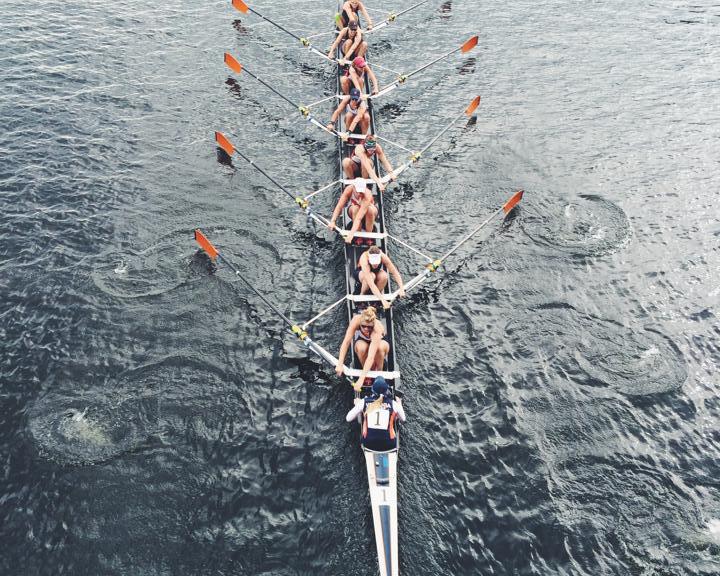
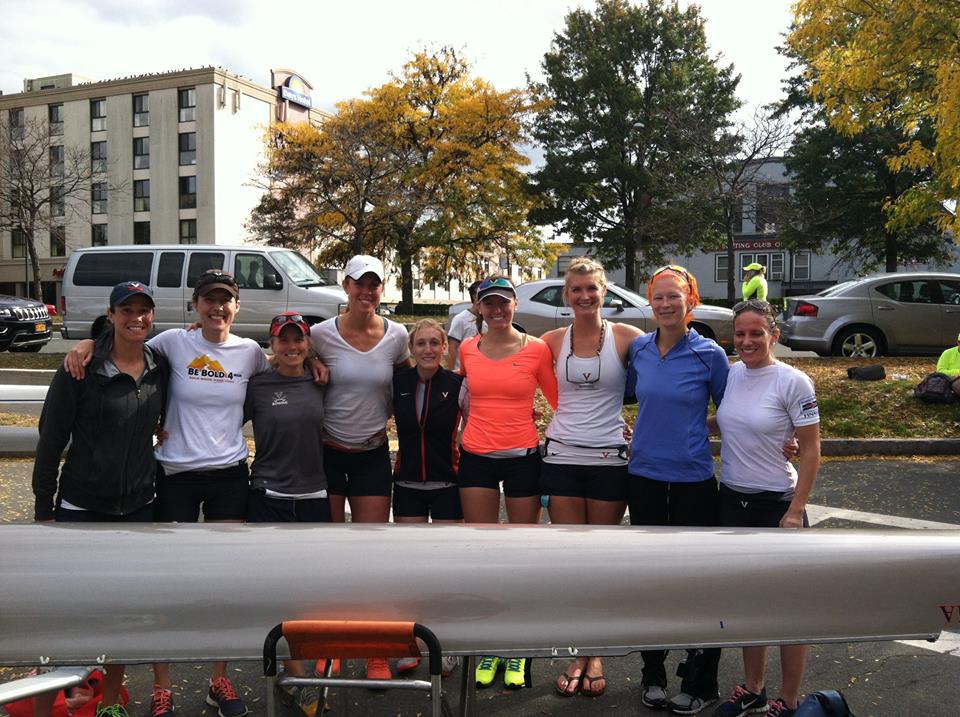
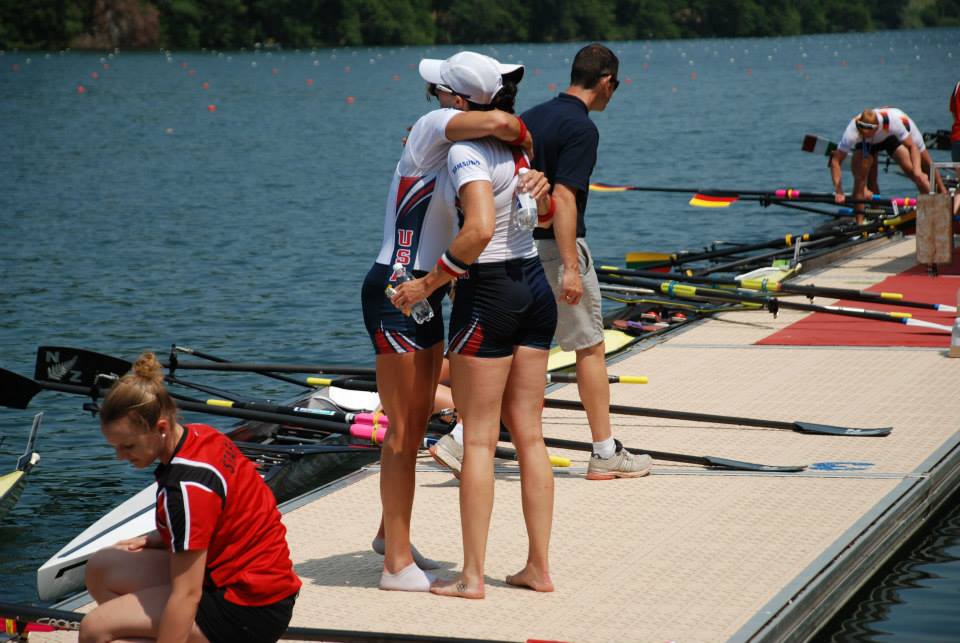
2014 University of Virginia Alumni Women’s 8+. Photo credit: Mary Nilan
A couple of weekends ago (October 18-19th) marked the 50th Anniversary of the Head of the Charles Regatta (HOCR). Like thousands of other loyal, devoted rowers I made the pilgrimage with my partner, Ellen Tomek to Boston to take part in this annual celebration. The Head of the Charles is the world’s largest two-day rowing event. Attracting over 11,000 athletes and nearly half a million spectators, this regatta is basically the Super Bowl of rowing.
This year I raced the Women’s Alumni 8+ on Saturday and the Directors’ Challenge Mixed Quad event on Sunday. These events are very much fun races for me and a great way to enjoy the weekend away from the pressures of everyday training for the women’s double. Just because they are “fun” does not mean they aren’t competitive. The Women’s Alumni 8+ has become especially fierce with several former and current National Teamers returning to race the Charles with their respective alumni boats.
For the past two years I have been fortunate enough to have an honorary seat in the University of Virginia Women’s Alumni boat, even though I was not a rower at UVA (I was a volleyball and softball athlete). Since the inception of the alumni races in 2009, UVA has won three Head of the Charles gold medals. Last year we beat the reigning champs, the University of Michigan, in addition to crushing their course record set the previous year. It was an awesome race, but I knew the Blue would be out for blood this year…and they got it.
Michigan stacked their boat full of National Team athletes, including my partner Ellen (which makes this ongoing rivalry all the more interesting). I’d be remiss if I didn’t mention that we had our share of former and current National Team athletes in the Virginia boat as well. Their coxswain steered a flawless course and they crushed us (and our 2013 course record) by a solid 18 seconds. We had to settle for second place out of 42 entries. Not too shabby, although I might still be a little bitter about the smack talking that went down as Michigan passed us in the last few meters before the finish line….
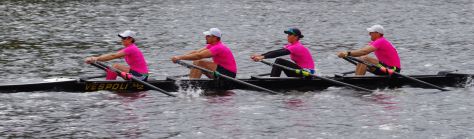
This year was also the second year I raced with Beat Cancer Boat Club in the Directors’ Challenge Mixed Quad event. My teammates and friends Brian Tryon, Mike Sivigny, and Michelle Nielsen came together last year to race in honor of all who have faced cancer and most especially for Brian’s wife, Pam Besteman, breast cancer survivor and founder of BCBC. Sunday was a blustery day with a prevailing headwind which made conditions slower and more difficult. We had a decent race, putting up the second fastest overall time and placing 4th with the age handicap-those dang handicaps.
Beat Cancer Boat Club in the Directors’ Challenge Mixed Quad. Photo credit: Robert Best
On top of being the largest two-day regatta, the Charles weekend has become the ultimate rowing reunion. For a few days, the city is literally overrun by giant, athletic men and women. As this was my fifth Head of the Charles to attend and fourth to race, the weekend has become an annual tradition and staple in my schedule. In my four short years of rowing, I’ve been lucky to have made friends and met so many great people from all over the country and world. I love heading to Boston, knowing I’ll get to see some old faces and probably make a new friend or two.
The Monday following HOCR, Ellen and I caught a 6am flight all the way back to Oklahoma City in time to get in two training sessions. Just like that, the “row-cation” was over. While I was utterly exhausted from the weekend and travel, I couldn’t help but feel rejuvenated in a way. While in Boston, I had the chance to reconnect with several of the people who played a big part in getting me to where I am today: from the Master’s women who I first rowed with at Riverfront Recapture, to Pam and Brian who literally taught me how to carry my first single, to the UVA coaches who continue to support me in so many ways even though I was never one of their athletes, and to my fellow National Team athletes scattered around the country who continue to inspire me to work harder every day. The good lucks, hugs of support, and congratulatory pats on the back really do go a long way, and I left the weekend revived and recharged, ready to take on a long, tough winter of training to prepare for next summer’s Olympic qualification.
Every rower has at least one thing in common. Other than pulling on one or two sticks and floating around in an expensive piece of carbon-fibre composite for a significant portion of our time, we all experience some sense of nomadism. It’s part of the job and an even more important part of pursuing the Dream.
A typical year will have you traveling across the country, first to a two to three-month training camp for the winter, back home for a few weeks, and then across the country again to compete at the National Trials in the Spring. You have another few weeks at home, which is just enough time to revive your water-deprived plants and put a hold on your mail. If you have a pet, they either hate you or have completely forgotten who you are. At this point you’ve just given up on the unpacking and packing charade and convinced yourself that living out of a suitcase is a skill you should continue to cultivate—even at home with your nice big closet and dresser of drawers. Now it’s time for the real fun: racing season. Maybe summer racing takes you to another country to compete at World Cups and then later, (of course, not before going back home first) to the World Championships. Or perhaps it sends you on the ultimate road trip, driving across the country to any and every regatta you can squeeze in. Regardless of your destination(s), it’s all for this crazy addiction we call a sport.
Following a month of competition and training in Europe, Ellen and I returned to train in Princeton, New Jersey. While Princeton still gets its share of heat and humidity, it’s nothing like the 100+ degrees (Fahrenheit) we’d be experiencing every day in Oklahoma City. We opted for the former to survive the remainder of the summer before heading to Amsterdam for the 2014 World Rowing Championships in just a few short weeks. When it’s all said and done, we will have spent less than three months over the past year in our actual apartment in OKC. I’m pretty sure at this point the house plants do hate us.
We’re no strangers to Princeton, having just moved to OKC from this quaint little college town last November. For the time that we are here, we’ve been lucky enough to take over the guest bedroom/office in the house that was once our home before we moved, catching up with our old roommate and fellow 2014 National Team member, Megan Kalmoe and her new roommate, Samantha Warren. It’s a happy home of four rowers sharing one tiny bathroom and little kitchen, but enough Netflix and HBO GO to keep everyone happy.
Despite the occasional chaos and headache that comes with always being on the road, the opportunity to meet different people, catch up with old friends, discover something new, and see the world from the seat of that expensive piece of carbon-fibre, is truly living the Dream.
The secret of change is to focus all of your energy, not on fighting the old, but on building the new. - Socrates
When I first sat down to write this post a few months ago, I could’t help but feel those odd, yet sometimes wondrous feelings of déjà vu. It seems the late summer transition into fall has always brought to me new challenges and significant change in my life. This year was no exception. It is telling that I am just now finishing this post; the past few months of “change” have been quite busy and to be honest, I had a difficult time finding the right words to fully capture all that occurred. Forgive me, this is going to be long but perhaps the most personal post I’ve written.
To back up this theme of change, I need to provide a little background. Four years ago I took a job promotion that moved me to New England and to the Connecticut River where I would eventually pull on my first oar. A year after that move, I made the critical decision to take on the challenge of training at the elite level to see where rowing could take me. I remember it well because it was at the USRowing National Team Identification Camp that fell on the weekend following my twin brother’s destination wedding. (I was that member of the wedding party spending two sessions per day in the hotel gym or running on the beach while everyone else was enjoying the benefits of an “all-inclusive” resort.) Nevertheless it paid off, and a year later I earned an official invitation to train at the USRowing Training Center in Princeton, New Jersey. (Are you following the year by year transitions yet?)
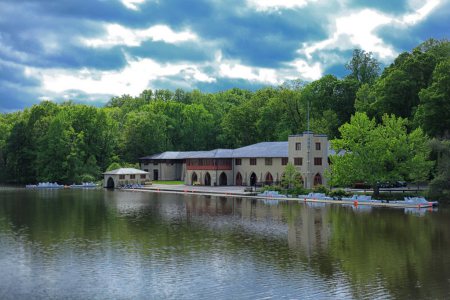
Princeton Boathouse. Courtesy of Aaron Cropper.
Boom. Life-changing step and I’m on my way to living the dream. In late October of 2011, I packed up what I needed and made the move away from my full-time job and promising start to a career at ESPN, close friends, and a comfortable home in Connecticut, to a dusty one-bedroom sublet in Princeton.
For most elite female and aspiring National Team rowers, this is the ticket. The cut to becoming one of the 20-25 athletes training in Princeton is a tough one to make. Beyond this initial huge and difficult step lies an even greater one. Not everyone at the Training Center is guaranteed a spot on the National Team. Many will come through the system not having ever made a boat. As with any athletic pursuit at this level, your time is limited, everyone is replaceable and nothing is ever guaranteed. For some, the opportunities are plentiful, and for others, you might have to fight for the one chance you’re going to get.
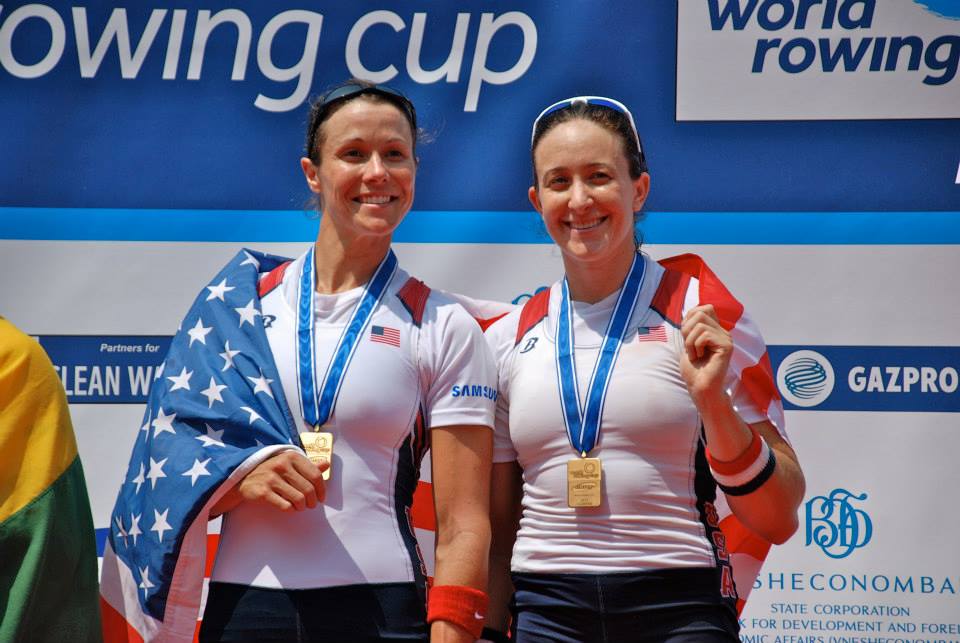
(L-R) Meghan O’Leary, Ellen Tomek; 2013 Samsung World Rowing Cup III Women’s Double Bronze Medalists
Looking back on the 2013 season, I would say it was an overall positive experience. Going into the year, my goals were to continue to improve each day, stay healthy, and perform well enough to make my first National Team. Of course there are other smaller goals along the way, but this was the general intended outcome. After dealing with another rib injury last fall that carried over into the winter, I was quite discouraged. One thing about training in Princeton, is that you are led to believe that you are only as good as your last workout. To some degree, this is true. And when you are injured, you feel completely out of the game. The Training Center can feel like and is at times, a dog-eat-dog environment. As one teammate appropriately describes it (and more specifically, describes selection), it can be a bit of a shark tank. Every day is a battle. The rules of war as well as your known allies and enemies are ever-changing. Get ready for The Hunger Games: Bloody Waters. In my short stint as a rower, I have quickly learned that rowing is absolutely and undeniably a team sport, but it is just as much about the individual.
On the second day of when official team training started back up in Princeton this past September, I found out life would be changing very quickly (again). The women’s double sculls event was essentially being removed from the Training Center in Princeton. My partner from the 2013 season, Ellen Tomek and I had the choice to stay and sweep to contend for spots in the eight, quadruple sculls, pair or four. Or as we had previously decided, remain as a unit and try to develop the double; but in result, be forced to find a new training location.
The reasoning? There would be no resources put toward the women’s double in Princeton, and therefore no opportunities to develop the boat if we were to remain there. I think it needs to be said that this wasn’t really a removal of resources; rather it was an admittance of the culture and structure of the Training Center in Princeton. What was previously hearsay would now be procedure. Over the past several years, separate from individual athletes or outside clubs, the double has never been a priority boat for the United States. Blog post to follow concerning that larger issue.
At the beginning of 2013, I knew I wanted to race the double. I’m what I like to call a “pure” sculler, with very little sweep experience (having never rowed in college). People often ask me, ‘why not go for the eight where you’re almost guaranteed a World Championship or Olympic gold medal at some point in your career?’ The women’s double has never brought home a World Championships or Olympic medal in the history of United States rowing. I guess you could say I like a challenge. What is that they say about the road less traveled? In the double, you are guaranteed to face some of the greatest rowers in the world, and that sounds pretty freaking awesome to me.
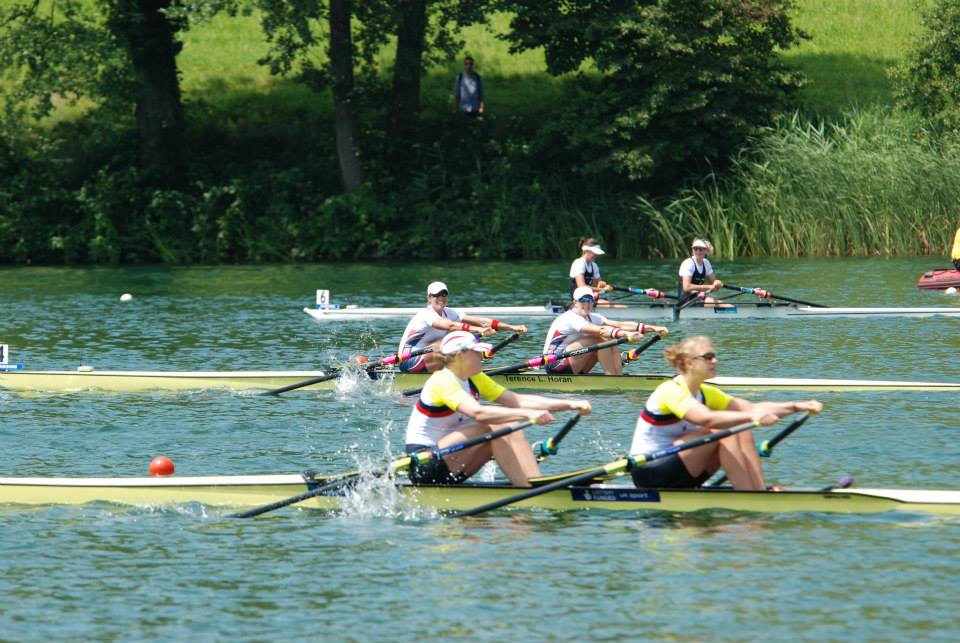
A Finals of the 2013 Samsung World Rowing Cup III
I also like the double because of its unique dynamic. It’s just you and one other person. It’s a marriage of absolute trust in and devotion to the other person because without them, you’re not going very far. Literally and figuratively. You can’t fight against them without being punished. There is no right or wrong in the boat; you both will be right or you both will be wrong in order to truly succeed.
And so I digress. Back to the point of all of this. Ellen Tomek and I won the National Selection Regatta #2, won a bronze medal at World Cup III in Lucerne-much to the surprise of well, probably everybody-and then had a mediocre, 7th place performance at the World Championships in Korea. It was a disappointment. I’ve already gone into the reasons as to why I believe we underperformed in a previous post, but a significant one that is relevant to this is that we were not given any priority by our representative body, the USRowing Training Center - Princeton. I say this as a statement of fact, not as a criticism. I knew this going into making my choice to row the double.
The United States is good at making a fast eight. Really good. We can throw together a boat full of rookies and set a new world record. We are beasts in the eight. The Princeton Training Center should and will continue focusing on the boats that can be developed successfully in a camp-like structure. The double on the other hand, requires a lot of time and development and along with that, a coach who can give that amount of time focusing on developing the boat. This is the primary reason for the removal of the boat from the Training Center. You look at the lineups of small boats that have stood on the medals podium and the majority of them have stuck together for years, building the boat over time. And behind them is a coach that has spent countless hours focused solely on them. It’s the same reason the top U.S. singles have trained independent of the Training Center. Specialty requires specialization. The smaller the boat, the more specialization required in order to be successful. Compare it to making a great quarterback or pitcher.
And so at the end of November, Ellen and I packed up our things and moved south to the Oklahoma City National High Performance Center. The months of September, October and November were a whirlwind of travel and decision-making all while trying to maintain a solid training regimen. Stress can be unbelievably damaging to training and a huge detriment to gaining speed. All we wanted to focus on was preparing ourselves for a solid 2014 season, not how we were going to move our lives 1,500 miles across the country.
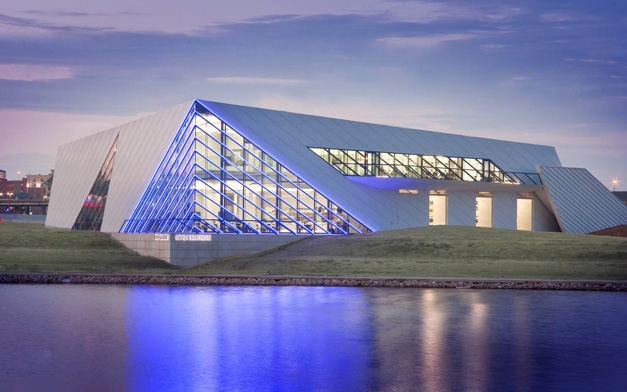
Devon Boathouse, Oklahoma City National High Performance Center
It wasn’t a flawless transition, but I think we handled it all fairly well and I’m happy to say we’re finally settling into our new home. Separate from the imminent chance of tornadoes, the freak ice and snowstorms, an earthquake, and the four scorpions I’ve already spotted, I think we’ve come to the right place. After the initial shock and oftentimes anger that change so often brings, this move has been a positive “reset” button. Though painful and difficult as it may be, you grow from positive and negative experiences alike.
Now it’s time to focus on building something new, building something great.