Tag Archives: National Selection Regatta

2014 National Selection Regatta II Recap

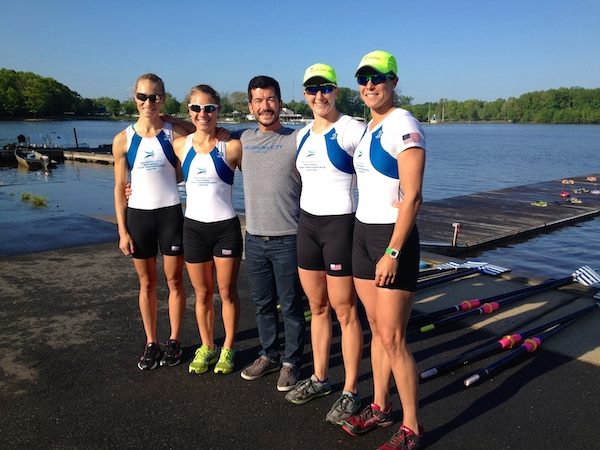
USRowing Training Center-OKC W2x and LW2x NSR II winners. (L-R Devery Karz, Michele Sechser, Jeremy Ivey, Ellen Tomek, Meghan O'Leary) Photo Credit: USRowing
USRowing Training Center-OKC W2x and LW2x NSR II winners. (L-R Devery Karz, Michele Sechser, Jeremy Ivey, Ellen Tomek, Meghan O’Leary) Photo Credit: USRowing

Last weekend concluded the 2014 series of USRowing National Selection Regattas (NSR) I and II. Held on Mercer Lake in Princeton, New Jersey, the NSRs provide opportunities for athletes to take the first step toward making the United States National Senior Team. The winning women’s and men’s crews of the pair, single, double sculls and lightweight double sculls are awarded the opportunity to compete at World Cup 2 or 3 to then qualify for the World Championships (and thereby solidify their spots on the National Team). The NSRs are also formatted as a step toward entrance into or ranking for big boat camp selection for the men’s eight and four; and the women’s eight, quadruple sculls, and four.

For my double partner, Ellen and me, the goal for NSR II was to win each race: take the fastest time in the time trial, win our semifinal, and of course, take home the all important win in the final. We were rested and healthy. Our race preparation pieces leading into the week had been solid, and the boat was moving well. We felt good. All that was left to to do was to execute.

The 1900-meter time trial on Thursday morning went off accordingly and we posted the fastest time (6:49.67) by nearly four seconds. The weather the following day for the semifinals was absolutely horrendous. In conditions like that, anything can happen. We fought our way down the course in an 18-mph crosswind with gusts up to 30-mph, survived a few diggers and one boat-stopping crab (by yours truly), but managed to finish comfortably ahead of the field in first place. The winning crew of the other semifinal, Stesha Carle and Gevvie Stone (SoCal Scullers/Cambridge Boat Club) had posted a faster time than us by just under two seconds.

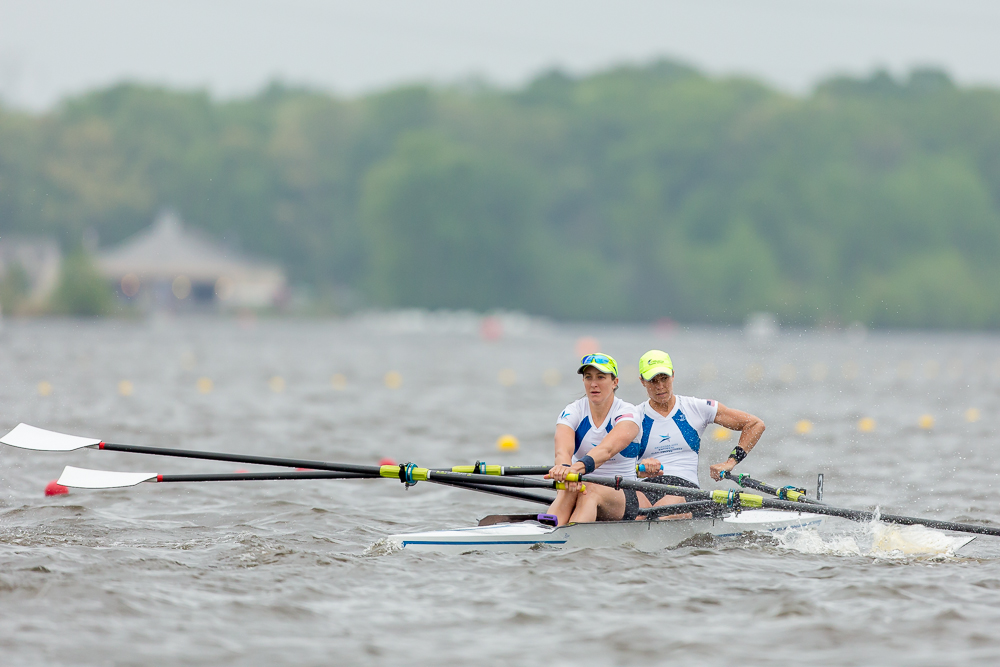
Fighting the horrendous conditions during the NSR II Friday semifinals. Photo credit: Erik Dresser
Fighting difficult conditions during the NSR II Friday semifinals. Photo credit: Erik Dresser

The morning of the final, the weather had thankfully calmed down and we arrived at the course to find a serene sunrise over flat water with the faintest puff of a breeze. The racing would be fair and fast. You can’t ask for a better finals day than that. Ellen and I won in a time of 6:54.47, nearly five seconds ahead of the next crew of Carle and Stone in second (6:59.20), followed by Lindsay Meyer and Nicole Ritchie (Seattle Rowing Club/Vesper Boat Club) in third (7:00.81).

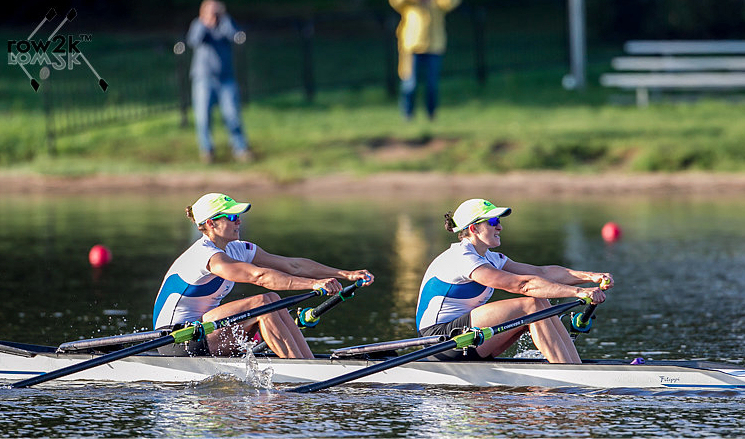
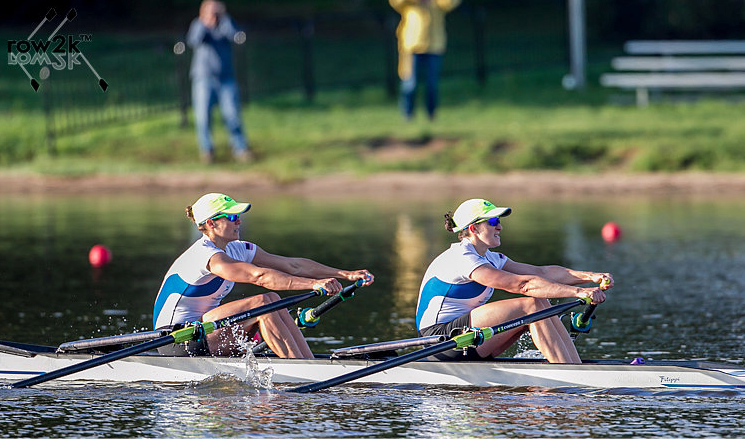
Saturday Finals, NSR II
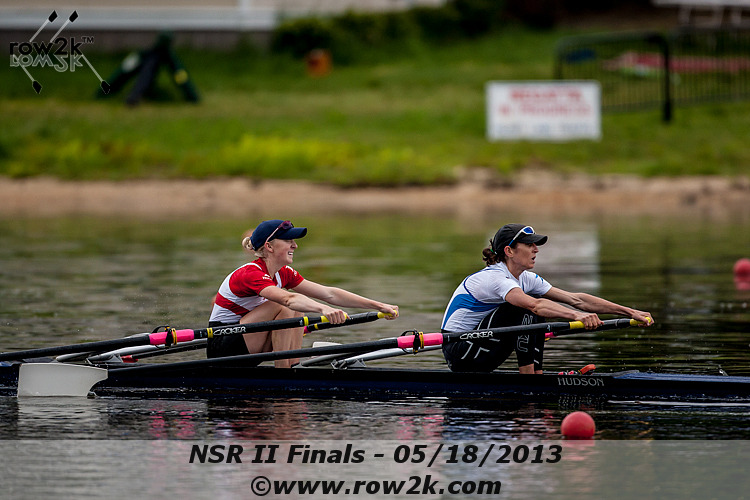
Saturday Finals, NSR II. Photo credit: row2k

In a few weeks, Ellen and I will travel to Aiguebelette, France to compete at World Cup 2 to try and qualify for the World Championships taking place later this summer in Amsterdam. Congratulations to all of the crews who punched their tickets to a World Cup last week. Step one of many more to come. Back to work to go fast and represent Team USA.

Every Day Counts.

2013 National Selection Regatta #2 Recap

As quickly as National Selection Regatta #1 flew by, so has National Selection Regatta #2. Time flies when you’re going fast. NSR #2 events included the men’s pair, men’s double, women’s double, lightweight men’s double, and the lightweight women’s double. The lightweight men’s pair raced as a speed order event. With NSR #1 and #2 wrapped up, we’re one step closer towards naming the 2013 United States Men’s and Women’s National Rowing Teams.

What does the NSR mean? The winning boats gain the opportunity (if they choose to accept) to compete at one or both of the upcoming World Rowing Cup events, and with a top four or top half finish, earn a berth on the U.S. National Team that will compete at the 2013 World Rowing Championships August 25-September 1 in Chungju, South Korea.

Like NSR #1, NSR #2 also featured top performances from the men and women at the United States Training Center. The Men’s Pair featured an all USRowing Training Center A Final with the six boats finishing within less than ten seconds of each other. If I hadn’t already been in the cool down area cooling down from my own race, I would have loved to have seen this grueling hard-fought 2,000-meter race between the Training Center men. 2012 bronze medalist from the Men’s Four, Henrik Rummel paired up with 2012 Team Alternate Mike Gennaro to take first place ahead of Seth Weil and London Olympian Grant James in second, followed by London Olympian Steve Kasprzyk and Max Goff in third.

Taylor Goetzinger and Meghan Musnicki, Women's Pair. Photo courtesy of row2k.com
Taylor Goetzinger and Meghan Musnicki, USTC Women’s Pair. Photo courtesy of row2k.com

There were only five total entries in the Women’s Pair, all from the USRowing Training Center. After a second place finish in the Time Trial behind Vicky Opitz and Felice Mueller, Taylor Goetzinger and 2012 gold medalist from the Women’s Eight Meghan Musnicki took first in the A Final, switching places with Opitz and Mueller who crossed the line less than two seconds later in second place. Grace Luczak and Lauren Schmetterling took third. It was another tight finish with the top three boats separated by about only two and half seconds.

The Men’s Double didn’t include any Princeton Training Center athletes, as the USRowing Training Center in Princeton is primarily a sweep camp for the men. Shoutout to Willie Cowles and fellow Virginia grad, Matt Miller from Potomac Boat Club for taking first place.

The Women’s Lightweight Double was a lot of fun to watch. It wasn’t that it was a tight finish like the men’s pair and women’s pair, it was the dominating factor in which three-time national team athlete and silver medalist (who used to row open-weight), Kate Bertko and London Olympian, Kristin Hedstrom won the event. These are two experienced scullers who know how to move the boat and have teamed up for the first time (literally, their first row together was just a couple of days before the NSR #2 Time Trial). I’m super pumped to see this boat continue to come together and what kind of speed they put up internationally. The United States hasn’t medaled the lightweight women’s double since Sydney 2000 (Bronze; Christine Collins / Sarah Garner). Watch out Rio 2016.

Kristin Hedstrom and Kate Berko, Lightweight Women's Double. Photo courtesy of row2k.com
Kristin Hedstrom and Kate Berko, Lightweight Women’s Double. Photo courtesy of row2k.com

The Lightweight Men’s Double was won by composite entry of Malta Boat Club’s Colin Ethridge and Vesper’s Peter Alter.

The Lightweight Men’s Pair was another speedy race. In an all USTC-Oklahoma A Final, top pair Robin Prendes and Anthony Fahden won the event as well as the overall percentage (GMS = Gold Medal Standard) of the regatta with a time of 6:46.16. To put it into perspective, their time would have put them in 5th place in the heavyweight Men’s Pair A Final, beating out 8 other boats. Nicely done.

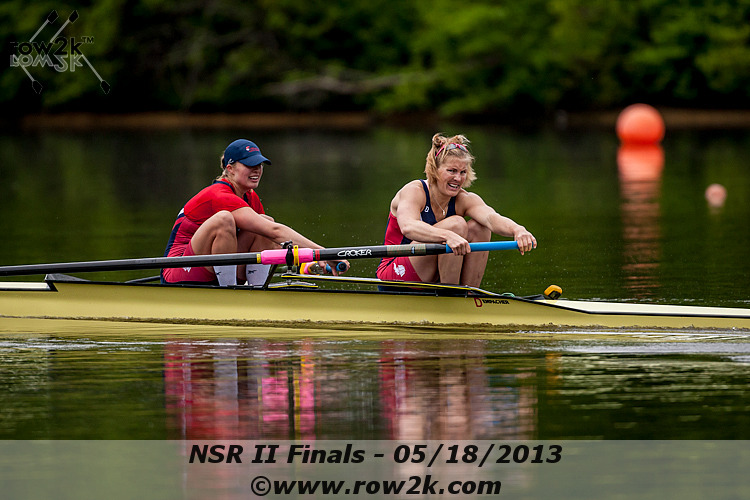
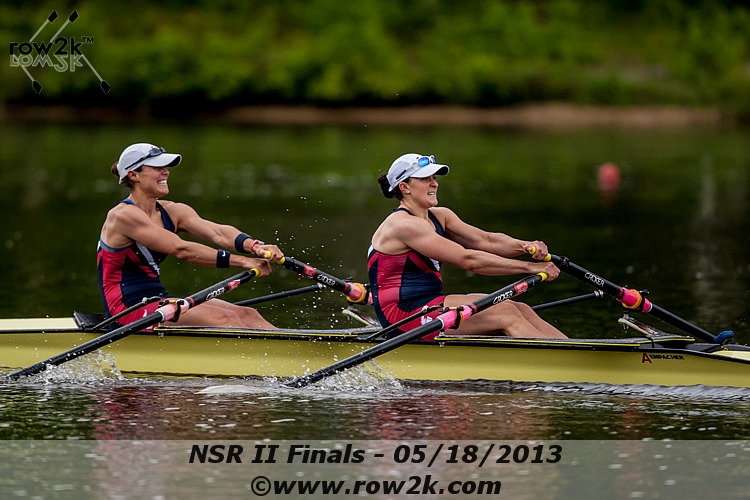
Last, but certainly not least…the Women’s Double was won by 2008 Beijing Olympian Ellen Tomek and myself, Meghan O’Leary from the Princeton Training Center. We finished about five seconds ahead of the composite entry of London gold medalist Esther Lofgren rowing for Potomac Boat Club and four-time National Team member Stesha Carle, rowing for California Rowing Club. Composite entry of USTC-Princeton’s Liv Coffey and Vesper Boat Club’s Grace Latz took third.

Meghan O'Leary and Ellen Tomek, USTC Women's Double. Photo courtesy of row2k.com
Meghan O’Leary and Ellen Tomek, USTC Women’s Double. Photo courtesy of row2k.com

On a personal note, racing and winning my first NSR #2 was a thrill. When is winning not exciting? In the timeline of achieving goals, it was step one toward making my first National Team. Tomek and I will go on to race at the World Cup in Lucerne, Switzerland to hopefully qualify and then race at the World Championships. As a boat, we have a lot of potential and speed to gain. I’m excited to see what we can do with a little time and more racing experience.

As with many of the other crews coming out of both NSR #1 and #2 as well as all of the athletes at the Training Center, we return to the water and the weight room without skipping a beat. It’s already been a grueling week of training filled with the ups and downs that rowing bestows upon us. Time to work harder than ever.

Every Day Counts.

2013 National Selection Regatta #1 Recap

And just like that, the 2013 National Selection Regatta #1 is over. Monday began another week of training; things falling right back into place as it was before race week. It’s sort of like that moment after finishing Thanksgiving Dinner when you look down at your clean plate and around the table at the empty serving dishes. So much effort goes into this “big event” that comes around just once a year. Weeks, maybe months of planning; days of traveling; days of cooking; and then it’s all over in a fraction of the time spent preparing for it.

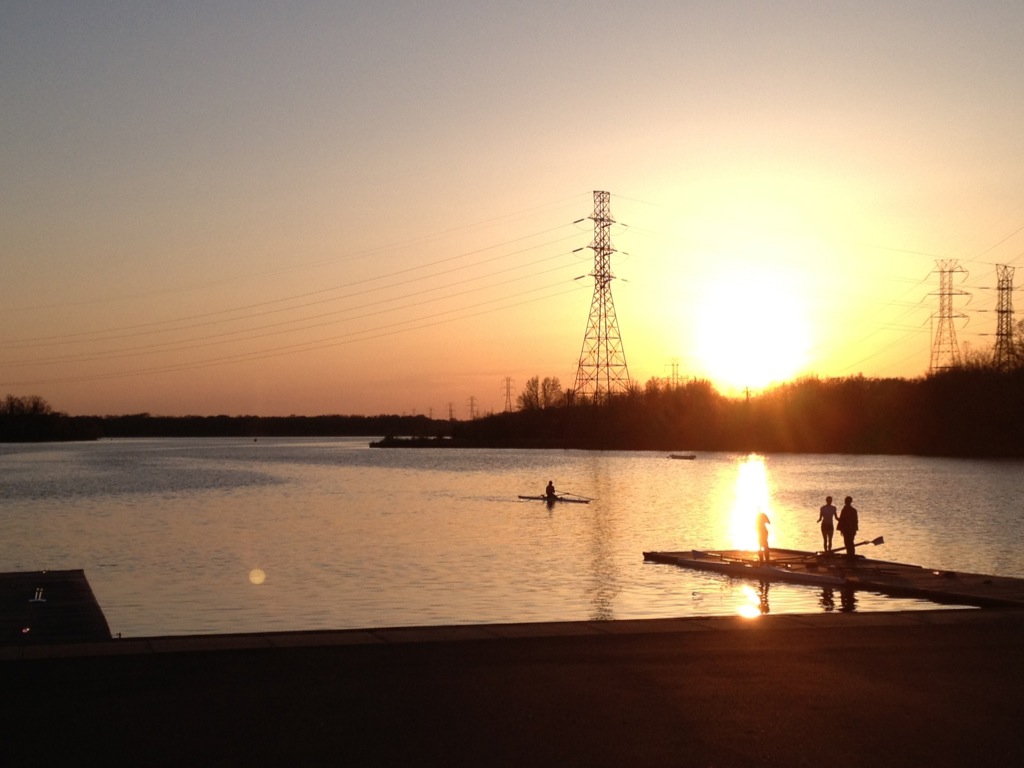
Lake Mercer Sunset, 2013 NSR #1

For many of us, we had been focusing on this race for months. Every training session, every erg test, every piece on the water was a step toward preparing and ensuring that we show up in top form for NSR #1. It’s the opportunity to test yourself and see how you stack up against athletes outside the Training Center. Of course we all want to win, but for everyone else who doesn’t take that coveted first place spot and go on to race the single at a World Cup and possibly the World Championships, NSR #1 also acts a measure for big boat selection later in the year. So if you know you’re most likely not going to win the whole thing, you want to make sure you get as close as you can.

This year’s NSR was a solid one for the six women representing the USRowing Training Center in Princeton: Eleanor Logan, Megan Kalmoe, Ellen Tomek, Olivia Coffey, Vicky Opitz and myself. Beginning with Thursday’s Time Trial, the USTC athletes opened the regatta by posting the six fastest times in the Women’s 1x event. Strong performances continued into the afternoon heats with all six women placing within the top two or top three of their respective heats and advancing to the semifinals the following morning.

By the end of Saturday’s Finals racing, the USTC athletes had finished the regatta just as strong as they began it, dominating their respective races. The A Final was stacked: five of the six women were multi-year National Team members including four Olympians: two Gold medalists in the W8+ (Logan a 2-time Gold Medalist; Esther Lofgren, 2012 Gold medalist rowing under Potomac Boat Club); 2-time Olympian and 2012 Bronze medalist in the W4x Megan Kalmoe; and 2008 Beijing Olympian Ellen Tomek. This leaves Stesha Carle, 4-time National Team member and myself, with zero National Team experience. I couldn’t have been more excited, anxious, nervous (insert adjective here) to be going up against such a formidable field of competitors.

Logan took first in the A Final, winning the NSR and thereby earning the right to compete at a 2013 World Cup event this spring to possibly qualify herself to go on and compete at the World Championships. Tomek and Kalmoe took 2nd and 3rd followed by yours truly in 4th place. Opitz won the B Final with Coffey hot on her heels taking 2nd place.

All in all it was a great few days of racing for the USTC athletes. Although we are always competing with each other and continuously ranked against one another, it is exciting to have the opportunity to root for your teammates and want to see them go fast and do well…just not as fast as you.

Every Day Counts.

Attention…Row!

The water has finally thawed, the days are getting longer, and you’ve started leaving your pogies at home. You’ve dug out your summer training gear, replacing your long-sleeve fleece for a tank top (maybe we’re not quite there yet, but one can dream for warmer weather). Your pride for the calluses on your hands has been rekindled. At last, spring racing season is upon us.

The USRowing National Selection Regatta I this week marks the beginning of our racing season for the year and the first selection regatta of the 2016 cycle. The Women’s and Men’s 1x will be raced as part of NSR I, while the Men’s 2-, Women’s 2-, Men’s 2x, Women’s 2x, Men’s Ltwt 2-, Women’s Ltwt 1x, and Men’s Ltwt 1x are Speed Order Events. This year’s Women’s 1x event lists 18 athletes from seven different clubs/affiliations.

When racing the single, race prep becomes a personalized process, one you figure out and fine tune with the more experience you gain. Being a member of the United States Rowing Training Center, we have our prescribed workouts and scheduled practices as a team, but everyone approaches race day (or week) in their own unique way.

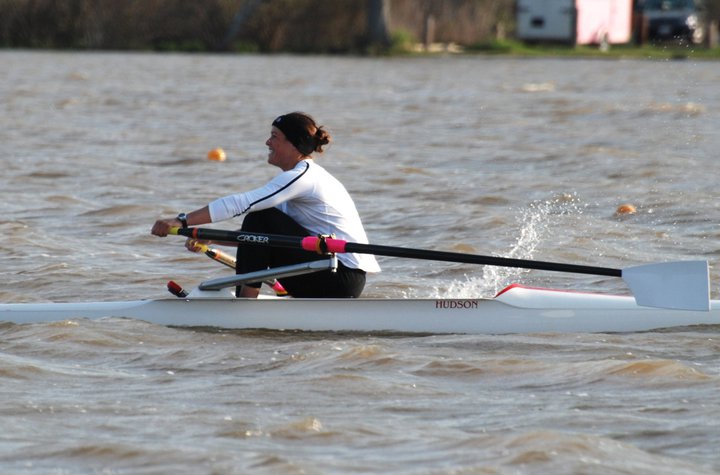
Looking ahead to this week’s racing, I couldn’t help but think back on the handful of races I have under my belt. My first National Selection Regatta was only two years ago. I had been rowing all of maybe four months total…as in ever before in my life; my time spent in the single alone amounted to three, maybe four weeks. I remember launching for the W1x Time Trial from the dock at Mercer Lake, white knuckles wrapped tightly around my handles, my shoulders probably up near my ears, and thinking to myself “just don’t end up IN the water.” The weather that day was absolutely terrible and worsening by the minute. By the time I lined up to head down the course, white caps were ripping across the lake. I was terrified. I took 31st place out of 33 racers that day. Needless to say I did not get to advance to the heats, but I had completed my first run down a 2,000-meter course in my single and met my personal goals of: 1) not flipping; and 2) not placing last. Everyone starts somewhere, right? Check out the picture below that I found from the 2011 NSR. I think the expression on my face sums it all up rather nicely.
Fast forward two years later and so much has changed. Now that I have a little more racing experience and a higher set of expectations for myself, my approach to this year’s NSR is slightly different from 2011. While I won’t give away any training secrets or divulge too much of my own personal secret sauce, here is a very general approach to racing prep and getting ready to go fast.

Hydrate.
You’ve heard it from your coaches a million times over: hydrate, hydrate, hydrate. The tricky part about being hydrated is that you can’t take care of it in a day. It’s a process and something you have to be consistent with. Waking up on racing day and downing a couple of gallons of H20 won’t exactly do the trick. Not to mention you’ll wear yourself out running to the bathroom 10 times before you even get to the racecourse. Hopefully you’ve already developed wonderful hydration habits, but heading into race week be extra diligent about putting those fluids into your body. I try to make sure I always finish the water and/or Gatorade I pack for training sessions. In between practices, be mindful of continuing to hydrate. For some people, water can be boring so try to spice it up a bit with (healthy) things you like to drink. This will make it easier. Personally, I like to stock up on ZICO chocolate flavored coconut water. It’s been a little bit colder the past few days so I’ve been fixing myself lots of tea and decaf coffee. Keep a water bottle by your bed at night. Sip on it as you’re reading or watching TV before you fall asleep. If you wake up in the middle of the night thirsty or to take a trip to the bathroom, you already have some water handy.
chocozico

Rest.
This is hopefully a no-brainer. Rowers love their sleep, and with good reason. Rest and sleep is vital to the body’s recovery process and replenishing energy stores. Plan ahead and try to clear your schedule as much as possible during race week so that you aren’t caught staying up late with work or social engagements. Set a hard bedtime and stick to it. Try to adjust your sleeping schedule in advance so that you don’t throw your body off too much during race week (it’s already dealing with enough having to push through possibly multiple 2,000-meter races). So if you know you have to be up at 5am every morning during race week-and you’re not used to waking up at that time-start waking up a little earlier the week leading up to racing (and theoretically going to bed sooner so that you aren’t losing sleep).

E-A-T.
An obvious one but perhaps one of the most important. Fuel your body with foods you know it runs well on. This can be a bit of a trial and error process for racing but you know your body better than anyone else. Get plenty of protein, carbs and eat your fruits and veggies. If you’re traveling to a race and staying in a hotel, try staying in one that has a kitchen (or microwave and mini fridge). That way you can stock up on plenty of snacks and easily accessible food that you prefer. Relying on eating out at restaurants can be exhausting (not to mention expensive) and sometimes limits you to food choices you wouldn’t normally make.

Be prepared.
You’ve spent all this time training and preparing your body, now make it even easier on yourself by preparing yourself with the easy stuff. Know the regatta rules, course traffic pattern, race times, etc. Take the time to research about the course: what kind of body of water is it? Is there a current or flow? What are the weather conditions supposed to be like during racing? In racing, there are many factors you can’t control, but at least you can control how you prepare for them.

Visualize Success.
Visualization; meditation; imagery; mental rehearsal. Not everyone buys into these tactics, but they have been proven to contribute to many athletes’ success. Whatever term you use for it, the mental practice of seeing yourself in the race can help you to better prepare for when you are actually in the race. Rehearse your race plan, imagine yourself at the start line, visualize your moves and how you’ll react to any unexpected events that could possibly occur during the race. If you catch a crab off the start or find yourself a length down going into the last 500 meters, you’ve already mentally experienced this and know how to handle it. Why not train the mind as we train the body?
foamroller
Body Work.
Keep up with your stretching routine, get a massage, ice those nagging ailments, and spend some time on the foam roller. These are all things that are hopefully already a part of your routine. With endurance sports like running, cycling, or in this case, rowing your body is your most important instrument. Keeping your body fine-tuned requires a lot of work. Taking the time to properly warm up, cool down, and manage any injuries is just as important as eating right, hydrating, and training hard.

Contain the crazy…but not too much.
Everybody handles the “taper” differently. Not everyone tapers for racing, but if you do and if you have in the past, you may have experienced what I call the “crazies” caused by the excess energy you have from a few days of lighter training than you’re used to. Some people feel great, some people feel pretty crappy, and some people don’t feel any different than they do during a normal training week. Be prepared to feel bored, loopy, antsy, and even moody. Find a new show to watch or rent a few movies, buy a new book, pick up a new hobby like knitting or download Words with Friends or Scrabble on your smartphone; I promise you’ll become addicted. Most importantly, positively channel the energy and be able to unleash it all on the water.

Finally, enjoy the experience. It’s racing! As rowers we train, train, train. Relative to the time spent practicing, we have very few opportunities to actually race. Relish the chance to put all that hard work to use. Go fast.

Every Day Counts.

Letting it Happen…just like at the Catch

Training Camp #2 concluded this past Saturday as “my training family” and I pulled out of Aiken, South Carolina and onto I-95 ,headed back north to Connecticut. Last week was an important lesson in the importance of patience and the undeniable significance of timing. Things truly happen at their own pace and in many instances, beyond our control. Whether it is in our professional, personal, or athletic worlds, we only have so much control over limited things in our lives. When we force or attempt to press on certain issues, objects, relationships, or whatever they may be, those things tend to only push back and become even more difficult for us to handle. Every force has an equal and opposite force (reaction), right?
 
Aiken, SC Sunrise - 2011 Training Camp


Just like at the catch, simply letting the blades drop into the water, you can’t force it (as I seem to be doing right now). When you force this inevitable part of the rowing motion, things go awry. Balance can be compromised, you dig the blades too deep into the water, and your stroke becomes inefficient and ineffective. Rowing is power, but rowing is very much finesse. I’ve got the power down, but allowing for finesse and trusting that certain things will happen is coming a bit slower. This concept serves as an interesting metaphor for other facets of my life. Patience,  timing, and learning to be comfortable with just letting things happen- who knew rowing would drive home such big life lessons.

I completed my first NSR (National Selection Regatta) time trial this morning in what I hope will be the absolute worse rowing conditions I ever have to row in for a very long time. Brutal. Mind you, I’ve yet to actually compete in a full-on 2,000 meter race. Not to worry, this will come tomorrow morning. I didn’t make it into the Heats but managed to not finish last. There is a small victory in that. Success takes time and while I’ll never be of the mindset to sit back and let success happen, I do need to remember an important lesson I learned in all my years of ball sports… Let the game come to you.