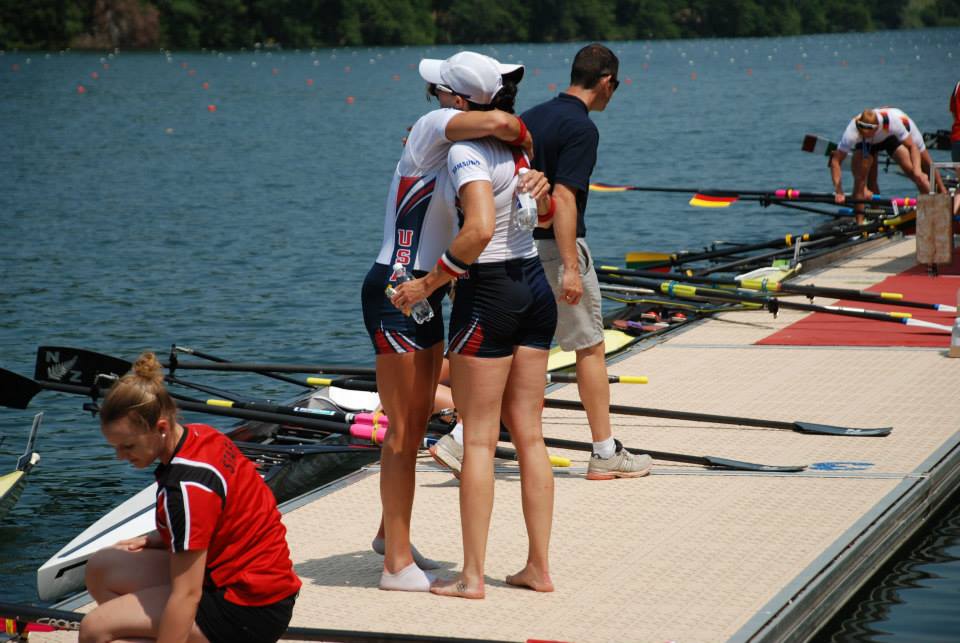
Every rower has at least one thing in common. Other than pulling on one or two sticks and floating around in an expensive piece of carbon-fibre composite for a significant portion of our time, we all experience some sense of nomadism. It’s part of the job and an even more important part of pursuing the Dream.
A typical year will have you traveling across the country, first to a two to three-month training camp for the winter, back home for a few weeks, and then across the country again to compete at the National Trials in the Spring. You have another few weeks at home, which is just enough time to revive your water-deprived plants and put a hold on your mail. If you have a pet, they either hate you or have completely forgotten who you are. At this point you’ve just given up on the unpacking and packing charade and convinced yourself that living out of a suitcase is a skill you should continue to cultivate—even at home with your nice big closet and dresser of drawers. Now it’s time for the real fun: racing season. Maybe summer racing takes you to another country to compete at World Cups and then later, (of course, not before going back home first) to the World Championships. Or perhaps it sends you on the ultimate road trip, driving across the country to any and every regatta you can squeeze in. Regardless of your destination(s), it’s all for this crazy addiction we call a sport.
Following a month of competition and training in Europe, Ellen and I returned to train in Princeton, New Jersey. While Princeton still gets its share of heat and humidity, it’s nothing like the 100+ degrees (Fahrenheit) we’d be experiencing every day in Oklahoma City. We opted for the former to survive the remainder of the summer before heading to Amsterdam for the 2014 World Rowing Championships in just a few short weeks. When it’s all said and done, we will have spent less than three months over the past year in our actual apartment in OKC. I’m pretty sure at this point the house plants do hate us.
We’re no strangers to Princeton, having just moved to OKC from this quaint little college town last November. For the time that we are here, we’ve been lucky enough to take over the guest bedroom/office in the house that was once our home before we moved, catching up with our old roommate and fellow 2014 National Team member, Megan Kalmoe and her new roommate, Samantha Warren. It’s a happy home of four rowers sharing one tiny bathroom and little kitchen, but enough Netflix and HBO GO to keep everyone happy.
Despite the occasional chaos and headache that comes with always being on the road, the opportunity to meet different people, catch up with old friends, discover something new, and see the world from the seat of that expensive piece of carbon-fibre, is truly living the Dream.
Hello from Lucerne (Luzern)! It has been a busy couple of weeks prior to our arrival here in Switzerland just a few days ago. I wish I could keep this short, but the first week alone was enough for a lengthy and long overdue update. It’s hard to believe Ellen and I are just over halfway through a month of training and racing in Europe. So far we’ve done it all: Planes, Trains and Automobiles…and let’s not forget the important one, Boats. It’s been a ton of fun, exhausting, and at times stressful and difficult; but most importantly, we’re getting the valuable race experience we came here for.
Our “Eurotrip 2014” began on Saturday, June 14 with our traveling companions, the lightweight women’s double of Devery Karz and Michele Sechser and our coach Jeremy Ivey. We took a very early morning flight out of Oklahoma City to Newark, New Jersey where we enjoyed a six hour layover before departing for Geneva, Switzerland later that evening. Best way to kill that much time? Find a local gym that will accept guest day passes and squeeze in a solid workout and shower. Seriously. Best decision ever. The workout itself broke up the grogginess of a full day of travel as well as got the endorphins flowing so we didn’t feel as terrible after the eight hour flight filled with crying children, variable sleep, mediocre food, and dehydration. And as elite rowers, days lost to traveling oftentimes equates to missed valuable training days so it was great to feel like we hadn’t wasted an entire day. Special thanks to ClubMetro Newark for supporting Team USA and welcoming us into their fitness facility!
After landing in Geneva on Sunday morning (June 15), we met the rest of the USRowing conglomerate who had traveled on a separate flight, before loading onto a large tour bus that took us an hour and half south across the border into France to the small town of Aix-Les-Bains nestled in the Alps region on Lac du Bourget. Including all athletes, coaches, and other related personnel, Team USA included about 50 people total, one of the larger groups we’ve traveled to a World Rowing Cup.
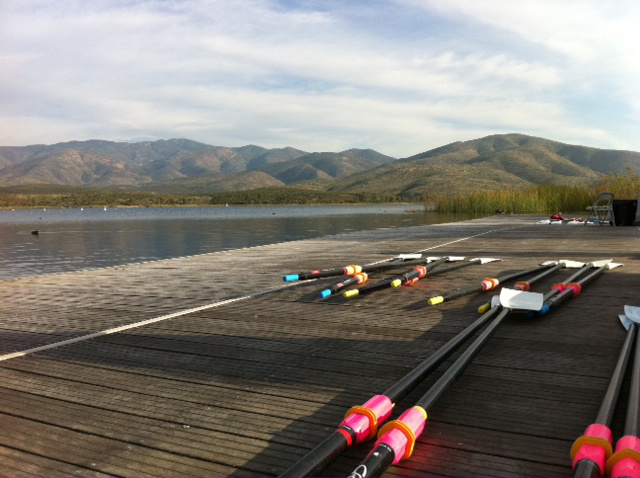
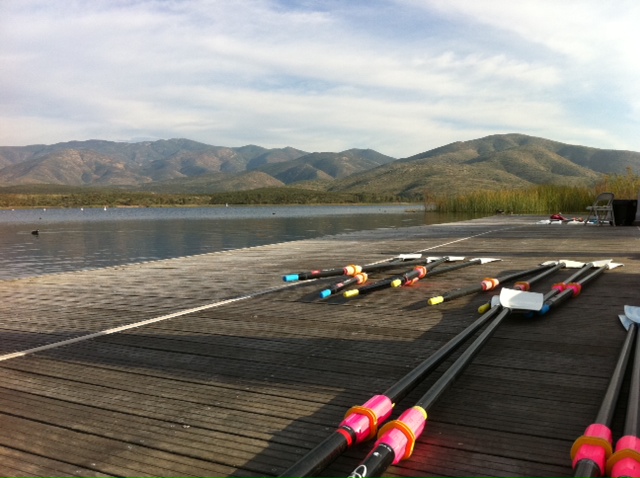
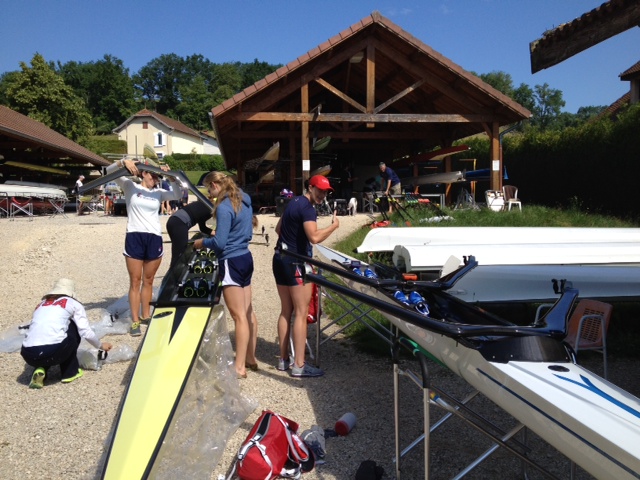
Rigging the boats for training at Aviron du Lac Bleu in Paladru, France.
World Cup 2 took place on the beautiful Lac d’Aiguebelette June 20-22. The course didn’t open to outside countries for training until June 18 which posed a problem for getting those critical first strokes in to adjust to a new boat, new water, and shake off the sometimes paralyzing jet lag. Fortunately, we had arranged to train at an alternate location out of a nearby (and very hospitable) club, Aviron du Lac Bleu located in Paladru for the two days we weren’t allowed to be on Aiguebelette. It was about a 75 minute trek from the hotel which made for long days, and the open water and variable conditions made for bumpy rowing, but we made it work.
To put it mildly, the week leading up to racing didn’t go exactly as planned. (Really, in life when do things ever go exactly as planned?) Race week is already stressful enough so when you hit those bumps along the way, your blood pressure tends to irrationally skyrocket and the crazy eyes come out. Despite some challenging issues, by the morning of our first race Ellen and I were prepared and confident as we paddled to the starting line.
The heats were unique in that they were conducted in a time trial format (as opposed to six boats across racing). At least once during each Olympic quadrennial, FISA will simulate the time trial to ensure officials and crews are prepared in the event that it may be necessary (most likely due to weather conditions that would prevent fair racing). This way of “racing” is not exactly ideal because you can’t truly gauge your speed off of other crews; you’re basically racing the clock, hoping you put up the fastest time. In our time trial heat, we took second behind Australia, a fast crew which had taken gold at the first World Cup in March. Our finish advanced us straight to the semifinals to be raced the next afternoon.
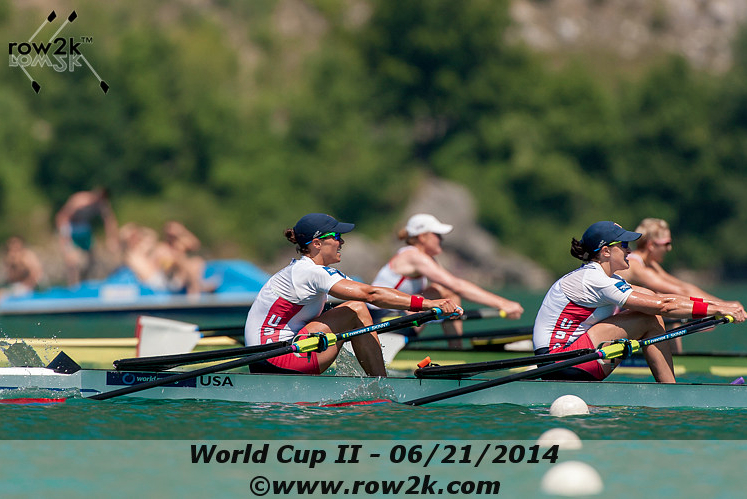
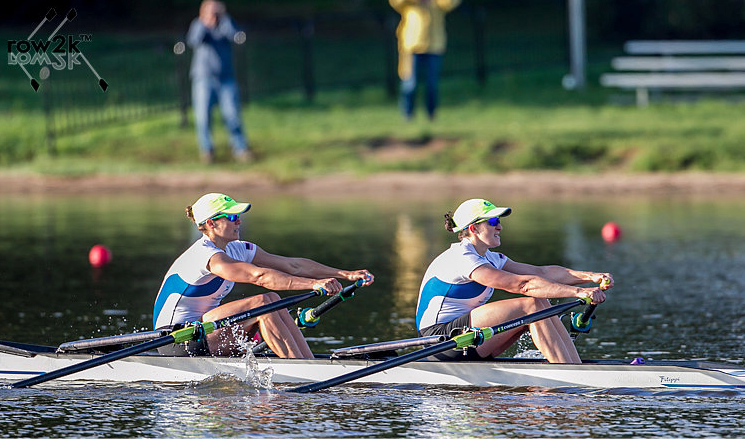
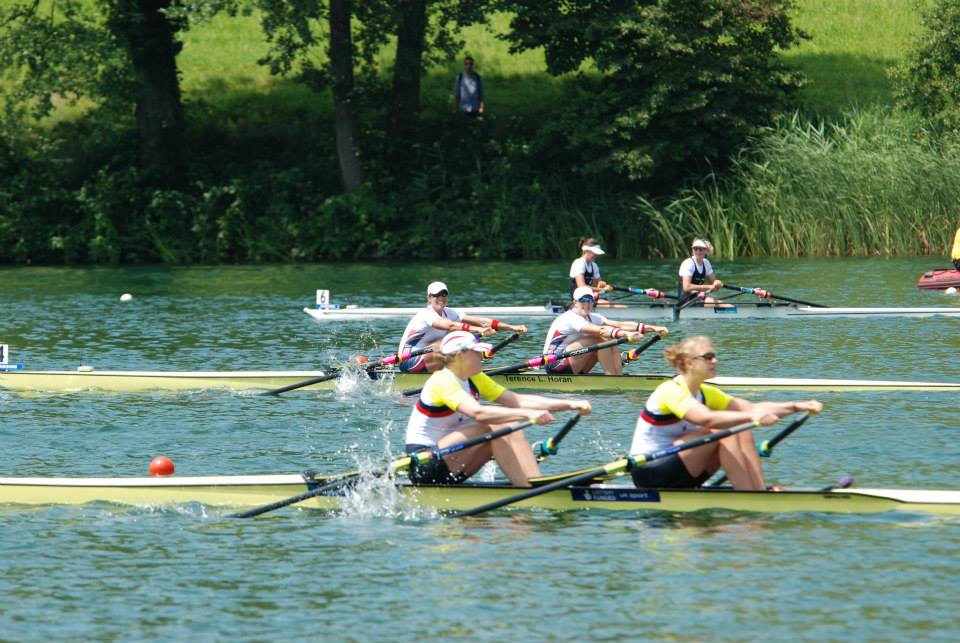
Final strokes of our semifinal at World Cup 2. (Photo courtesy of row2k.com, Erik Dresser)
The semifinal was a bit more exciting: side by side racing and we were lined up against a very fast Polish double-the 2014 European Champions-along with Great Britain, China 1, China 2, and Finland. We needed to place in the top three to qualify for the A Final as well as secure our seats on the 2014 United States National Team. This was a big one. We fought our way down the course, neck and neck with Great Britain trading places for second and third, finally passing through them in the last five hundred to take second, less than half a length behind Poland in first. We were pumped. We had raced well enough to make the A Final and to be awarded a decent lane as well as officially punched our tickets to the 2014 World Championships!
The A Final took place on Sunday, June 22. Our rowing had been coming together better and smoother with each day as we settled into the new boat and fine-tuned some tricky rigging. Having officially qualified for the National Team and with that little bit of weight off our shoulders, we were ready to lay it all out in the final which was stacked with nothing but strong, fast crews.
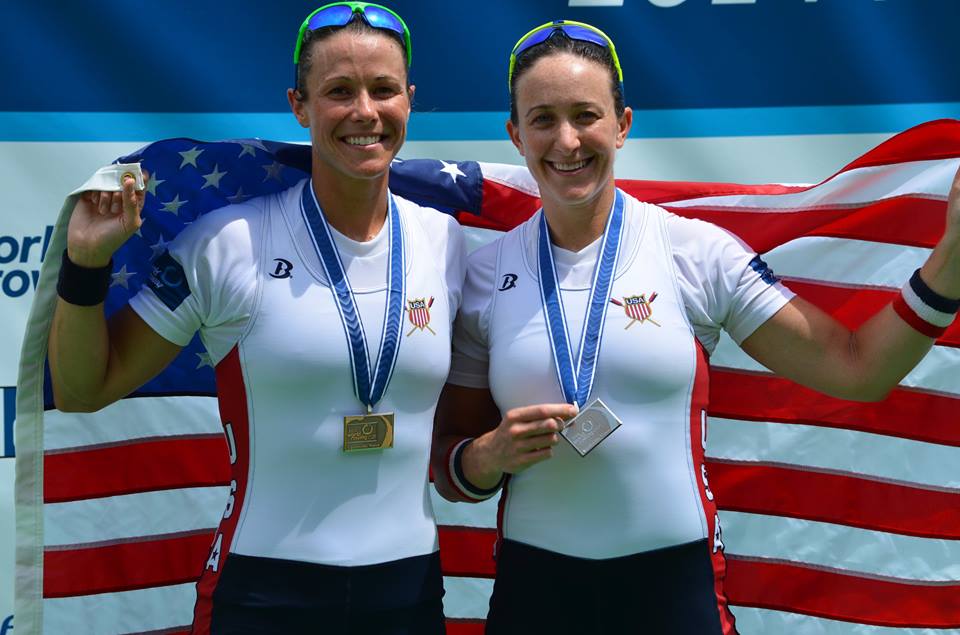
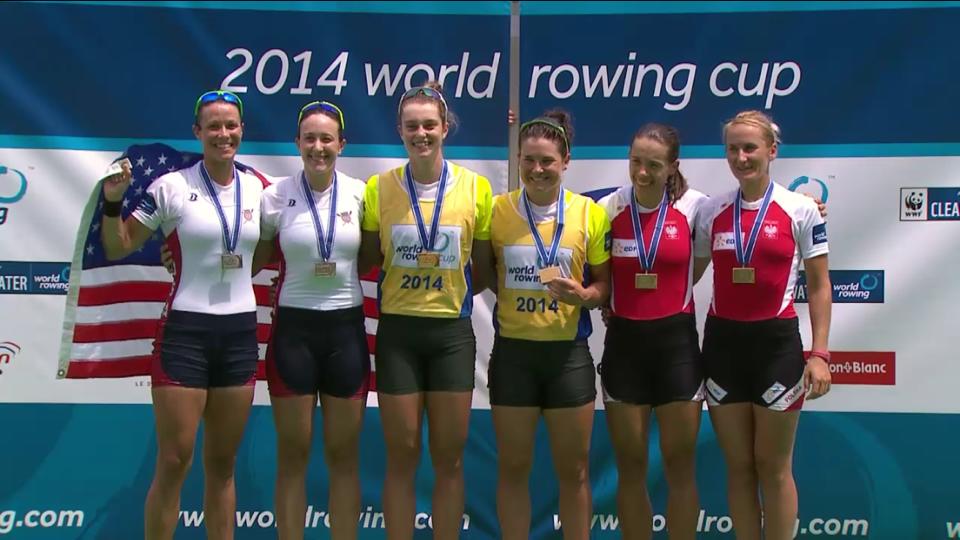
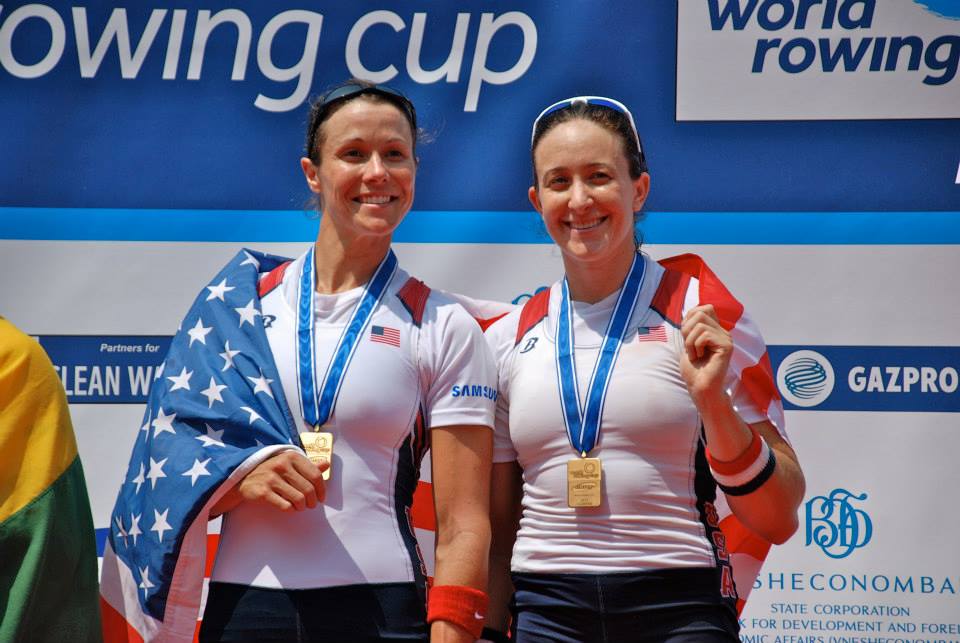
2014 World Cup 2 Women’s Double medalists (L-R: United States, Australia, Poland).
From the competitive racing seen in the heats and semifinals, this race promised to be an all out battle to the line, six boats across. As we pulled into the starting dock in lane five, I looked to the left: the Netherlands, Belarus, Australia and Poland; glanced to the right: Great Britain.
We blasted off the line at a 51 (insanity…thanks, Ellen), determined to stay up with Australia and Poland, who would surely be leading in the first 500 meters. As expected, the race was a 2,000-meter all out battle. Australia led from start to finish with Poland in second until we made a decisive push coming into the third 500. We made a run at Australia in the last 250 meters, finishing just a half length behind to take silver. All crews finished fast with first, second and third separated by less than a boat length and the entire field within seven seconds of each other. For Ellen and me, it was our second World Cup and best international finish as a crew. We were very pleased and proud of our performance and even hungrier to take that next step. Check out the replay of the race HERE.
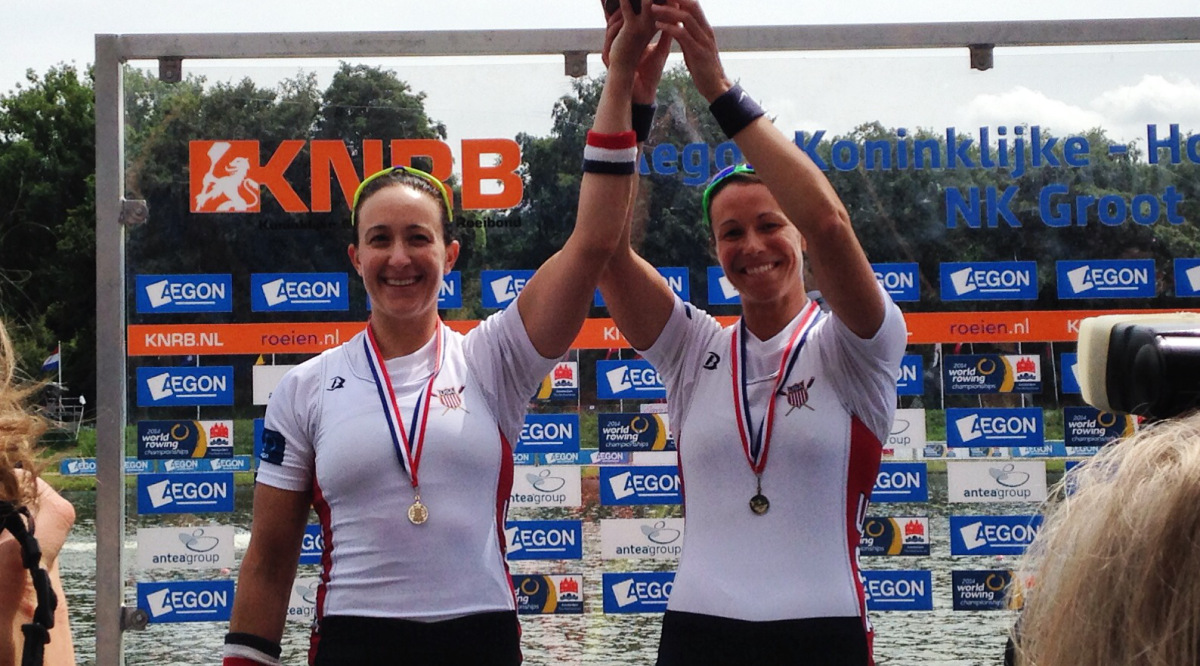
Following World Cup 2, the team packed up and flew to Amsterdam where we trained on the Bosbaan for the week and raced in the Holland Beker Regatta (June 28-29). Amsterdam is a very cool city. Ellen and I raced in the women’s double sculls event both days, going 4-4 winning each heat and final to take home two gold medals. Needless to say we were pretty tired after four races in 48 hours. The racing may have not been our prettiest, but it was a great way to get an early look at the Bosbaan where the World Championships will be held later this summer (August 24-31).
The women’s double is shaping up to be one of the strongest, deepest, and most competitive fields the event has seen in several years. It truly is an honor to race against some of the best athletes in the world. There will be no “easy” races as crews will only get faster as we near the World Championships. World Cup 3 (July 11-13) is coming up in just ten days and the entry list for the women’s double is larger and just as fast (if not faster) than in France. Looking forward to another regatta filled with tough racing!
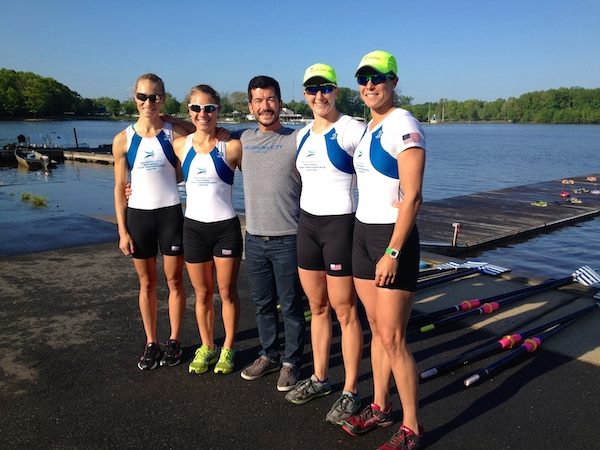
USRowing Training Center-OKC W2x and LW2x NSR II winners. (L-R Devery Karz, Michele Sechser, Jeremy Ivey, Ellen Tomek, Meghan O’Leary) Photo Credit: USRowing
Last weekend concluded the 2014 series of USRowing National Selection Regattas (NSR) I and II. Held on Mercer Lake in Princeton, New Jersey, the NSRs provide opportunities for athletes to take the first step toward making the United States National Senior Team. The winning women’s and men’s crews of the pair, single, double sculls and lightweight double sculls are awarded the opportunity to compete at World Cup 2 or 3 to then qualify for the World Championships (and thereby solidify their spots on the National Team). The NSRs are also formatted as a step toward entrance into or ranking for big boat camp selection for the men’s eight and four; and the women’s eight, quadruple sculls, and four.
For my double partner, Ellen and me, the goal for NSR II was to win each race: take the fastest time in the time trial, win our semifinal, and of course, take home the all important win in the final. We were rested and healthy. Our race preparation pieces leading into the week had been solid, and the boat was moving well. We felt good. All that was left to to do was to execute.
The 1900-meter time trial on Thursday morning went off accordingly and we posted the fastest time (6:49.67) by nearly four seconds. The weather the following day for the semifinals was absolutely horrendous. In conditions like that, anything can happen. We fought our way down the course in an 18-mph crosswind with gusts up to 30-mph, survived a few diggers and one boat-stopping crab (by yours truly), but managed to finish comfortably ahead of the field in first place. The winning crew of the other semifinal, Stesha Carle and Gevvie Stone (SoCal Scullers/Cambridge Boat Club) had posted a faster time than us by just under two seconds.
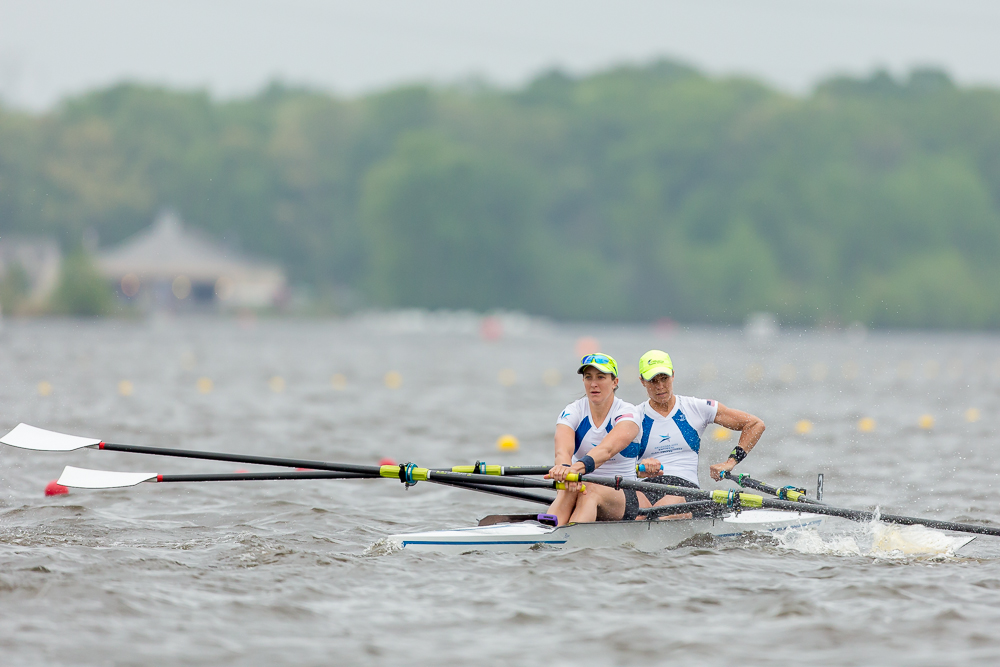
Fighting difficult conditions during the NSR II Friday semifinals. Photo credit: Erik Dresser
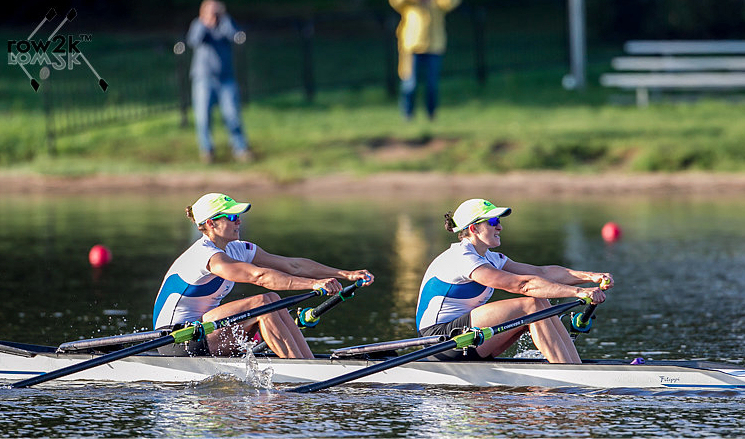
The morning of the final, the weather had thankfully calmed down and we arrived at the course to find a serene sunrise over flat water with the faintest puff of a breeze. The racing would be fair and fast. You can’t ask for a better finals day than that. Ellen and I won in a time of 6:54.47, nearly five seconds ahead of the next crew of Carle and Stone in second (6:59.20), followed by Lindsay Meyer and Nicole Ritchie (Seattle Rowing Club/Vesper Boat Club) in third (7:00.81).
Saturday Finals, NSR II. Photo credit: row2k
In a few weeks, Ellen and I will travel to Aiguebelette, France to compete at World Cup 2 to try and qualify for the World Championships taking place later this summer in Amsterdam. Congratulations to all of the crews who punched their tickets to a World Cup last week. Step one of many more to come. Back to work to go fast and represent Team USA.
The secret of change is to focus all of your energy, not on fighting the old, but on building the new. - Socrates
When I first sat down to write this post a few months ago, I could’t help but feel those odd, yet sometimes wondrous feelings of déjà vu. It seems the late summer transition into fall has always brought to me new challenges and significant change in my life. This year was no exception. It is telling that I am just now finishing this post; the past few months of “change” have been quite busy and to be honest, I had a difficult time finding the right words to fully capture all that occurred. Forgive me, this is going to be long but perhaps the most personal post I’ve written.
To back up this theme of change, I need to provide a little background. Four years ago I took a job promotion that moved me to New England and to the Connecticut River where I would eventually pull on my first oar. A year after that move, I made the critical decision to take on the challenge of training at the elite level to see where rowing could take me. I remember it well because it was at the USRowing National Team Identification Camp that fell on the weekend following my twin brother’s destination wedding. (I was that member of the wedding party spending two sessions per day in the hotel gym or running on the beach while everyone else was enjoying the benefits of an “all-inclusive” resort.) Nevertheless it paid off, and a year later I earned an official invitation to train at the USRowing Training Center in Princeton, New Jersey. (Are you following the year by year transitions yet?)
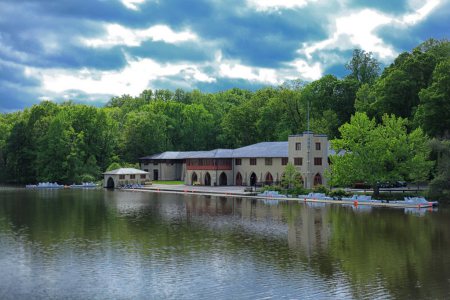
Princeton Boathouse. Courtesy of Aaron Cropper.
Boom. Life-changing step and I’m on my way to living the dream. In late October of 2011, I packed up what I needed and made the move away from my full-time job and promising start to a career at ESPN, close friends, and a comfortable home in Connecticut, to a dusty one-bedroom sublet in Princeton.
For most elite female and aspiring National Team rowers, this is the ticket. The cut to becoming one of the 20-25 athletes training in Princeton is a tough one to make. Beyond this initial huge and difficult step lies an even greater one. Not everyone at the Training Center is guaranteed a spot on the National Team. Many will come through the system not having ever made a boat. As with any athletic pursuit at this level, your time is limited, everyone is replaceable and nothing is ever guaranteed. For some, the opportunities are plentiful, and for others, you might have to fight for the one chance you’re going to get.
(L-R) Meghan O’Leary, Ellen Tomek; 2013 Samsung World Rowing Cup III Women’s Double Bronze Medalists
Looking back on the 2013 season, I would say it was an overall positive experience. Going into the year, my goals were to continue to improve each day, stay healthy, and perform well enough to make my first National Team. Of course there are other smaller goals along the way, but this was the general intended outcome. After dealing with another rib injury last fall that carried over into the winter, I was quite discouraged. One thing about training in Princeton, is that you are led to believe that you are only as good as your last workout. To some degree, this is true. And when you are injured, you feel completely out of the game. The Training Center can feel like and is at times, a dog-eat-dog environment. As one teammate appropriately describes it (and more specifically, describes selection), it can be a bit of a shark tank. Every day is a battle. The rules of war as well as your known allies and enemies are ever-changing. Get ready for The Hunger Games: Bloody Waters. In my short stint as a rower, I have quickly learned that rowing is absolutely and undeniably a team sport, but it is just as much about the individual.
On the second day of when official team training started back up in Princeton this past September, I found out life would be changing very quickly (again). The women’s double sculls event was essentially being removed from the Training Center in Princeton. My partner from the 2013 season, Ellen Tomek and I had the choice to stay and sweep to contend for spots in the eight, quadruple sculls, pair or four. Or as we had previously decided, remain as a unit and try to develop the double; but in result, be forced to find a new training location.
The reasoning? There would be no resources put toward the women’s double in Princeton, and therefore no opportunities to develop the boat if we were to remain there. I think it needs to be said that this wasn’t really a removal of resources; rather it was an admittance of the culture and structure of the Training Center in Princeton. What was previously hearsay would now be procedure. Over the past several years, separate from individual athletes or outside clubs, the double has never been a priority boat for the United States. Blog post to follow concerning that larger issue.
At the beginning of 2013, I knew I wanted to race the double. I’m what I like to call a “pure” sculler, with very little sweep experience (having never rowed in college). People often ask me, ‘why not go for the eight where you’re almost guaranteed a World Championship or Olympic gold medal at some point in your career?’ The women’s double has never brought home a World Championships or Olympic medal in the history of United States rowing. I guess you could say I like a challenge. What is that they say about the road less traveled? In the double, you are guaranteed to face some of the greatest rowers in the world, and that sounds pretty freaking awesome to me.
A Finals of the 2013 Samsung World Rowing Cup III
I also like the double because of its unique dynamic. It’s just you and one other person. It’s a marriage of absolute trust in and devotion to the other person because without them, you’re not going very far. Literally and figuratively. You can’t fight against them without being punished. There is no right or wrong in the boat; you both will be right or you both will be wrong in order to truly succeed.
And so I digress. Back to the point of all of this. Ellen Tomek and I won the National Selection Regatta #2, won a bronze medal at World Cup III in Lucerne-much to the surprise of well, probably everybody-and then had a mediocre, 7th place performance at the World Championships in Korea. It was a disappointment. I’ve already gone into the reasons as to why I believe we underperformed in a previous post, but a significant one that is relevant to this is that we were not given any priority by our representative body, the USRowing Training Center - Princeton. I say this as a statement of fact, not as a criticism. I knew this going into making my choice to row the double.
The United States is good at making a fast eight. Really good. We can throw together a boat full of rookies and set a new world record. We are beasts in the eight. The Princeton Training Center should and will continue focusing on the boats that can be developed successfully in a camp-like structure. The double on the other hand, requires a lot of time and development and along with that, a coach who can give that amount of time focusing on developing the boat. This is the primary reason for the removal of the boat from the Training Center. You look at the lineups of small boats that have stood on the medals podium and the majority of them have stuck together for years, building the boat over time. And behind them is a coach that has spent countless hours focused solely on them. It’s the same reason the top U.S. singles have trained independent of the Training Center. Specialty requires specialization. The smaller the boat, the more specialization required in order to be successful. Compare it to making a great quarterback or pitcher.
And so at the end of November, Ellen and I packed up our things and moved south to the Oklahoma City National High Performance Center. The months of September, October and November were a whirlwind of travel and decision-making all while trying to maintain a solid training regimen. Stress can be unbelievably damaging to training and a huge detriment to gaining speed. All we wanted to focus on was preparing ourselves for a solid 2014 season, not how we were going to move our lives 1,500 miles across the country.
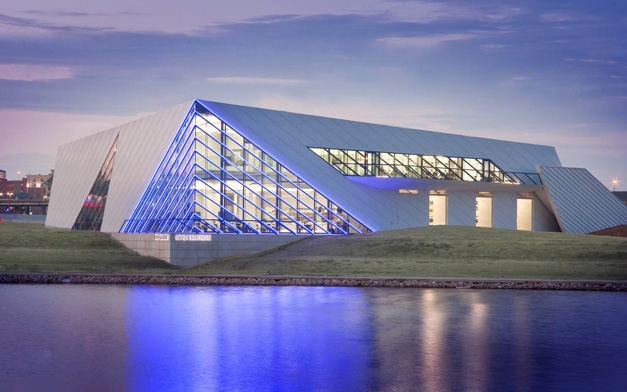
Devon Boathouse, Oklahoma City National High Performance Center
It wasn’t a flawless transition, but I think we handled it all fairly well and I’m happy to say we’re finally settling into our new home. Separate from the imminent chance of tornadoes, the freak ice and snowstorms, an earthquake, and the four scorpions I’ve already spotted, I think we’ve come to the right place. After the initial shock and oftentimes anger that change so often brings, this move has been a positive “reset” button. Though painful and difficult as it may be, you grow from positive and negative experiences alike.
Now it’s time to focus on building something new, building something great.
Over the next two weekends (Nov. 9-10 & Nov. 16-17) hundreds of rowers across the country will compete in the “USRowing Fall Speed Order” at three locations in three different regattas: the East Coast (Princeton, New Jersey); the Midwest (Oklahoma City, Oklahoma) and the West Coast (Oakland, California) Fall Speed Orders. I like to think of the Fall Speed Order as this sort of super challenge. People make a big deal about the “Tough Mudder” or their latest ultimate CrossFit challenge. Try this for a weekend, all you weekend warriors.
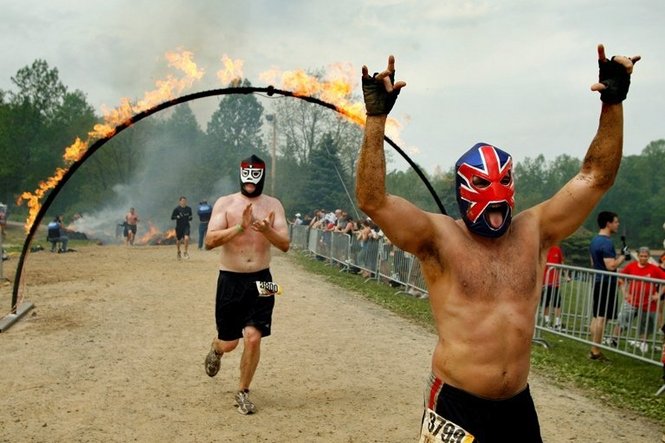
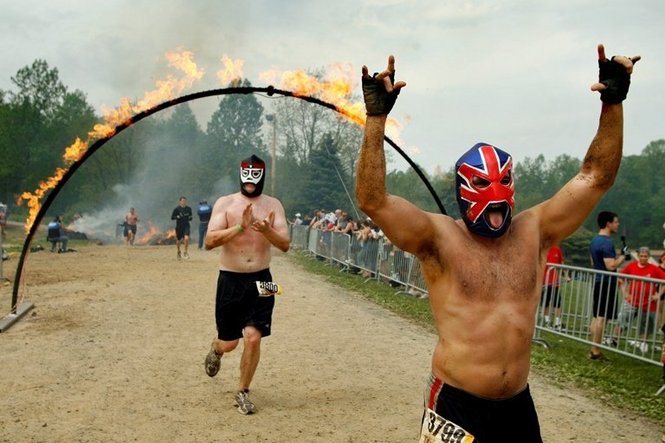
Ring of Fire!
Okay, maybe it would be a bit more “fun” if you were rowing through rings of fire or had paintballs thrown at you from the Harrison Street Bridge (take a minute, picture it…). Or if you could drop little banana peels and mines for someone who was speeding up behind you like in Mario Kart, and then there was a beer and a band playing “Another One Bites the Dust” waiting for you at the end of the race. And people wonder how to make rowing a more spectator-friendly sport?
So WHAT is the Fall Speed Order, you ask?
First, you sit on the erg (ergometer) and withstand 6,000 meters of pain and fury as you plug away at (trying to) pull the best 6K time you can in the fantastic or more likely, mediocre shape that you’re in. You are in a crowded, hot and stuffy erg room with 30 other athletes all trying to finish before you. It’s silent, save for the sharp breathing and occasional grunts as people endure the lactic acid building up in their system. You’ve put together the ultimate playlist on your iPod, but it still doesn’t drown out the sound or the awareness of what is happening around you as you stare at the floor to ceiling, room-length mirror in front of you, taunting you to pull harder each stroke. It’s the fall, so you may be in great shape from training hard or you may be coming off of your summer racing “break” and just enjoying the fall head-racing season. Whatever situation you find yourself in, sitting through 19-22 minutes-ish of pain is never “fun”. To top it off the little man in your iPod shuffle screams at you “Battery Low” and shuts off as you come into your last 1200 meters. At this point, it almost doesn’t matter because the voice inside your head is screaming at you even louder to “JUST. KEEP. GOING!!” Your vision begins to blur as the oxygen deprivation slowly takes over. Finally, with one last heave you pull the meters all the way to “0” and collapse onto your knees gasping for breath-or maybe you look triumphantly around, having finished at the front of the pack-as other people are still slamming themselves up and down the slide, desperately trying to finish their piece.
Oh, you think you’re done? Put that beer down. It’s only just beginning. You spend the rest of the afternoon resting, eating, hydrating and continuously pressing refresh on your computer screen or smart phone to find out what the start order for the next day’s head race-a four to five kilometer piece on the water-will be. If you didn’t get a chance to get on the water before the erg test, you take your single out for a quick late afternoon paddle to familiarize yourself with the course. You squeeze into your compression tights after an ice bath and settle in for a wild Saturday night of Netflix and electrolyte replenishment.
Pogies!
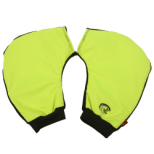
The following morning you wake up to the sound of the wind roaring outside against the windows. It wouldn’t be a fall speed order without a wind advisory in effect. Oh yeah, and the temperature is a balmy 35 degrees (Fahrenheit) outside. Don’t forget to pack your warm gear and pogies!
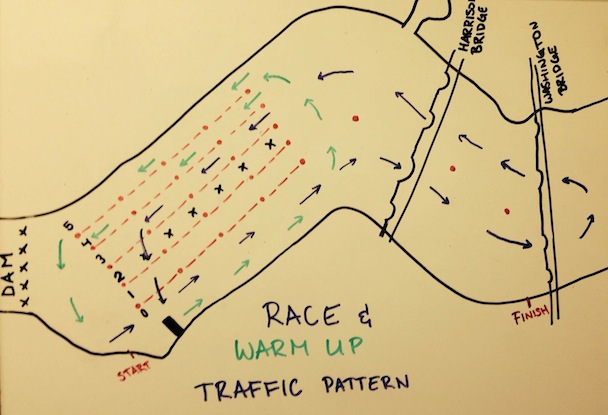
The head race is time trial style which means you go off one by one with about 20 seconds between you and the next boat. The fun thing about this is having the opportunity to pass other boats…the not so fun thing about this is having to deal with passing other boats (or the demoralizing feeling of being passed by another boat). Head races are usually not on a straight course and involve some turns, looking around and making sure you don’t cut any buoys that may end up giving you a big fat time penalty. (Hint: if you’re unfamiliar with the course, take a few practice runs up and back taking note of landmarks to point off of, awkwardly placed buoys, etc.) A lot of time is saved by avoiding having to look around and being able to steer a good course. Fear not, the rings of fire won’t be put in until race day.
East Coast Speed Order - Carnegie Lake Traffic Pattern (no, this is not my work of art. Photo courtesy of USRowing).
After battling a 15-20mph wind that, even on a course that changes direction, somehow is ALWAYS a headwind, you cross the finish line hearing that glorious call from the referee, “over.” You go immediately from a stroke rate 36 to 0, relaxing your burning legs and slumping over your oars, gasping in the sharp, cold air.
Now your weekend challenge is finally over. Cue the music.
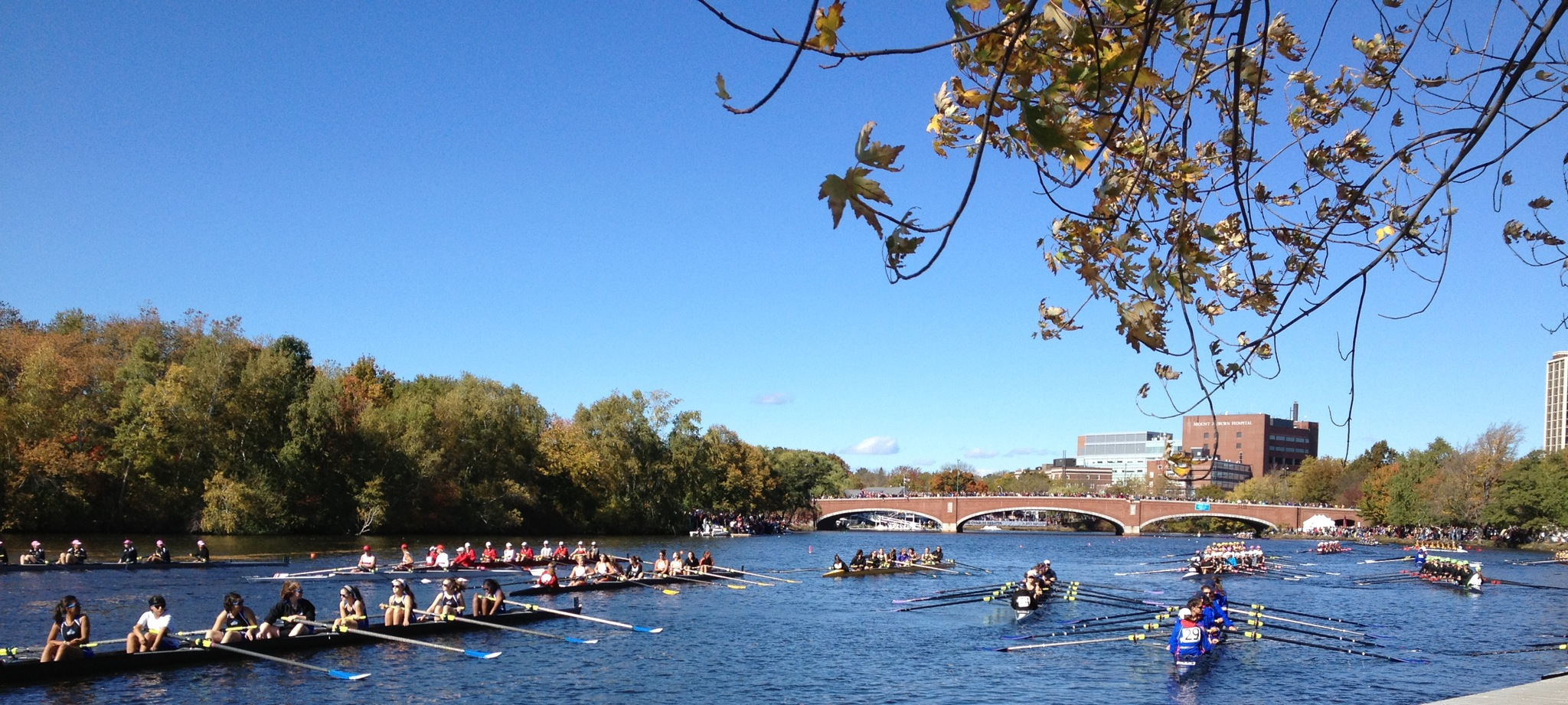
Ah, the Head of the Charles. The world’s largest regatta brings together nearly 10,000 athletes from 37 different states and 23 countries and over 400,000 spectators across two days of competition. People from all over the world converge on the city of Boston to watch over 2,000 boats in 55 different events make the winding 3-mile trek through seven bridges on the Charles River, hopefully finishing in one piece and a little bit faster than all of the other boats. To put it in layman’s terms to the non-rower, it’s the Super Bowl of rowing.
The 49th Head of the Charles Regatta (Oct. 19-20) marked my fourth time attending and third time racing the regatta. My first HOCR race was the fall of 2010 when I had just picked up rowing. I barreled down the course in a coxed four (4+) competing in the Women’s Club Fours division as a member of the Riverfront Recapture rowing club, based out of Hartford, Conn. That’s a long ways away from the 2013 World Championships I competed in this year as a member of the United States National Team. Humble beginnings.
As I have become a more experienced HOCR racer and attendee, I quickly found that returning to Boston for the Head of the Charles is like having a high school or college reunion every year. The rowing world is small and feels very much like a tight-knit family; but for one weekend, we take over the city of Boston and make rowing feel like a pretty big deal. There are actually spectators! And lots of them! Outside of the World Cups or World Championships, this is the biggest race and for many it is the biggest race. From pre-teens to veteran rowers well into their 80s, the Head of the Charles is the ultimate regatta. The fact that Olympians, junior rowers and master’s rowers share the same race course for a weekend is part of what makes the weekend so special.
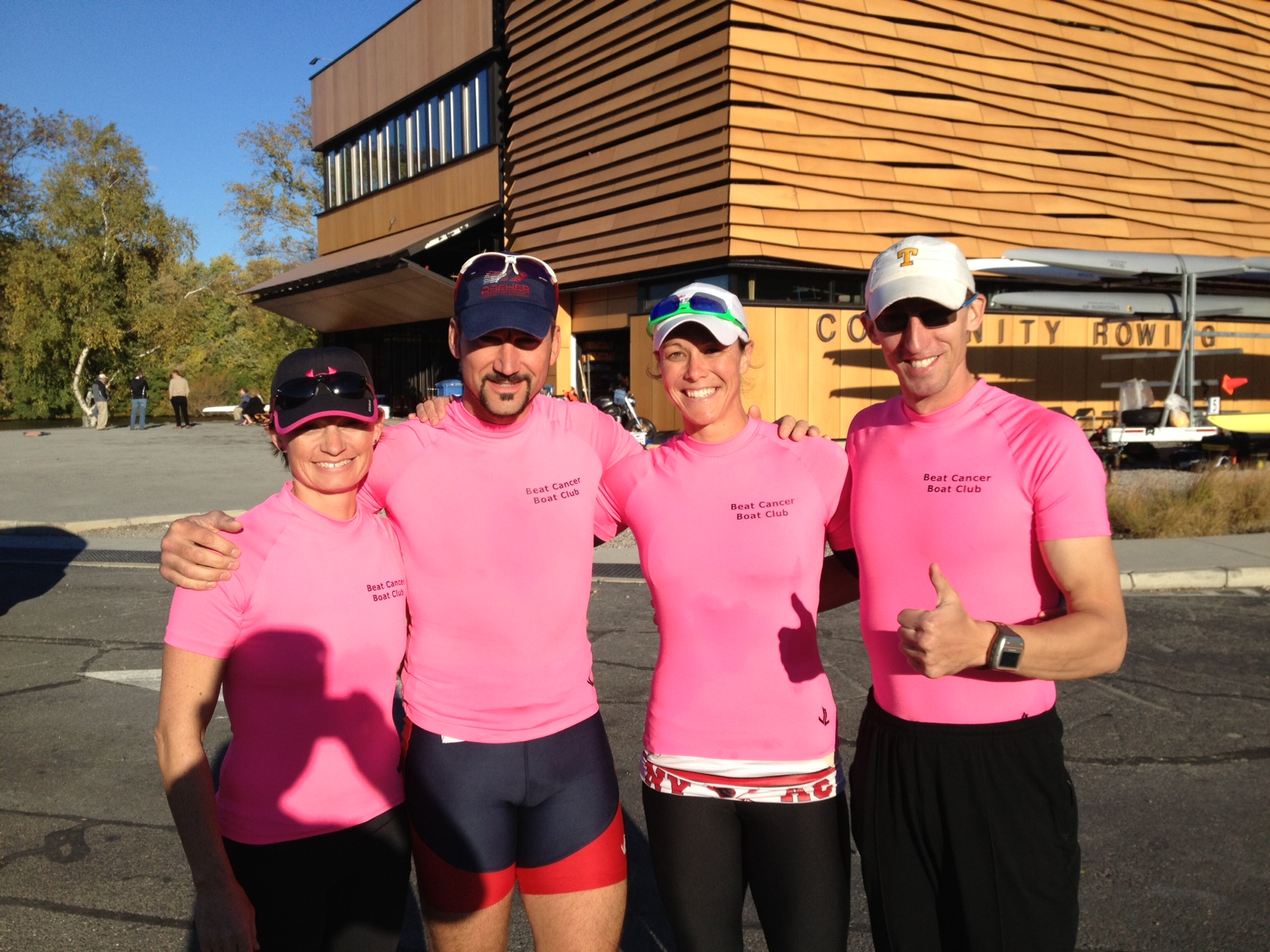
DCM4x Beat Cancer Boat Club (L-R: Michelle Nielsen, Mike Sivigny, Meghan O’Leary, Brian Tryon)
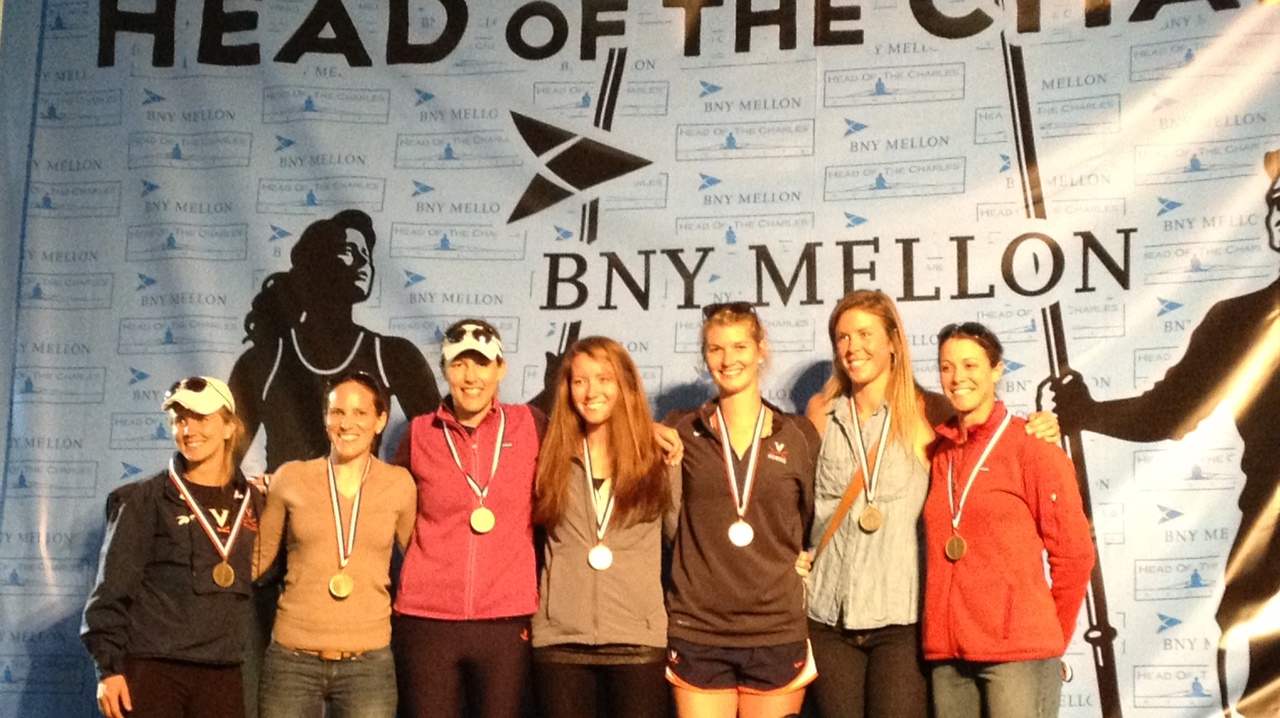
This year I competed with the University of Virginia in the alumnae 8+ event on Saturday, and with “Beat Cancer Boat Club” in the Director’s Challenge mixed quad (DCM4x) event on Sunday afternoon. Going into the weekend, I thought racing two events would be awesome. And then you race in your first event and realize how much it’s going to hurt the next time. Nevertheless, it still ended up being pretty awesome. UVa won the alumnae 8+ and we managed to set a new course record, I might add. This was an especially cool experience for me since I didn’t actually row for Virginia (I played softball and volleyball at UVa). Beat Cancer Boat Club placed 2nd in the DCM4x, but posted the fastest raw time in the event. Age handicapping put another boat ahead of us by three seconds. It was a blast racing for a good cause and with some of my good friends I don’t get to see all too often.
Outside of my personal experience, this year’s Head of the Charles saw some fast times and great races. Twenty new course records were set on Saturday with racers taking advantage of the fast conditions. The women’s championship eight event saw a tight race between the 2013 world champion U.S. Women’s Eight and the Great Eight filled with some of the world’s top scullers, stroked by U.S. single sculler, Eleanor Logan. The Great Eight came out on top, edging the U.S. Women’s Eight by 1.2 seconds. In the men’s championship eight event, the Dutch national team finished 1.48 seconds ahead of the U.S. Men’s National Team eight to win their first HOCR title in history.
University of Virginia Alumni 8+ HOCR Champions and new course record holder.
In the women’s championship single event, Kate Bertko crossed the line 2.5 seconds ahead of 2012 U.S. Olympic single sculler and 4-time HOCR winner Gevvie Stone, to set a new course record of 18:33.015. In the men’s championship single event, Norwegian Double Sculls 2013 World Champion, Kjetil Borch won in a blazing time of 17:12.313, also setting a new course record.
The weather was beautiful all weekend and aside from the windy and less than fast conditions on Sunday, it was perfect weather for fall rowing. It was great to see friends-old and new-and come together with thousands of other people who share the same passion for a sport so foreign to others. I know I can speak for thousands of other rowers around the world when I say that I’m already looking forward to next year’s annual pilgrimage to Boston for the Head of the Charles.
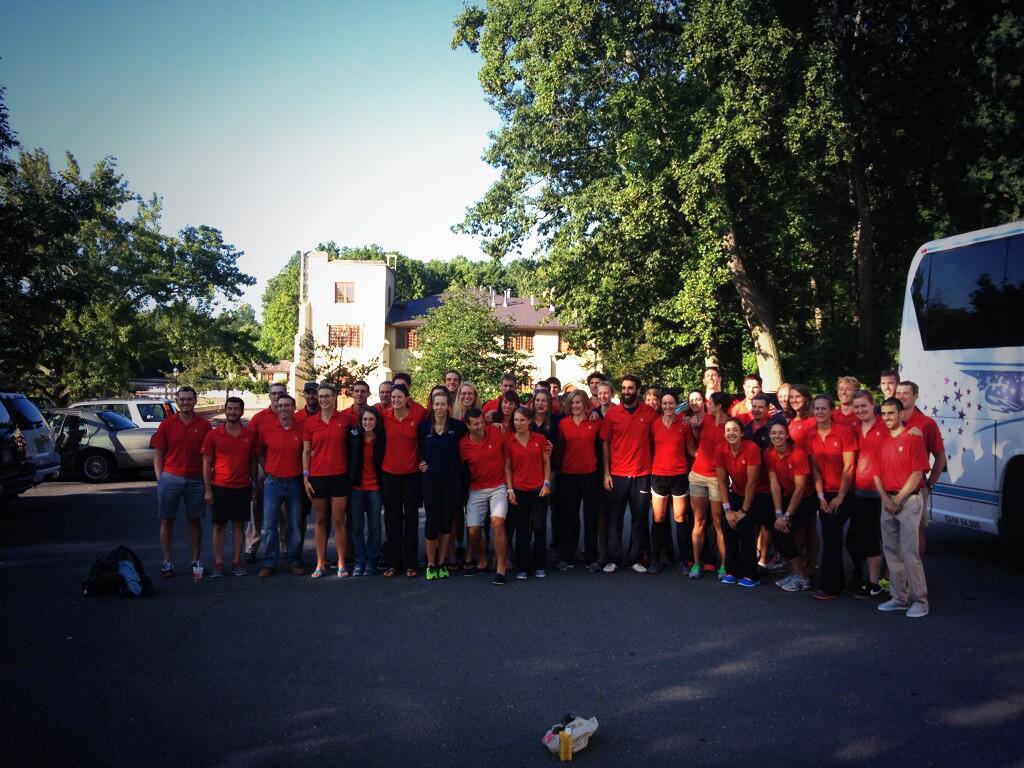
Team USA departing Princeton Boathouse headed for 2013 World Championships.
Team USA has officially arrived in Chungju, South Korea. The journey began early Wednesday morning with a two-hour bus ride from Princeton to JFK International Airport. The anticipation and excitement could be felt among the group as people seemed to be extra chatty-or perhaps it was just because I was sitting next to an over-caffeinated Mike Gennaro (stroke of the Men’s 4-).
After a long and rather sleepless 14-hour flight from JFK to Incheon International Airport in Seoul, South Korea, we endured another two-hour bus ride heading southwest to the city of Chungju. Unsurprisingly, this bus ride was a bit quieter than the ride some 20 hours earlier.
This slideshow requires JavaScript.
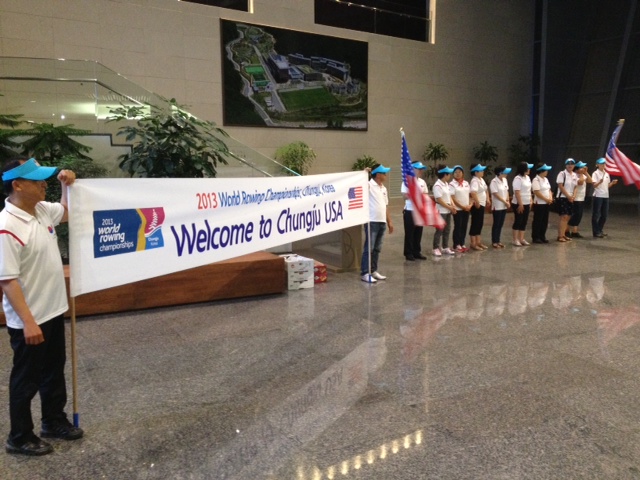
As the buses pulled into and began unloading at the IBK Training Center, our residence for the next two weeks, the energy of the group was revived by an enthusiastic and boisterous welcoming party chanting “U-S-A! U-S-A!” and waving the American flag. Holding up a huge banner, “Welcome to Chungju USA”, they continued to chant and clap for us as we walked into the lobby. It was humbling yet uplifting to be greeted so warmly by the local staff. I’m not sure I’ve ever made an entrance like that.
This slideshow requires JavaScript.
The IBK Training Center is absolutely beautiful. Set in the lush, green hillside along the banks of the Chungjuho lake, the campus itself is immaculate and pristine, surrounded by an impeccable layout of gardens and open space. Basically, we’re staying in a pretty amazing place. The staff couldn’t be nicer and the food is actually pretty decent. Great Britain, Germany, and Australia join team USA at the IBK, while other countries are scattered at various resorts and hotels around Chungju.
A few days later and we’re finally adjusting to the time difference, shaking off the jet lag and remembering how to effectively move a boat. The facilities at the race course are just as impressive. Aside from a pretty wicked cross wind, I have no complaints. South Korea definitely knows how to welcome the World.
This slideshow requires JavaScript.
We’re all excited and proud to be here, representing the USA at the 2013 World Rowing Championships. We still have a lot of days ahead of us before racing begins, but it’ll be here before we know it. Here’s to fast racing and bringing home some hardware.