Winning Is The Easy Part

As I sat on the eight-hour direct flight from Geneva to Newark returning from the 2015 World Championships just a week ago, I ran through my mind the previous several hours, into days, and finally, weeks. At best, all I wanted to do was forget. Forget it all. The brain does this amazing thing called dissociation when faced with stress or conflict. You can block out an incident or time and nearly forget it ever happened. At varying levels, dissociation describes a wide array of mild to severe detachment, including simply daydreaming when bored, to more serious altered states of consciousness, the latter of course linked to much more serious episodes than a bad regatta. Pretty incredible when you think about it.

A week later and the pain of what was, simply put, a terrible World Championships experience has slightly dulled, perhaps only due to a strong will to forget and thanks to the amazing brain’s coping mechanisms. There were lessons learned and I’ll hold tight to those, but revisiting anything else is only an invitation to be stuck in the past, brought down by sharp regret and disappointment. A week later, and it’s time to move on. A week later, and it’s already the start of the 2016 Olympic season. I’m a planner. Let’s get on to what needs to happen next. No time for moping.

They say winning isn’t easy. Whoever “they” are, got that terribly wrong. Winning is the easiest part of what we do. It’s the losing that will test you beyond measure; scrape out of you the emotions and parts you try to hide or pretend don’t exist. They’re those parts that whisper, “it’s not worth it” or “why do I even do this?” in the privacy of your own solitude and suffering.

When things come together just as (you think) they should, perfectly and all to plan, it’s bliss. When you’re riddled with setback after setback, fighting only not to fall apart completely, that’s the real struggle. In a sport like elite rowing, you work 357 days out of the year (and many more before that) in hopes to put together eight days of successful competition. It’s easy to sit back and enjoy the ride of the perfect week, just as you’d imagined it. It’s crippling to be tossed from one end to the next, white-knuckling the grip on your composure as the world around you seems to collapse.

It’s exciting to wake up the next morning, greeted by your smiling reflection, refreshed with the joy of knowing all of your hard work finally paid off. It’s depressing to pull yourself out of bed, weighted down by the burden of disappointment and no realization of the sacrifice you offered to chase the dream. The face in the mirror screams at you, “your best just isn’t good enough.”

It’s uplifting to look forward, to meet the eyes of your family and friends, those that supported you and experienced the victory with you. It’s crushing to keep your head down, eyes shifted to avoid any recognition of the pain for you on your loved ones’ faces, feeling your own hurt compounded by the weight of theirs.

It’s logical to comprehend that your hard work deserves success. It makes sense! It’s mind-boggling to accept that your blood, sweat, and tears amount to nothing. It feels good to take the pats on the back and high fives; it’s deafening to hear the silence of empty consolation, “Get ’em next time.” It’s easy to be reassured, you’re on the right path. You won, so you have to be! It’s halting to be doubted, no stable ground to push up from. Where do you go from here?

Winning is the easy part.

We’ve all been there. That is the push and pull of rowing. It’s what sucks you into this sport and refuses to allow you to give up. The pursuit of perfection. The allure of the game-winning goal and fairy tale ending. There are incredible peaks and valleys in sport, especially in rowing. The ability to ride through the highs and lows with a similar approach and steadiness is what will allow for greater success, not promise it. In a race, there is only one winner and en route to victory there is going to be a lot of losing along the way. A lot. Can you survive the beating and retain your belief that you will succeed? I think perhaps it’s this brutal reality that keeps rowing a small, amateur sport.

I like to believe I’ve experienced my share of valleys, but I have a strong inkling that the terrain ahead will continue to bring several ups and downs. In fact, I hope that it does. Bring ’em on. The lows are what truly test you and if you can handle them, you will come out stronger than before. As we look ahead into the 2016 year, the stakes will only be higher and the pressure more intense as we near the Summer Olympics. Every day brings a new challenge. Every day brings victory or defeat.

Every Day Counts.
2015 World Championships Recap

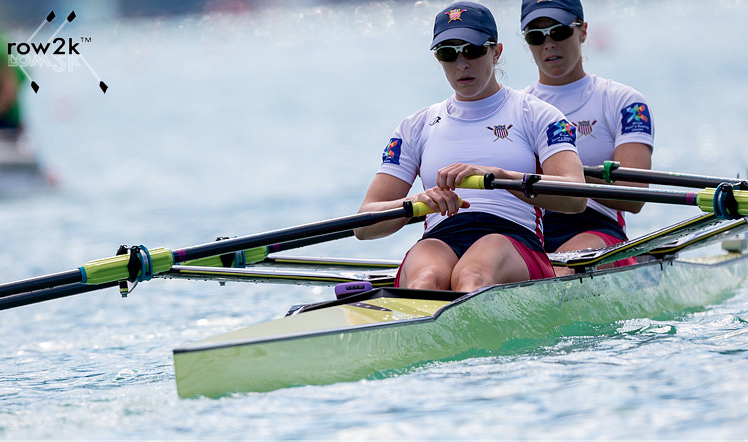
To say the least, the 2015 World Championships was an incredibly challenging regatta for Ellen and me-emotionally, mentally and physically. It was not the overall outcome we wanted nor expected, but at the end of the day, we got Olympic qualification for the women’s double taken care of (mini fist pump) and that was the critical mission. Sometimes things just don’t fall your way and we faced one too many hurdles last week to get on the podium.

From illness to simply “off” rowing, we were nowhere near being in top form. As I’ve hinted before, the women’s double sculls is possibly the most competitive event. You can’t come into any race at less than 100% and expect to do well. These are the best crews comprising the best athletes in the world. Last week, spots 1-11 (2016 Olympic qualifying positions) were separated by only a few seconds. In the double, this equals about the length of the boat, which is a very tight margin in a very deep field. To give you a comparison of similar boat size: in the women’s pair event, the gold medal to bronze medal position was a spread of eight seconds. Eight seconds behind first in the women’s double puts you well into the C Final.

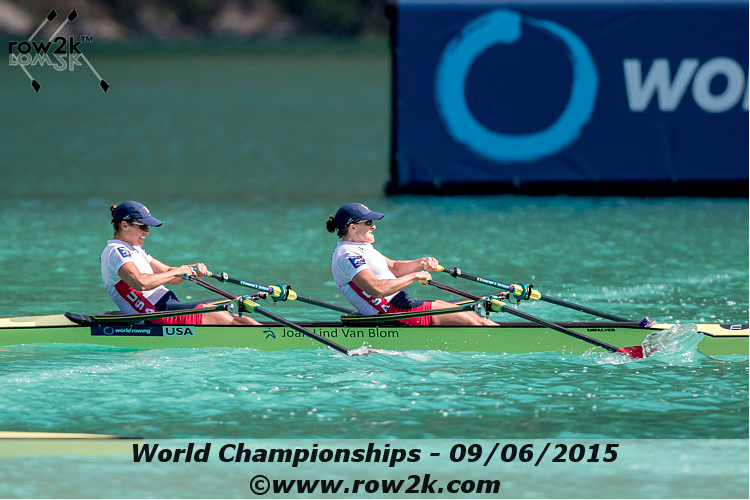
Ellen and I squeaked through Olympic qualification with an 11th place overall finish.
Ellen and I squeaked through Olympic qualification with an 11th place overall finish. Photo courtesy of Row2K.
In the double, any race could go any way with hundredths of seconds determining your fate; we struggled and just didn’t have things fall our way. We came into the regatta a medal favorite after nearly beating World Champion, New Zealand at World Cup 2 in June, but instead finished 11th, taking the last Olympic qualifying spot. The World Record holder and 2015 bronze medalist, Australia finished 10th. Last year’s World Championships silver medalist, Poland didn’t even medal. While only a matter of seconds separates the depth of our field, it doesn’t ease our devastation and disappointment. The silver lining is that in the big picture, we were still incredibly close for having struggled as much as we did. Last year’s World Champions, New Zealand took gold; Greece took silver; Germany took bronze. These crews are top-notch and had a great regatta. I’m continuously especially impressed by Team New Zealand who has definitely figured out how to field a winning team. With their women’s eight taking silver and their men’s eight qualifying their boat for the Olympics with a fourth-place finish, they’ve proven that they not only know how to expertly move the small boats, but can dominate the powerful eights as well.

On a higher note, the United States Women’s Rowing Team qualified EVERY boat for the Olympics. That’s right, we’re a bunch of badasses. I’d say the highlight of the regatta was the women’s quad beating reigning World Champions, Germany in a convincing win. It was impressive and I couldn’t be happier for senior team member and friend, Megan Kalmoe who has been a key figure in that boat over the past several years. She definitely finished out her last World Championships with a bang. Additionally, the women’s eight added a record 10th consecutive World Title to their belts. The men’s team had a rougher regatta, but managed to qualify the four, pair, lightweight four, and lightweight double (which we did not qualify in 2011). All in all, the United States Rowing Team brought home five medals and qualified ten boats for the Olympics.

What’s next? To break it down: While Ellen and I qualified the boat for the 2016 Olympics, USRowing holds separate selection procedures to fill the seats. So yes, exactly what you’re thinking. We did all of the hard work only to have to fight for it again in a few months. Some form of U.S. Trials are scheduled for mid-April to be held in Sarasota, Florida. USRowing has not finalized the 2016 Olympic Team selection procedures yet, so time will tell what that process entails.

For now, we’ll regroup, get healthy, and recover. After a few weeks rest, we’ll dive into full training again to prepare for the Big One. There will be changes to how we approach next year to address some of the things that we learned from the year and particularly our World Championship experience. We did a lot of things right this year, but every year is a learning experience; I like to think that as long as we learn from those mistakes and make sure we’re improving upon them, we’re headed in the right direction. I’ll take 11th this year if it means we get it right next year.

Thank you again for the continued support. 331 days until the 2016 Olympic Games. 331 days to get it right.

Every Day Counts.

Screen Shot 2015-09-09 at 11.53.29 AM
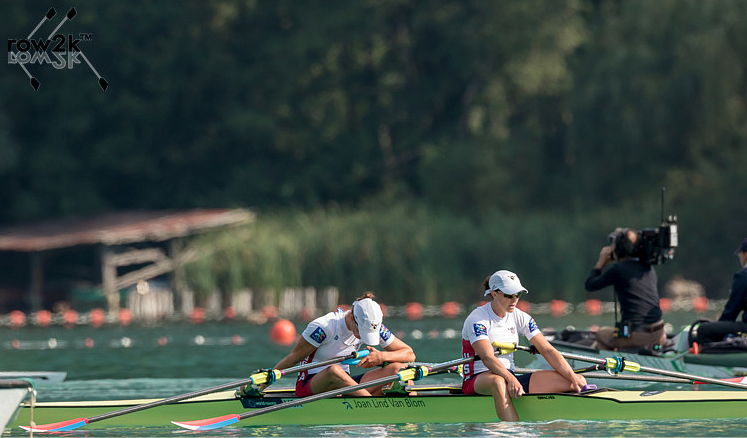
Photo courtesy of Row2K.