Tag Archives: USRowing

NOT for the Weekend Warrior: The Fall Speed Order

Over the next two weekends (Nov. 9-10 & Nov. 16-17) hundreds of rowers across the country will compete in the “USRowing Fall Speed Order” at three locations in three different regattas: the East Coast (Princeton, New Jersey); the Midwest (Oklahoma City, Oklahoma) and the West Coast (Oakland, California) Fall Speed Orders. I like to think of the Fall Speed Order as this sort of super challenge. People make a big deal about the “Tough Mudder” or their latest ultimate CrossFit challenge. Try this for a weekend, all you weekend warriors.
Ring of Fire!
Ring of Fire!

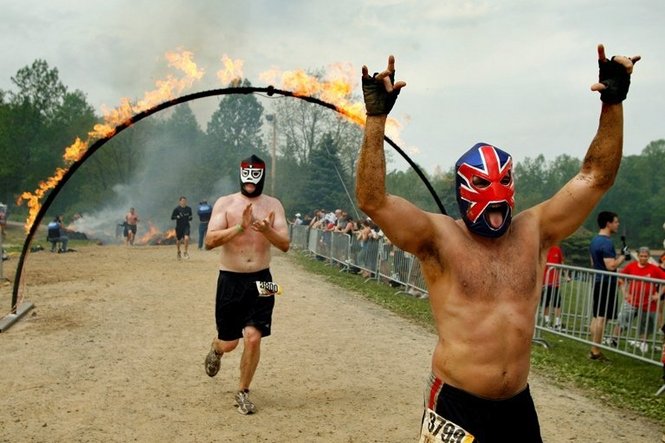
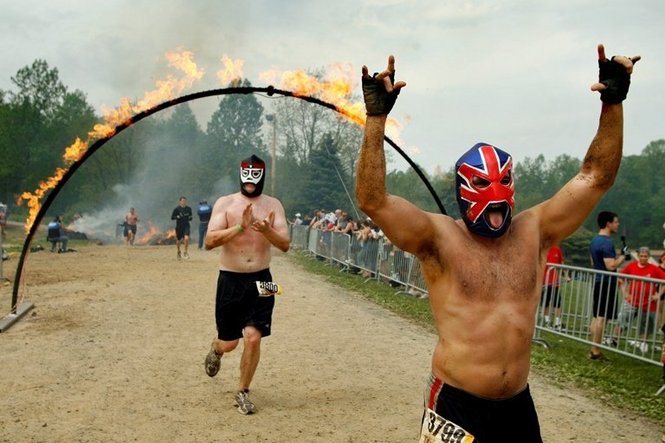
Okay, maybe it would be a bit more “fun” if you were rowing through rings of fire or had paintballs thrown at you from the Harrison Street Bridge (take a minute, picture it…). Or if you could drop little banana peels and mines for someone who was speeding up behind you like in Mario Kart, and then there was a beer and a band playing “Another One Bites the Dust” waiting for you at the end of the race. And people wonder how to make rowing a more spectator-friendly sport?

So WHAT is the Fall Speed Order, you ask?

First, you sit on the erg (ergometer) and withstand 6,000 meters of pain and fury as you plug away at (trying to) pull the best 6K time you can in the fantastic or more likely, mediocre shape that you’re in. You are in a crowded, hot and stuffy erg room with 30 other athletes all trying to finish before you. It’s silent, save for the sharp breathing and occasional grunts as people endure the lactic acid building up in their system. You’ve put together the ultimate playlist on your iPod, but it still doesn’t drown out the sound or the awareness of what is happening around you as you stare at the floor to ceiling, room-length mirror in front of you, taunting you to pull harder each stroke. It’s the fall, so you may be in great shape from training hard or you may be coming off of your summer racing “break” and just enjoying the fall head-racing season. Whatever situation you find yourself in, sitting through 19-22 minutes-ish of pain is never “fun”. To top it off the little man in your iPod shuffle screams at you “Battery Low” and shuts off as you come into your last 1200 meters. At this point, it almost doesn’t matter because the voice inside your head is screaming at you even louder to “JUST. KEEP. GOING!!” Your vision begins to blur as the oxygen deprivation slowly takes over. Finally, with one last heave you pull the meters all the way to “0” and collapse onto your knees gasping for breath-or maybe you look triumphantly around, having finished at the front of the pack-as other people are still slamming themselves up and down the slide, desperately trying to finish their piece.

Oh, you think you’re done? Put that beer down. It’s only just beginning. You spend the rest of the afternoon resting, eating, hydrating and continuously pressing refresh on your computer screen or smart phone to find out what the start order for the next day’s head race-a four to five kilometer piece on the water-will be. If you didn’t get a chance to get on the water before the erg test, you take your single out for a quick late afternoon paddle to familiarize yourself with the course. You squeeze into your compression tights after an ice bath and settle in for a wild Saturday night of Netflix and electrolyte replenishment.
pogies
Pogies!

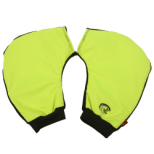
The following morning you wake up to the sound of the wind roaring outside against the windows. It wouldn’t be a fall speed order without a wind advisory in effect. Oh yeah, and the temperature is a balmy 35 degrees (Fahrenheit) outside. Don’t forget to pack your warm gear and pogies!

The head race is time trial style which means you go off one by one with about 20 seconds between you and the next boat. The fun thing about this is having the opportunity to pass other boats…the not so fun thing about this is having to deal with passing other boats (or the demoralizing feeling of being passed by another boat). Head races are usually not on a straight course and involve some turns, looking around and making sure you don’t cut any buoys that may end up giving you a big fat time penalty. (Hint: if you’re unfamiliar with the course, take a few practice runs up and back taking note of landmarks to point off of, awkwardly placed buoys, etc.) A lot of time is saved by avoiding having to look around and being able to steer a good course. Fear not, the rings of fire won’t be put in until race day.
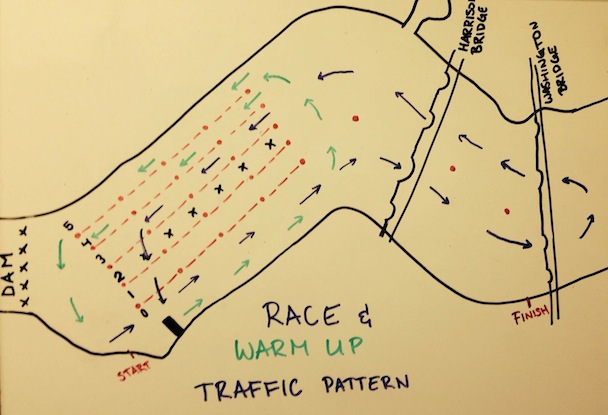
East Coast Speed Order - Carnegie Lake Traffic Pattern (no, this is not my work of art. Photo courtesy of USRowing).

After battling a 15-20mph wind that, even on a course that changes direction, somehow is ALWAYS a headwind, you cross the finish line hearing that glorious call from the referee, “over.” You go immediately from a stroke rate 36 to 0, relaxing your burning legs and slumping over your oars, gasping in the sharp, cold air.

Now your weekend challenge is finally over. Cue the music.

Every Day Counts.
49th Head of the Charles Recap

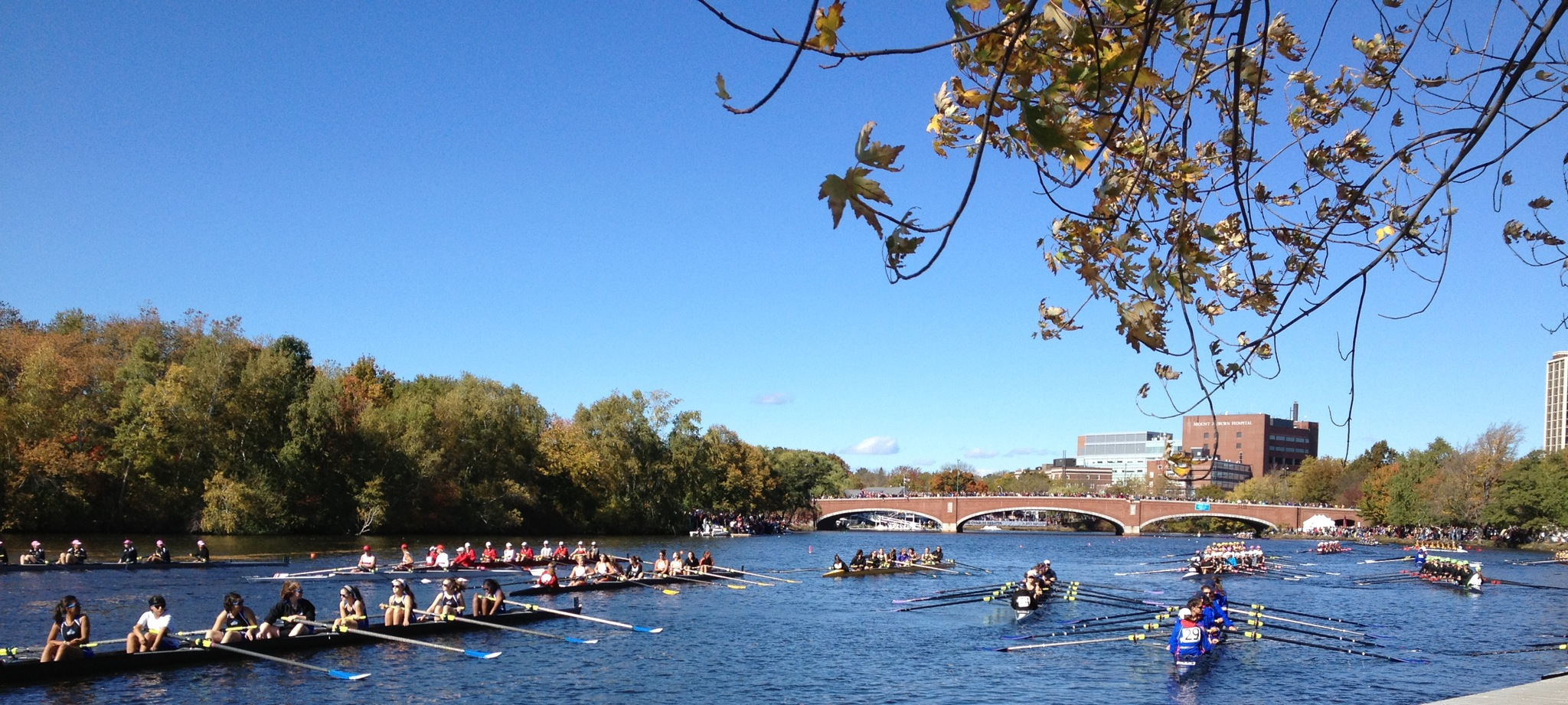
Eliot Bridge, Charles River

Ah, the Head of the Charles. The world’s largest regatta brings together nearly 10,000 athletes from 37 different states and 23 countries and over 400,000 spectators across two days of competition. People from all over the world converge on the city of Boston to watch over 2,000 boats in 55 different events make the winding 3-mile trek through seven bridges on the Charles River, hopefully finishing in one piece and a little bit faster than all of the other boats. To put it in layman’s terms to the non-rower, it’s the Super Bowl of rowing.

The 49th Head of the Charles Regatta (Oct. 19-20) marked my fourth time attending and third time racing the regatta. My first HOCR race was the fall of 2010 when I had just picked up rowing. I barreled down the course in a coxed four (4+) competing in the Women’s Club Fours division as a member of the Riverfront Recapture rowing club, based out of Hartford, Conn. That’s a long ways away from the 2013 World Championships I competed in this year as a member of the United States National Team. Humble beginnings.

As I have become a more experienced HOCR racer and attendee, I quickly found that returning to Boston for the Head of the Charles is like having a high school or college reunion every year. The rowing world is small and feels very much like a tight-knit family; but for one weekend, we take over the city of Boston and make rowing feel like a pretty big deal. There are actually spectators! And lots of them! Outside of the World Cups or World Championships, this is the biggest race and for many it is the biggest race. From pre-teens to veteran rowers well into their 80s, the Head of the Charles is the ultimate regatta. The fact that Olympians, junior rowers and master’s rowers share the same race course for a weekend is part of what makes the weekend so special.

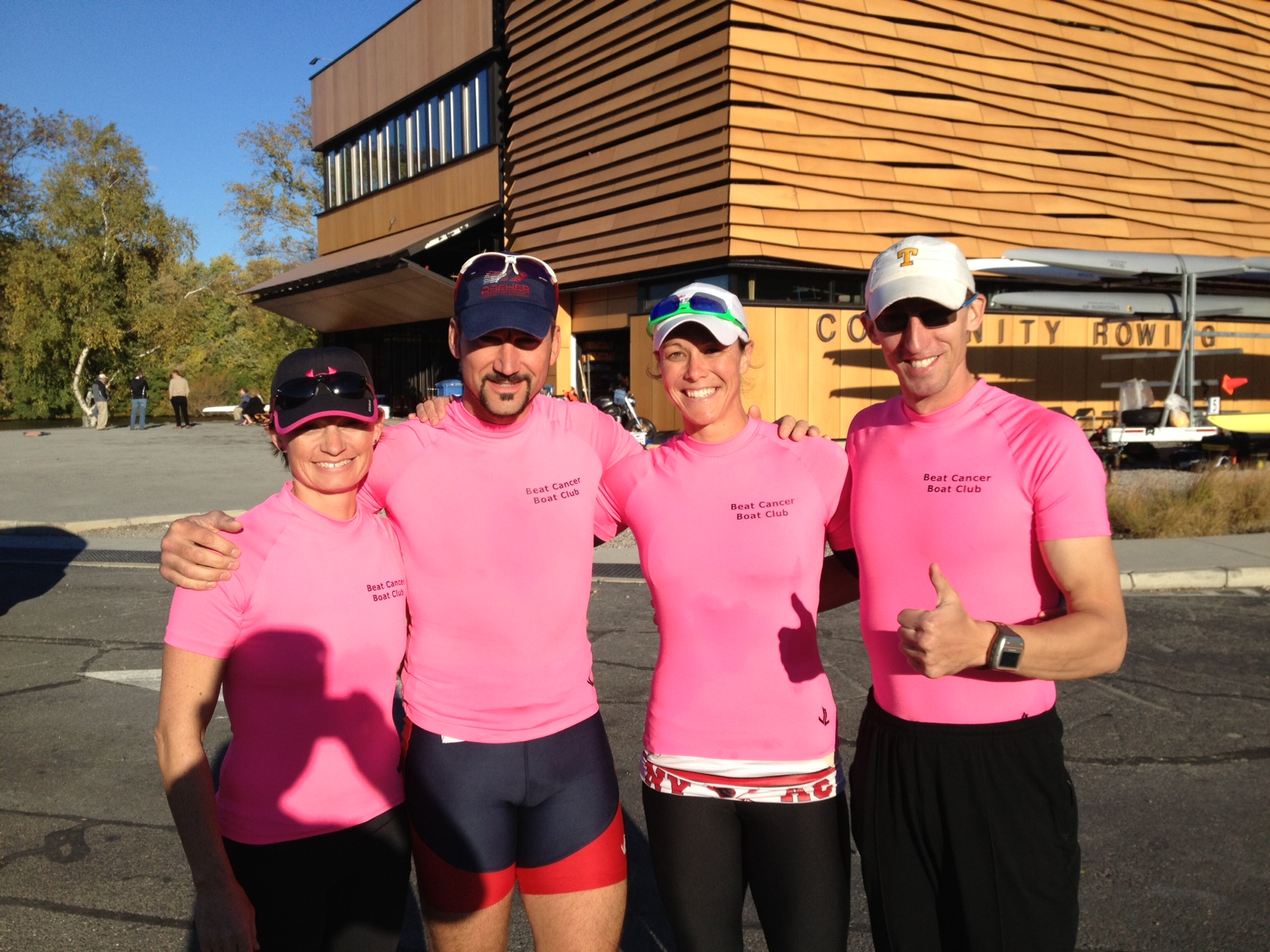
DCM4x Beat Cancer Boat Club (L-R: Michelle Nielsen, Mike Sivigny, Meghan O'Leary, Brian Tryon)
DCM4x Beat Cancer Boat Club (L-R: Michelle Nielsen, Mike Sivigny, Meghan O’Leary, Brian Tryon)

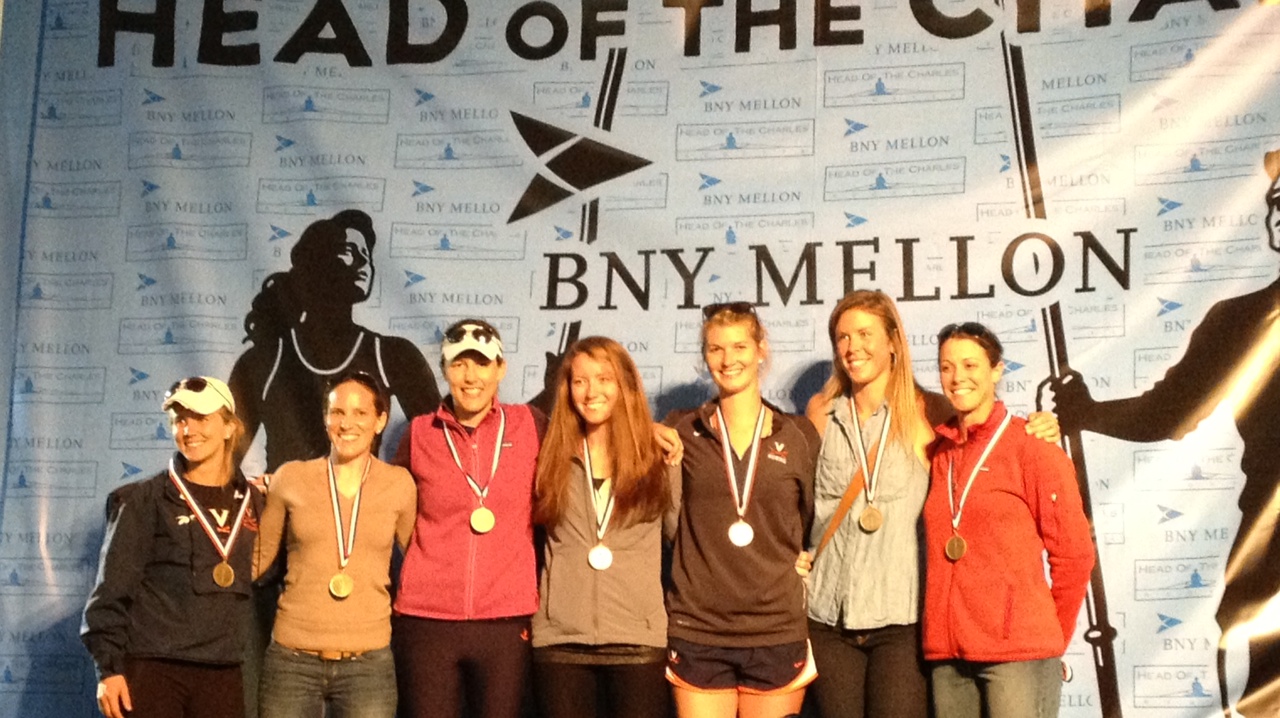
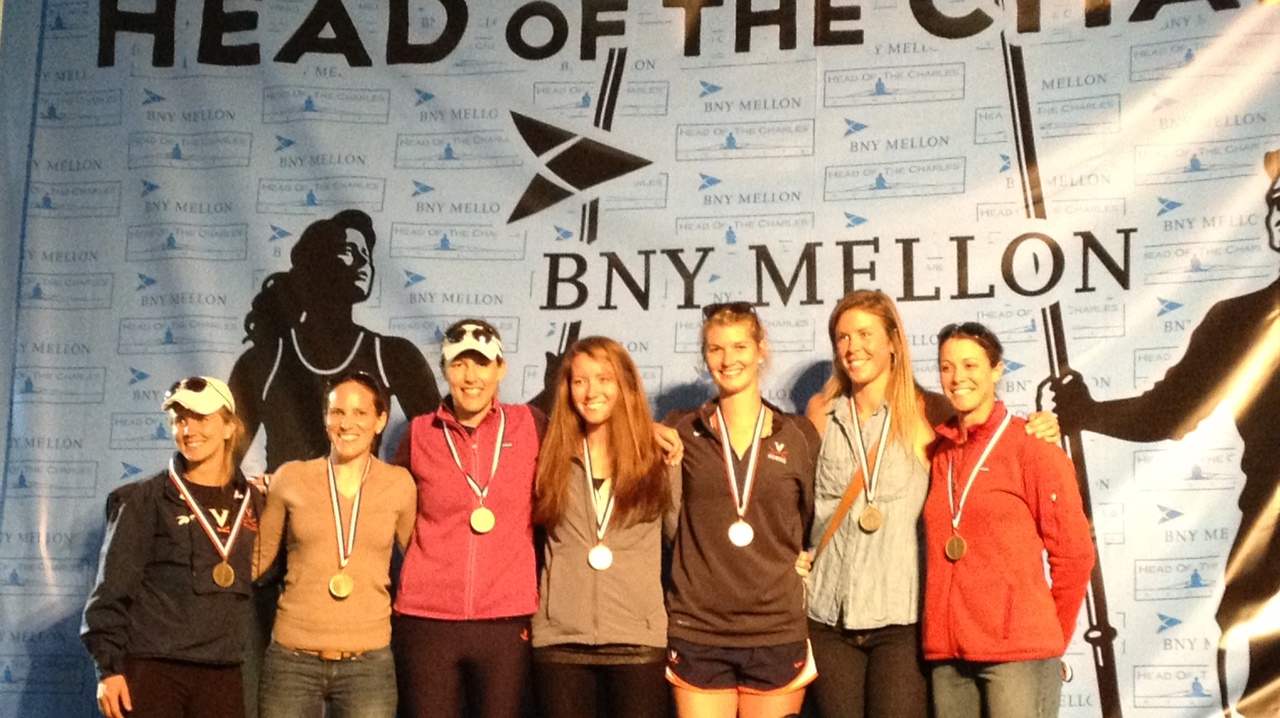
This year I competed with the University of Virginia in the alumnae 8+ event on Saturday, and with “Beat Cancer Boat Club” in the Director’s Challenge mixed quad (DCM4x) event on Sunday afternoon. Going into the weekend, I thought racing two events would be awesome. And then you race in your first event and realize how much it’s going to hurt the next time. Nevertheless, it still ended up being pretty awesome. UVa won the alumnae 8+ and we managed to set a new course record, I might add. This was an especially cool experience for me since I didn’t actually row for Virginia (I played softball and volleyball at UVa). Beat Cancer Boat Club placed 2nd in the DCM4x, but posted the fastest raw time in the event. Age handicapping put another boat ahead of us by three seconds. It was a blast racing for a good cause and with some of my good friends I don’t get to see all too often.

Outside of my personal experience, this year’s Head of the Charles saw some fast times and great races. Twenty new course records were set on Saturday with racers taking advantage of the fast conditions. The women’s championship eight event saw a tight race between the 2013 world champion U.S. Women’s Eight and the Great Eight filled with some of the world’s top scullers, stroked by U.S. single sculler, Eleanor Logan. The Great Eight came out on top, edging the U.S. Women’s Eight by 1.2 seconds. In the men’s championship eight event, the Dutch national team finished 1.48 seconds ahead of the U.S. Men’s National Team eight to win their first HOCR title in history.

University of Virginia Alumni 8+ HOCR Champions and new course record holder.

In the women’s championship single event, Kate Bertko crossed the line 2.5 seconds ahead of 2012 U.S. Olympic single sculler and 4-time HOCR winner Gevvie Stone, to set a new course record of 18:33.015. In the men’s championship single event, Norwegian Double Sculls 2013 World Champion, Kjetil Borch won in a blazing time of 17:12.313, also setting a new course record.

The weather was beautiful all weekend and aside from the windy and less than fast conditions on Sunday, it was perfect weather for fall rowing. It was great to see friends-old and new-and come together with thousands of other people who share the same passion for a sport so foreign to others. I know I can speak for thousands of other rowers around the world when I say that I’m already looking forward to next year’s annual pilgrimage to Boston for the Head of the Charles.

Every Day Counts.

Welcome to Chungju!

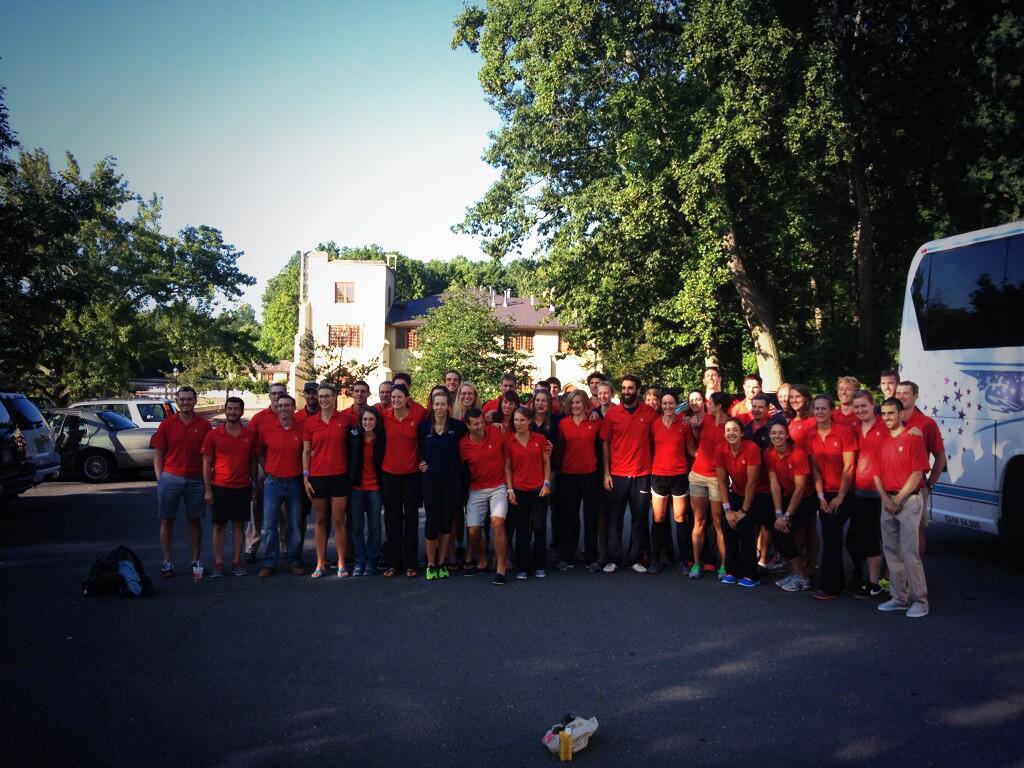
Team USA departing Princeton Boathouse headed for 2013 World Championships.

Team USA has officially arrived in Chungju, South Korea. The journey began early Wednesday morning with a two-hour bus ride from Princeton to JFK International Airport. The anticipation and excitement could be felt among the group as people seemed to be extra chatty-or perhaps it was just because I was sitting next to an over-caffeinated Mike Gennaro (stroke of the Men’s 4-).

After a long and rather sleepless 14-hour flight from JFK to Incheon International Airport in Seoul, South Korea, we endured another two-hour bus ride heading southwest to the city of Chungju. Unsurprisingly, this bus ride was a bit quieter than the ride some 20 hours earlier.

This slideshow requires JavaScript.

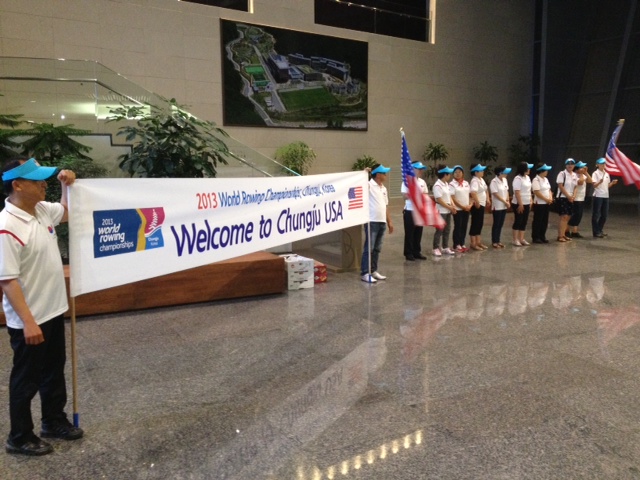
As the buses pulled into and began unloading at the IBK Training Center, our residence for the next two weeks, the energy of the group was revived by an enthusiastic and boisterous welcoming party chanting “U-S-A! U-S-A!” and waving the American flag. Holding up a huge banner, “Welcome to Chungju USA”, they continued to chant and clap for us as we walked into the lobby. It was humbling yet uplifting to be greeted so warmly by the local staff. I’m not sure I’ve ever made an entrance like that.

This slideshow requires JavaScript.

The IBK Training Center is absolutely beautiful. Set in the lush, green hillside along the banks of the Chungjuho lake, the campus itself is immaculate and pristine, surrounded by an impeccable layout of gardens and open space. Basically, we’re staying in a pretty amazing place. The staff couldn’t be nicer and the food is actually pretty decent. Great Britain, Germany, and Australia join team USA at the IBK, while other countries are scattered at various resorts and hotels around Chungju.

A few days later and we’re finally adjusting to the time difference, shaking off the jet lag and remembering how to effectively move a boat. The facilities at the race course are just as impressive. Aside from a pretty wicked cross wind, I have no complaints. South Korea definitely knows how to welcome the World.

This slideshow requires JavaScript.

We’re all excited and proud to be here, representing the USA at the 2013 World Rowing Championships. We still have a lot of days ahead of us before racing begins, but it’ll be here before we know it. Here’s to fast racing and bringing home some hardware.

Every Day Counts.

From the Alps to the Adirondacks

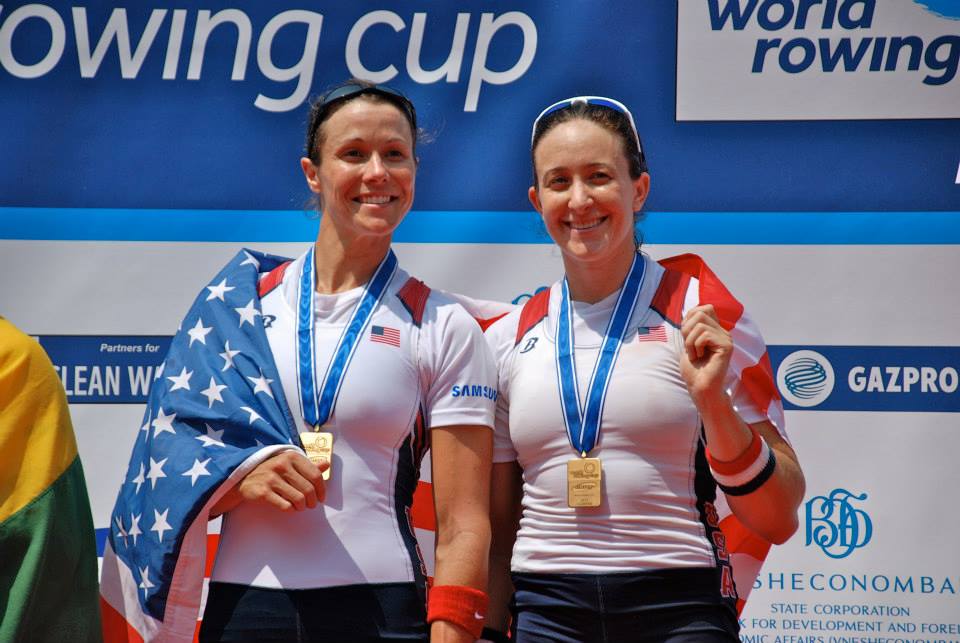
(L-R) Meghan O’Leary, Ellen Tomek; 2013 Samsung World Rowing Cup III Women’s Double Bronze Medalists. (Photo credit: Allison Frederick)

It’s been a busy few weeks. The journey began with a cross-Atlantic eight hour flight from Newark, New Jersey to Zurich, Switzerland, followed by a 90-minute bus ride to the small, but very popular lake town of Lucerne (Luzern), Switzerland. The flight was bearable and rather easy; in my best attempt to adjust to the time difference, I passed out about an hour and half into the flight, logging close to four and half, five hours of sleep before I started playing around with the on-demand video selections available. Guilty pleasure: I actually like watching Covert Affairs. I also wanted to be sure to be awake for our descent into Zurich. Seeing the Alps pop out as we cleared the clouds was pretty spectacular.

I have traveled through parts of Europe in the past, but had yet to visit Switzerland. I knew sight-seeing wouldn’t be on the agenda this time, but there is still something exotic and thrilling about flying to a foreign country halfway across the world, even if it is to row a little boat down a body of water very similar to the one we spend hours upon hours on every day in New Jersey. To be fair, I would actually swim in the Rotsee; whereas I despise getting even splashed by the waters of Lake Carnegie. And instead of lining up side by side with familiar faces from the Training Center, I would be looking across at Olympic and World Champions from Belarus, New Zealand, Great Britain, Canada, Germany, and Lithuania. And this time, unlike those early morning practice pieces back in Princeton, not only was our pride on the line, but that of our team and our country, the United States of America.

The entire trip was a valuable learning experience and for lack of a better word, just plain awesome. For my first real international regatta (no, the Royal Canadian Henley does not count), I actually wasn’t all that nervous. I was confident in the work my double partner (Ellen Tomek) and I had put up over the past several weeks. I knew we were fit, fast, mentally tough and that we were both stubborn and determined to make some noise in our first racing as a boat together. And that we did.

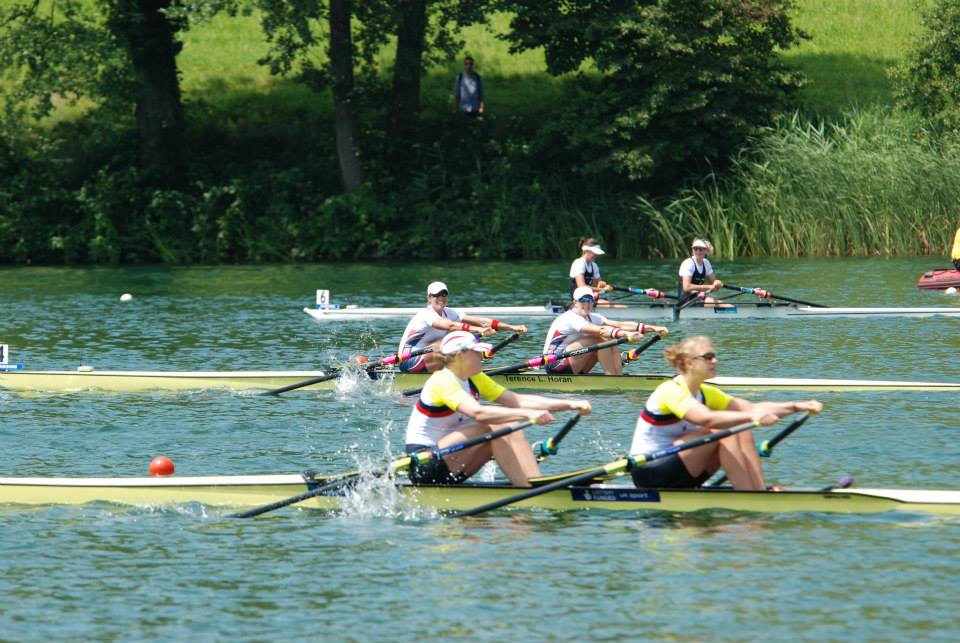
Women’s Double Sculls A Finals of the 2013 Samsung World Rowing Cup III (Photo credit: Allison Frederick)

We won our heat and posted the fastest overall time, beating some strong boats including a stacked Belarus and feisty New Zealand crew. While we were excited to see that we could make the boat move, we knew the Finals would be tough. The Final was a tight race all the way until the end, with the gold going to Lithuania and the silver going to New Zealand, a crew we had beat in the heats, with us taking home the bronze medal. We learned a lot from the racing, improving with each stroke. We were pleased with the bronze and the top four finish earned us our spots on the 2013 United States National Team and a trip to the World Championships in South Korea. The goal was to race well, learn, and qualify for South Korea. Mission accomplished.

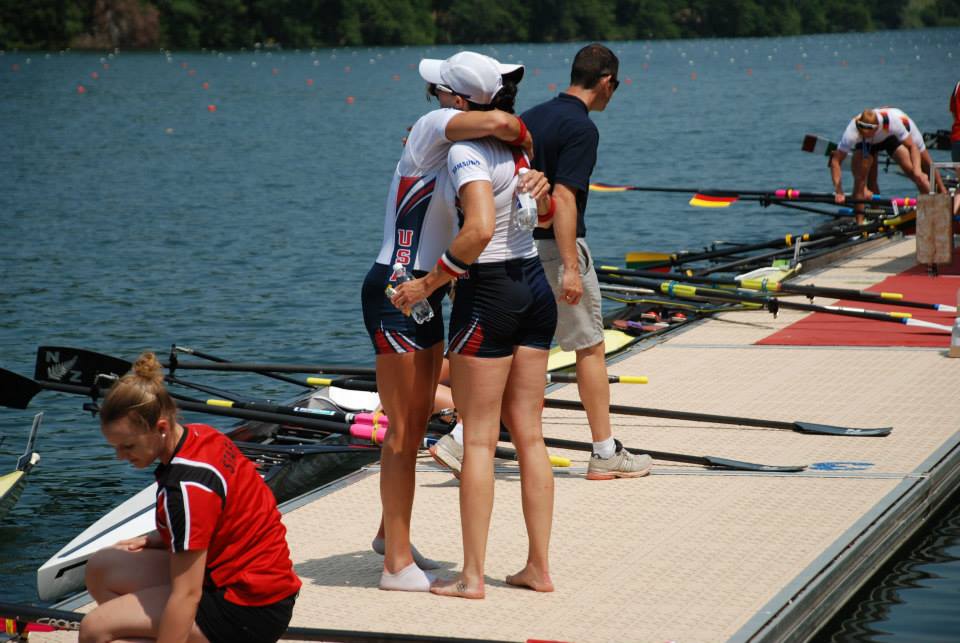
Congratulatory hug after the Finals race; Awards Ceremony dock (Photo credit: Allison Frederick)

The entire United States Men’s and Women’s Rowing Team had an incredible World Cup III showing. For the first time in history the U.S. won the Lucerne World Cup points total (translation: we won the regatta). The women medaled in five of the six events entered, setting a new world record and taking home gold in the women’s eight; silver in the women’s single and lightweight women’s double, and bronze in the women’s pair and women’s double. The men took home gold in the men’s eight and four, silver in the lightweight men’s pair and had the best finish in the lightweight men’s four they’ve had in several years (seventh overall, winning the B Final).

On top of a successful World Cup experience, I was lucky enough to have my parents and good family friends, the Bryant’s there to support Ellen and me. I grew up in sports and could always find my parents in the stands wearing my school or club team’s colors. It was pretty damn cool to look into the grandstand from the medals podium with the American flag draped around my back, and see my parents wearing the red, white, and blue, pumping their fists and cheering “U-S-A.”

Another bus ride and cross-Atlantic flight back to New Jersey…plus a seven hour delay at the Zurich airport…and we were finally home. But it was a tease. The next day was spent groggily unpacking, doing laundry, repacking, de-rigging boats and loading the trailer for a mini training trip to the Lake Placid Olympic Training Center.

Olympic Training Center, Lake Placid.

The week at the LPOTC was an adventure. It was a “get reacquainted with training” training trip as well as an escape from the New Jersey humidity and heat wave that was blasting the Eastern Seaboard that week. Once we got used to waking up at 4am (the jet lag actually helped with this), watching the sun come up as we wet launched from a resort beach on Lake Placid every morning was pretty amazing. We spent the afternoons cross-training with swims and hikes, exploring the surrounding Adirondack Mountains. We watched an aerial ski-jumping show, learned about John Brown, and I managed to talk my way out of a speeding ticket on the drive home (yup, still got it). An adventure indeed.

This slideshow requires JavaScript.

From the Alps to the Adirondacks and finally back home to New Jersey, the past few weeks have been full of emotion, never void of excitement, humility, joy, pain, frustration, tears and laughter, breakthroughs and setbacks, beauty, inspiration, and passion. There are moments when I look around and feel as though I will wake up from this dream, only to realize I’m living it.

And so we’ve returned to reality and to the grind at the Training Center in Princeton. The official naming date for the 2013 United States National Team was on Sunday. Selection is over and the success of the World Cup is just a new dust collector hanging on the wall and a long overdue blog post. We’ve spent the past year working our asses off to make the Team. Now it’s time to work together to win a World Championship.

Every Day Counts.

Ph.D, Rowing

It has been a few (okay, several) years since I graduated from college. But, every year during this time in the late weeks of May and early weeks of June as my Facebook feed is filled by graduation photos and Twitter flooded with sayings of “Congrats!” or those great cliché quotes about seizing the day and taking the road less traveled, I think back fondly on my time at the University of Virginia.

Graduation is such an exciting time. Bittersweet in a way. Sad to leave a place you called home for the last four years (or for some people, give or take another year), the best friends you’ll ever have, and the best late-night sandwich joint you’ll ever know. But ahead are new adventures and opportunities: perhaps a job or traveling for a few months while you “figure out what’s next,” or maybe you’ve already decided to dive straight into graduate school. And for a very small group of individuals, you’re taking a leap of faith and pursuing a continued athletic career, chasing a dream to make the big leagues, compete nationally and internationally, or go to the Olympics. And as we like to call it here at the Princeton Training Center, getting a Ph.D. in rowing. Whatever that next step is, it’s another door opening as you close one behind you.

My route in coming to train full-time as an elite rower at the USRowing Training Center in Princeton was a bit non-traditional; I did not begin my “professional rowing career” until well after I had graduated from college, attained a Master’s degree and established a career in the television industry. So technically with less than three years of rowing experience under my belt, I’m still working on my undergrad in rowing, although I like to think I’m in an accelerated program.

Most of the women at the Training Center joined the group directly after college, while there is a small handful who found their way to Princeton by way of the elite rowing club system. Choosing to pursue elite rowing in the United States is not for the faint of heart or those that wish to achieve fame and glory by becoming a professional athlete. Better start working on your jump-shot or touchdown dance if that’s your goal.

Last week, the Princeton Training Center was joined by a couple of fresh college graduates: Tessa Gobbo from Brown University and Heidi Robbins from Princeton University. Both Tessa and Heidi come from strong rowing programs and will be excellent additions to the group.

Additionally, the women training to make the U23 National Team, many of whom are recent college graduates, are here in Princeton training before they head to the World Rowing Under 23 Championships (July 24th - July 28th) in Linz-Ottensheim, Austria. I’m sure there may be a couple out of that group who hope to join the senior team training group once they complete their U23 competition.

Congratulations to all of the college graduates out there and a special good luck to those who are taking a chance and pursuing their dreams, whatever they may be. At 21 and 22 years old it can be difficult to see beyond the big paycheck and fancy lifestyle, but having a passion will take you further in life than you could ever imagine. And if you haven’t found your passion yet, keep your eyes and ears open. It may hit you when you’re least expecting it.

Every Day Counts.
gradphoto

2013 National Selection Regatta #2 Recap

As quickly as National Selection Regatta #1 flew by, so has National Selection Regatta #2. Time flies when you’re going fast. NSR #2 events included the men’s pair, men’s double, women’s double, lightweight men’s double, and the lightweight women’s double. The lightweight men’s pair raced as a speed order event. With NSR #1 and #2 wrapped up, we’re one step closer towards naming the 2013 United States Men’s and Women’s National Rowing Teams.

What does the NSR mean? The winning boats gain the opportunity (if they choose to accept) to compete at one or both of the upcoming World Rowing Cup events, and with a top four or top half finish, earn a berth on the U.S. National Team that will compete at the 2013 World Rowing Championships August 25-September 1 in Chungju, South Korea.

Like NSR #1, NSR #2 also featured top performances from the men and women at the United States Training Center. The Men’s Pair featured an all USRowing Training Center A Final with the six boats finishing within less than ten seconds of each other. If I hadn’t already been in the cool down area cooling down from my own race, I would have loved to have seen this grueling hard-fought 2,000-meter race between the Training Center men. 2012 bronze medalist from the Men’s Four, Henrik Rummel paired up with 2012 Team Alternate Mike Gennaro to take first place ahead of Seth Weil and London Olympian Grant James in second, followed by London Olympian Steve Kasprzyk and Max Goff in third.

Taylor Goetzinger and Meghan Musnicki, Women's Pair. Photo courtesy of row2k.com
Taylor Goetzinger and Meghan Musnicki, USTC Women’s Pair. Photo courtesy of row2k.com

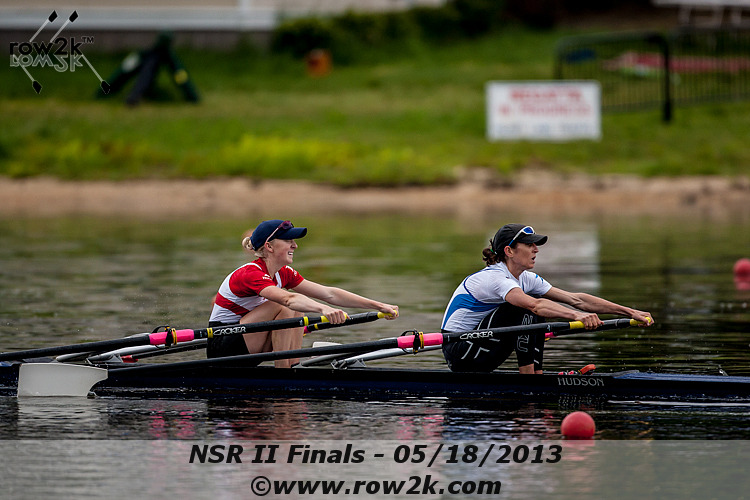
There were only five total entries in the Women’s Pair, all from the USRowing Training Center. After a second place finish in the Time Trial behind Vicky Opitz and Felice Mueller, Taylor Goetzinger and 2012 gold medalist from the Women’s Eight Meghan Musnicki took first in the A Final, switching places with Opitz and Mueller who crossed the line less than two seconds later in second place. Grace Luczak and Lauren Schmetterling took third. It was another tight finish with the top three boats separated by about only two and half seconds.

The Men’s Double didn’t include any Princeton Training Center athletes, as the USRowing Training Center in Princeton is primarily a sweep camp for the men. Shoutout to Willie Cowles and fellow Virginia grad, Matt Miller from Potomac Boat Club for taking first place.

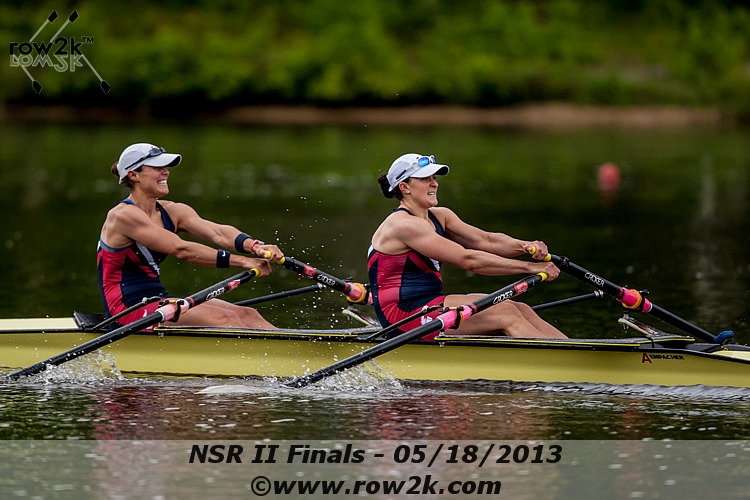
The Women’s Lightweight Double was a lot of fun to watch. It wasn’t that it was a tight finish like the men’s pair and women’s pair, it was the dominating factor in which three-time national team athlete and silver medalist (who used to row open-weight), Kate Bertko and London Olympian, Kristin Hedstrom won the event. These are two experienced scullers who know how to move the boat and have teamed up for the first time (literally, their first row together was just a couple of days before the NSR #2 Time Trial). I’m super pumped to see this boat continue to come together and what kind of speed they put up internationally. The United States hasn’t medaled the lightweight women’s double since Sydney 2000 (Bronze; Christine Collins / Sarah Garner). Watch out Rio 2016.

Kristin Hedstrom and Kate Berko, Lightweight Women's Double. Photo courtesy of row2k.com
Kristin Hedstrom and Kate Berko, Lightweight Women’s Double. Photo courtesy of row2k.com

The Lightweight Men’s Double was won by composite entry of Malta Boat Club’s Colin Ethridge and Vesper’s Peter Alter.

The Lightweight Men’s Pair was another speedy race. In an all USTC-Oklahoma A Final, top pair Robin Prendes and Anthony Fahden won the event as well as the overall percentage (GMS = Gold Medal Standard) of the regatta with a time of 6:46.16. To put it into perspective, their time would have put them in 5th place in the heavyweight Men’s Pair A Final, beating out 8 other boats. Nicely done.

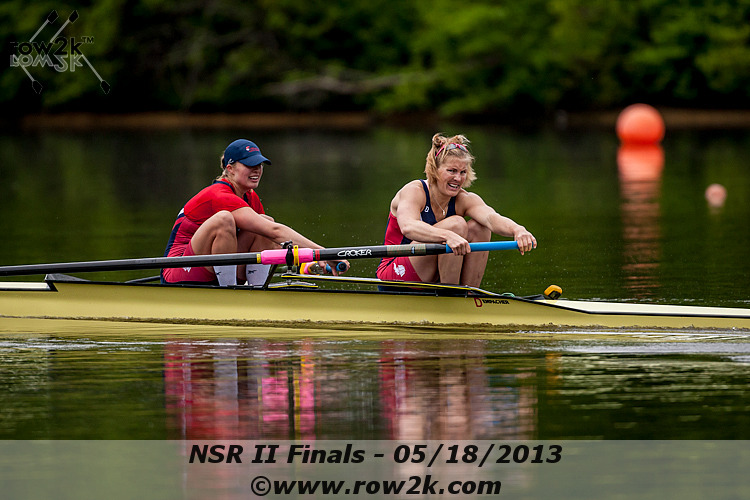
Last, but certainly not least…the Women’s Double was won by 2008 Beijing Olympian Ellen Tomek and myself, Meghan O’Leary from the Princeton Training Center. We finished about five seconds ahead of the composite entry of London gold medalist Esther Lofgren rowing for Potomac Boat Club and four-time National Team member Stesha Carle, rowing for California Rowing Club. Composite entry of USTC-Princeton’s Liv Coffey and Vesper Boat Club’s Grace Latz took third.

Meghan O'Leary and Ellen Tomek, USTC Women's Double. Photo courtesy of row2k.com
Meghan O’Leary and Ellen Tomek, USTC Women’s Double. Photo courtesy of row2k.com

On a personal note, racing and winning my first NSR #2 was a thrill. When is winning not exciting? In the timeline of achieving goals, it was step one toward making my first National Team. Tomek and I will go on to race at the World Cup in Lucerne, Switzerland to hopefully qualify and then race at the World Championships. As a boat, we have a lot of potential and speed to gain. I’m excited to see what we can do with a little time and more racing experience.

As with many of the other crews coming out of both NSR #1 and #2 as well as all of the athletes at the Training Center, we return to the water and the weight room without skipping a beat. It’s already been a grueling week of training filled with the ups and downs that rowing bestows upon us. Time to work harder than ever.

Every Day Counts.

In Pursuit of the Dream

A little over a month ago, I hung up my ESPN gig to pursue the Olympic dream. That’s right. I’ve officially traded in my business suit for a unisuit. After juggling what was basically two full-time jobs for nearly three years, I finally made the decision to go all in. No regrets. My time with ESPN was nothing short of wonderful. They were kind enough to put out a farewell post on the ESPN Front Row website last week. Check it out below:

ESPN’s Meghan O’Leary starts full-time pursuit of her U.S. Olympic Rowing Team dreams

2013 National Selection Regatta I. (Photo courtesy of Erik Dresser / row2k)

Working for ESPN for nearly five years, I have had the unique opportunity to not only witness amazing sports moments but to be a part of capturing and telling the great stories in sports. It’s why I first got into television and why I wanted to work for the best in the business.

I love storytelling. The world of sports has an infinite number of inspiring acts of sportsmanship, unbelievable feats of the underdog, and last-second victories that make you jump to your feet and send goosebumps down your spine.

After five years of being on the “other” side of sports, I have made the difficult decision to put my ESPN career on hold and take a leap into chasing my own sports story, in hopes to become an Olympian.

Less than three years ago, I attended my first “learn to row” class at a small rowing club on the Connecticut River in Hartford, Conn. Just 18 months later, I received the official invite and began training with the United States Women’s Rowing Team at the U.S. Rowing Training Center based in Princeton, N.J.

I was fortunate enough to have the support from ESPN to train with the U.S. Team while continuing to work. After spending last year as a member of the 2012 Olympic selection group, I knew that this was what I wanted to do. I had stumbled upon a once-in-a-lifetime opportunity.

I could not have done this without the support from my coworkers and managers. It’s impossible to fully express how much I have valued my time with ESPN and have grown from the experiences and relationships I’ve made with all of the wonderful and talented people here. From my beginning as a Production Assistant in the Charlotte-ESPN Regional Television office, to my time with Programming in Connecticut, ESPN has positively altered the course of my life in so many ways.

And so I’ve turned in the laptop and PDA for a boat and oars. What used to be days full of meetings and conference calls are now filled will two, three, or maybe four training sessions; presentations and performance reviews are replaced with World Cup and World Championship races; and finally watching those big sports moments are replaced with creating my own.

Thank you for the memories. Thank you for the inspiration.

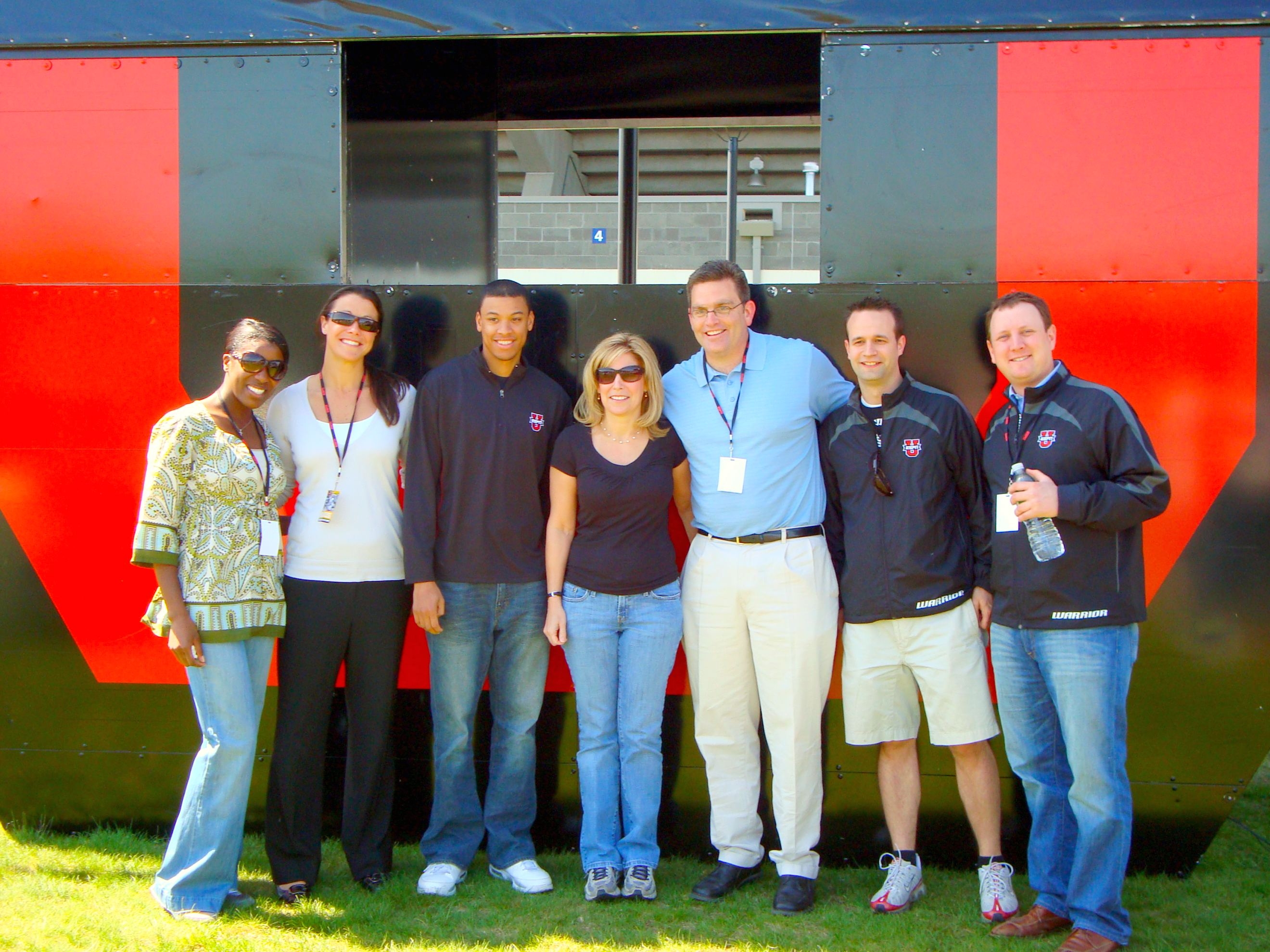
At the ESPNU Warrior Classic men’s college lacrosse event in Hartford, Conn. circa 2011 (L-R) ESPNU’s Rosalyn Durant, Meghan O’Leary, Kevin Lopes, Lauren Albee, Dan Margulis, AJ Mazza and consultant Darren Lachtman.

Every Day Counts.