It’s been nearly three weeks since we returned to the United States from the 2014 World Rowing Championships held on the windy Bosbaan in Amsterdam. It goes without saying this blog update is a bit overdue. It was actually only a week ago that I finally navigated the World Rowing website to find our Women’s Double Sculls A Final video and rewatched the race. Outside of the Olympics, the World Championships are the pinnacle of training and competition for every year. In a sport like rowing, the World Championships are arguably more competitive than the Olympics. To be a World Champion sits right up next to being an Olympic Champion. So much energy, emotion and thought goes into this one week of competition, that you welcome the short break you have afterwards, before starting the cycle back up all over again.
Ellen and I made it into the A Final of the Women’s Double Sculls, placing an overall sixth out of 22 entries. While this is a great step up from our seventh place B Final winning performance at last year’s World Championship, we were still disappointed. Our goal (and truly any competitor’s goal) is to come away with a medal. It was a decent end to an overall successful 2014 season. In just our second year together, we handedly won the U.S. National Selection Regatta; went on to take a silver medal at World Cup II in France (our top finish as a crew yet); won double gold at the 2014 Holland Beker Regatta; placed fifth in a very tight first through sixth finish at World Cup III in Switzerland; and finished sixth in the world at the 2014 World Rowing Championships. In a field as deep and incredibly talented as the women’s double, making the A Final is a huge success in itself. Among the top 8-10 crews in our event, it truly is anyone’s game on any day, and that’s what makes the women’s double so exciting.
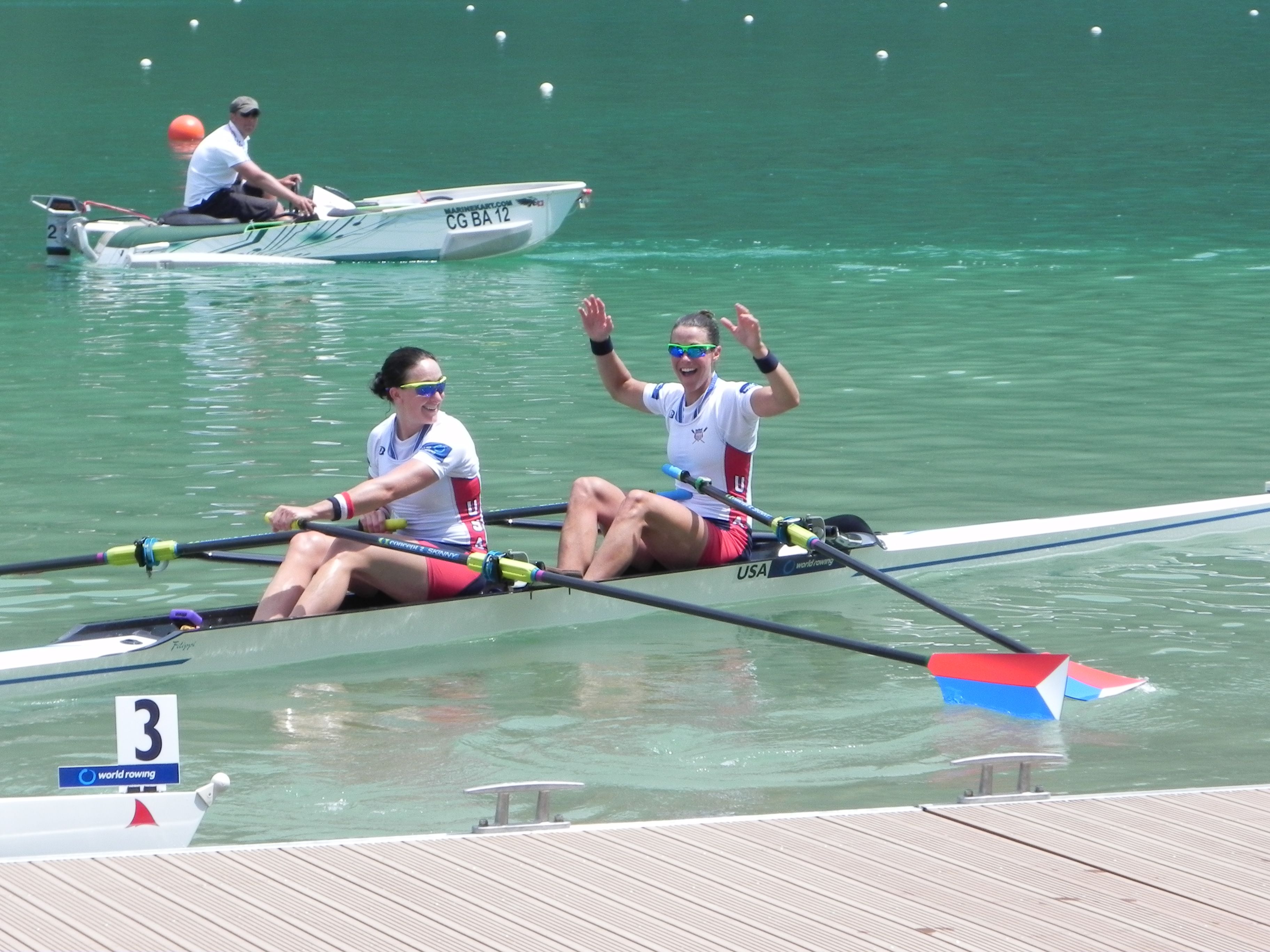
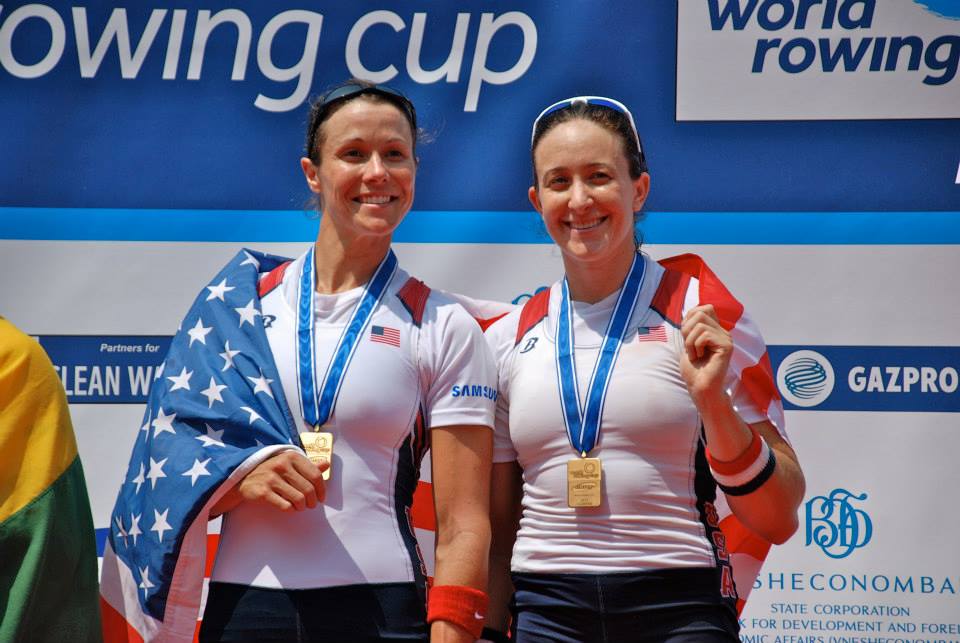
World Cup II silver medalists (I’m excited).
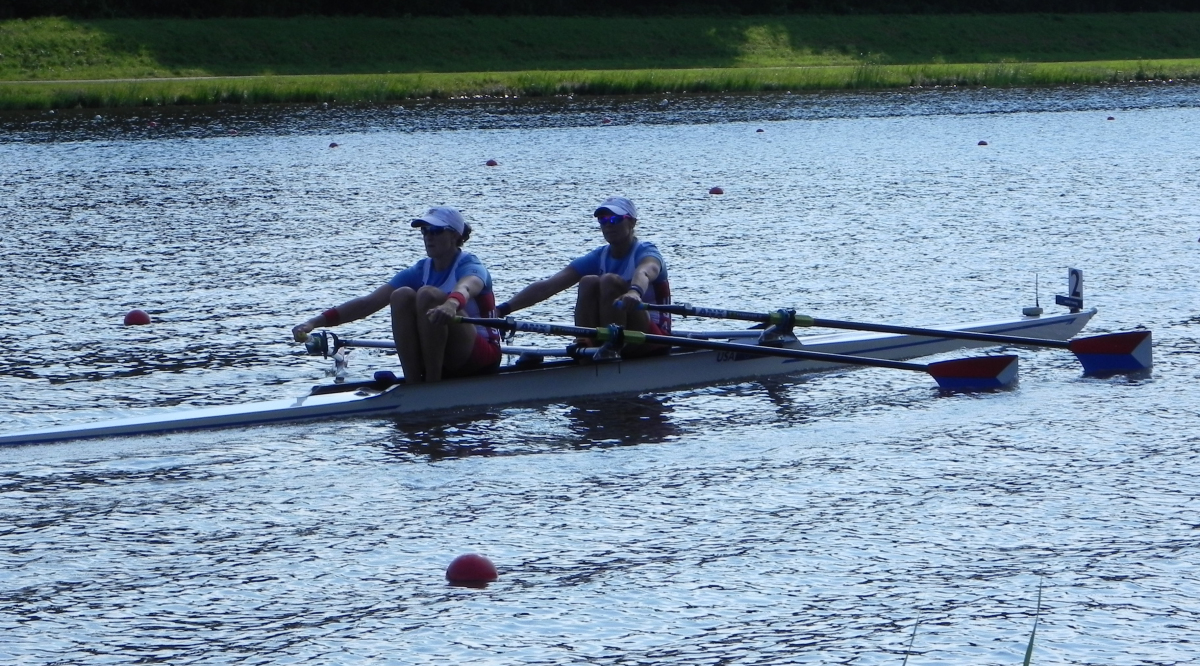
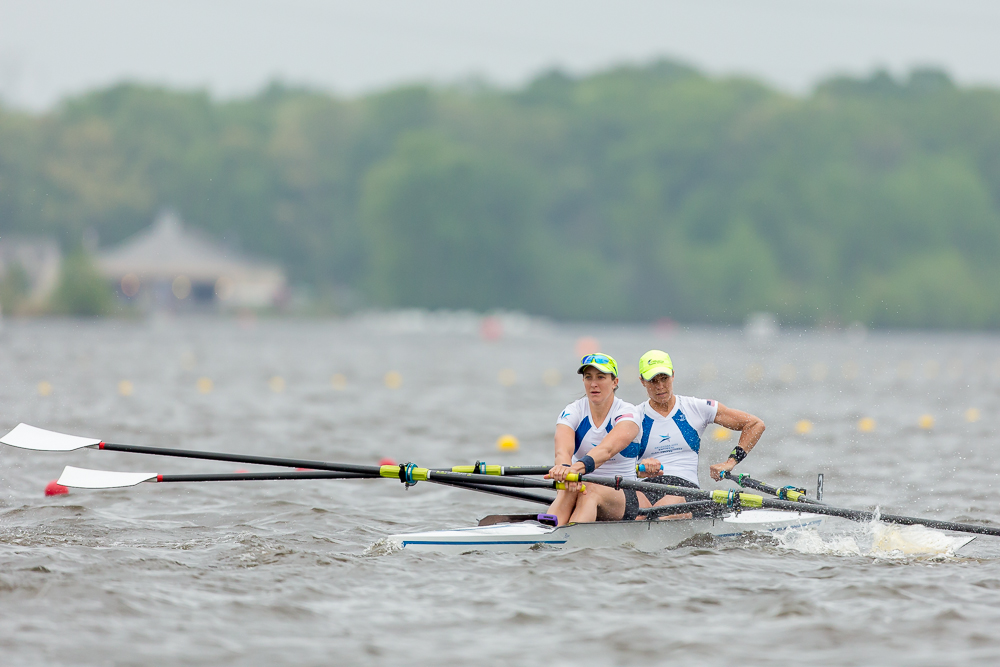
This year’s World Championships was a strange regatta with some funky things happening throughout the week. The Bosbaan in Amsterdam is not known as the fairest of courses and it lived up to this reputation during race week. The raging winds and fast water-if you found yourself in the right lane-made for a record-breaking streak as fourteen new world records were set. And that doesn’t include the multiple times a new record was set and then broken again in the same day. I don’t think there has ever been one regatta in which that many world best times were shattered. Mull over that one for a bit. Pretty insane. On a related note, the wacky weather unfortunately played a huge role in the conditions of the course from lane to lane, and there was much discussion (and I’ll go as far as saying argument amongst NGBs and the Fairness Committee) throughout the week about the incredible impact this had on results. From day to day, it was a sort of pick your own adventure: lanes were reseeded, lanes weren’t reseeded, races were cancelled, races weren’t cancelled. We were not so lucky with lane draws and how the wind decided to blow on our particular days of racing. In three out of the four races we had on the Bosbaan that week, the conditions were a determining factor and we found ourselves at a strong disadvantage in the poorest lanes. BUT, aside from the uncontrollable forces of nature, the event itself was very well run. Amsterdam knows how to put on a great show.
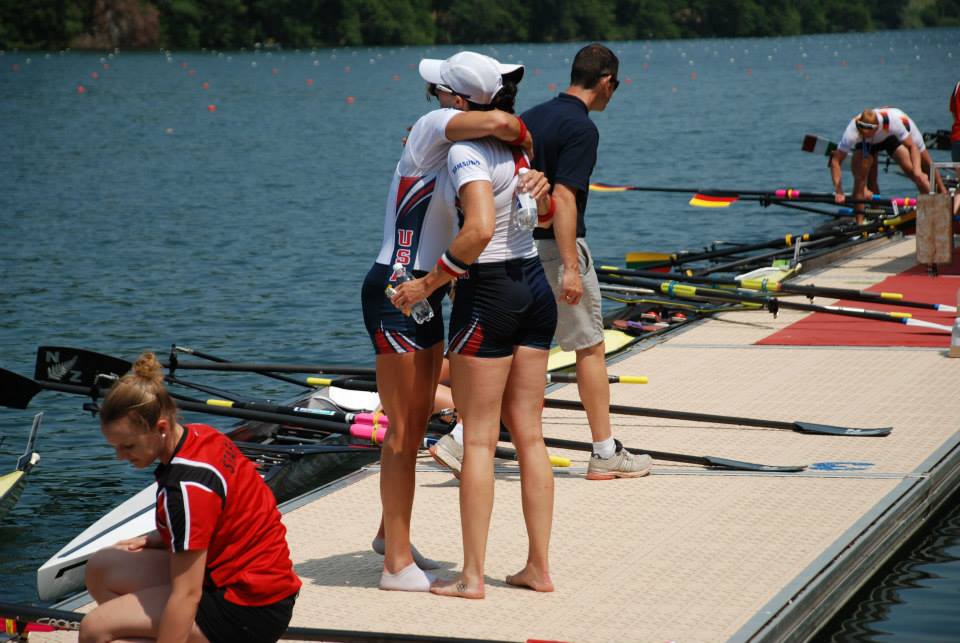
2014 World Championships. On the Bosbaan, Amsterdam.
After a few weeks of “down time” since our return to the states—which, down time generally just translates to unstructured (continued) training-I’m already chomping at the bit to get back into the boat. The year ahead promises even stiffer competition as we are one more year closer to the 2016 Olympics in Rio. It is the Olympic qualification year, which means the 2015 World Championships carry even greater weight.
Bring on the sweat. Bring on the pain. Bring on the progress.
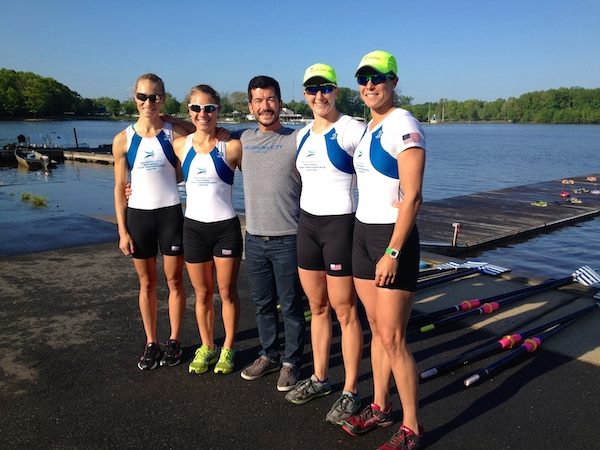
USRowing Training Center-OKC W2x and LW2x NSR II winners. (L-R Devery Karz, Michele Sechser, Jeremy Ivey, Ellen Tomek, Meghan O’Leary) Photo Credit: USRowing
Last weekend concluded the 2014 series of USRowing National Selection Regattas (NSR) I and II. Held on Mercer Lake in Princeton, New Jersey, the NSRs provide opportunities for athletes to take the first step toward making the United States National Senior Team. The winning women’s and men’s crews of the pair, single, double sculls and lightweight double sculls are awarded the opportunity to compete at World Cup 2 or 3 to then qualify for the World Championships (and thereby solidify their spots on the National Team). The NSRs are also formatted as a step toward entrance into or ranking for big boat camp selection for the men’s eight and four; and the women’s eight, quadruple sculls, and four.
For my double partner, Ellen and me, the goal for NSR II was to win each race: take the fastest time in the time trial, win our semifinal, and of course, take home the all important win in the final. We were rested and healthy. Our race preparation pieces leading into the week had been solid, and the boat was moving well. We felt good. All that was left to to do was to execute.
The 1900-meter time trial on Thursday morning went off accordingly and we posted the fastest time (6:49.67) by nearly four seconds. The weather the following day for the semifinals was absolutely horrendous. In conditions like that, anything can happen. We fought our way down the course in an 18-mph crosswind with gusts up to 30-mph, survived a few diggers and one boat-stopping crab (by yours truly), but managed to finish comfortably ahead of the field in first place. The winning crew of the other semifinal, Stesha Carle and Gevvie Stone (SoCal Scullers/Cambridge Boat Club) had posted a faster time than us by just under two seconds.
Fighting difficult conditions during the NSR II Friday semifinals. Photo credit: Erik Dresser
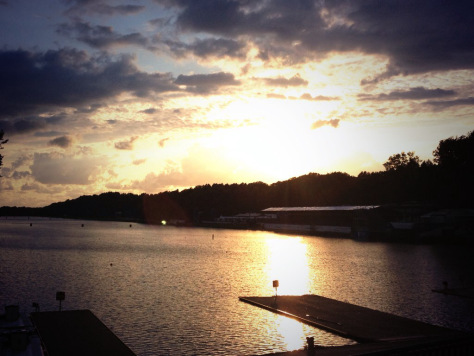
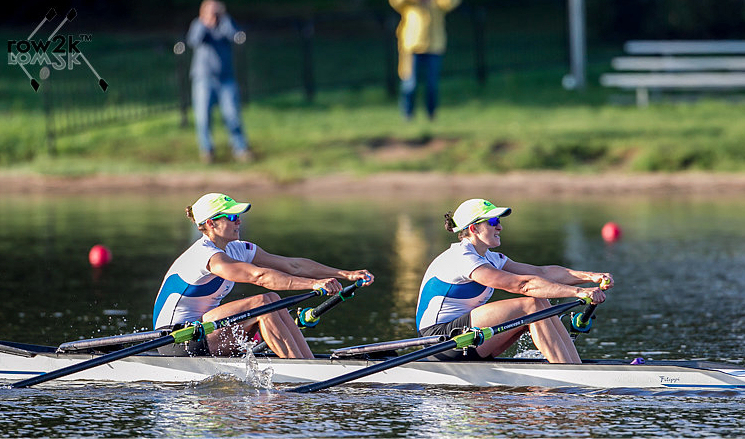
The morning of the final, the weather had thankfully calmed down and we arrived at the course to find a serene sunrise over flat water with the faintest puff of a breeze. The racing would be fair and fast. You can’t ask for a better finals day than that. Ellen and I won in a time of 6:54.47, nearly five seconds ahead of the next crew of Carle and Stone in second (6:59.20), followed by Lindsay Meyer and Nicole Ritchie (Seattle Rowing Club/Vesper Boat Club) in third (7:00.81).
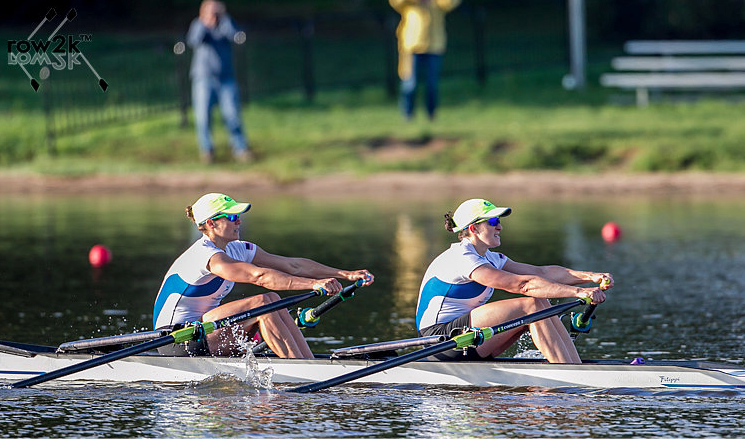
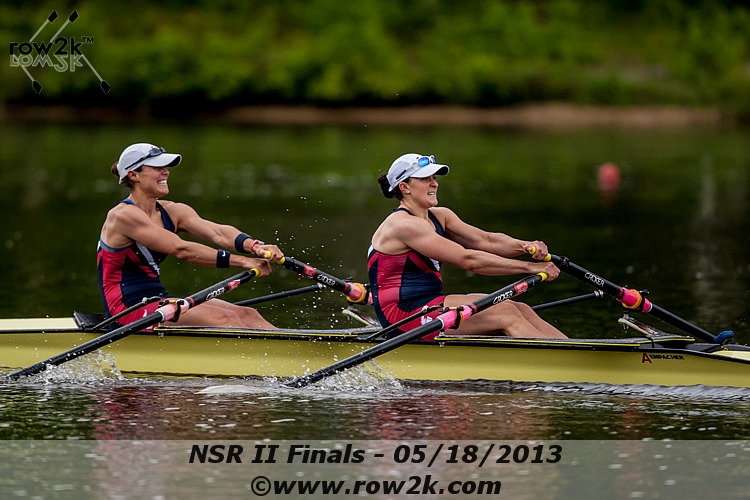
Saturday Finals, NSR II. Photo credit: row2k
In a few weeks, Ellen and I will travel to Aiguebelette, France to compete at World Cup 2 to try and qualify for the World Championships taking place later this summer in Amsterdam. Congratulations to all of the crews who punched their tickets to a World Cup last week. Step one of many more to come. Back to work to go fast and represent Team USA.
Wow, so it’s already March. I figured it was about time to put down my “2014 Resolutions” so that I have something to reflect on and keep me honest as the months creep closer to another year passing. With the Sochi 2014 Olympics having just wrapped up (and the Sochi 2014 Paralympics about to begin!), I thought what better time than now to revisit my goals on the road to Rio 2016.
It’s interesting how with the turn of a year, so many people want to hit this huge “start over” button. “This year I am going to completely stop (insert terrible habit),” or “I’m going to start this brand new (insert latest diet or fitness trend).” That is all well and fine, but I like to avoid this idea of erasing last year’s “faults” or completely overhauling my daily routine. Yes, the beginning of the year does signify a new beginning and in a sense, the turning of a page. We live and we learn and we make daily improvements. This attitude should not be limited to December 31st and January 1st.
Obviously, I’m a little late to the game in “setting my resolutions” for 2014. I’ve never been one to get all hyped about “New Year’s Resolutions” but I do like to take the time to think about what it is I want to accomplish in the coming months: how can I work toward becoming a better athlete, friend, daughter, partner and just overall a stronger person? What do I want to do this year that gets me closer to where I want to be next year? What do I want to learn about myself and about the world? These are the questions I tend to ask myself when deciding what kinds of goals I wish to set for the year and beyond.
As a fun practice I took a look at a post I put out a few years ago in January of 2011, Resolutions to Rio, when I first picked up the sport of rowing. Literally, I had just began training and it is very evident in those goals. As I laughed at the 2011 version of myself writing down those goals, I also couldn’t help but appreciate the value of them. As ridiculous as they are to me now, they were so meaningful at the time. And the best part? I blasted through every single goal I set that year from the erg standards, to buying my first single, to making it to the National Team Training Center in Princeton. So while I was laughing at my 2011 self, I was giving her a big pat on the back.
Now it’s time to tackle a bigger plate in 2014. I won’t bore you by delving into the non-rowing components of my 2014 resolutions. But for all you rowers and elite athletes out there, perhaps this will inspire you to take a look (or a second look) at your own plan, how far you’ve already come and how you are working toward becoming the best version of yourself that you can this year. And if you’ve already slipped on your “2014 Resolutions,” don’t give up. Every day is a new start to something beautiful, something meaningful. Every day counts.
Resolutions to Rio, Take 2:
Stay Healthy. If I’ve learned anything in my time training at the elite level, it is the importance of staying healthy. With the amount of volume a sport like rowing demands of the body to be successful, injury is common. Obviously it’s not a contact sport where we are throwing our bodies against the ground or at other people with the risk of broken and dislocated limbs, but the number of hours the body is working and in constant, repetitive motion, can lead to serious overuse injuries. Those injuries like strained and torn muscles or broken ribs (the worst!) can put a rower out of the game for several weeks to several months, severely impacting their ability to train and be ready to perform when competition starts.
At this level, everyone works hard. Sometimes it takes a lot more mental strength to say “I need to cross-train this session” or even “I need the afternoon off” when you may not feel well. I’m no spring chicken and don’t bounce back from things like I used to when I was 18 years old. Listening to my body and not being stubborn (stupid) like I have in the past, will be critical to staying healthy and being able to train day in and day out without the jarring disruption of an injury.
I have made it a habit to spend a solid 20-30 minutes before practice to properly warm up and run through a routine of strengthening exercises. In the same way, I spend another 30 minutes cooling down and stretching after practice to make sure any muscles that might have tightened up are settled down and loose. Creating and sticking to habits like these can make the difference between standing on the medals podium or watching from the stands.
Manage the Emotional and Mental Ups and Downs of Training. This is a big one. Rowing has frustrated me and tried my patience in ways that no other sport has in my entire athletic career. Now only in my fourth year of rowing, I still continue to learn a great deal every day, which in turn only shows me how much more I have to learn. Every elite rower is a perfectionist in some way; it’s what draws us to the sport, it’s what keeps us addicted to the sport. We are all pursuing the perfect stroke, the perfect training plan, the perfect recovery techniques, the perfect race. Frankly, it can be a bit maddening.
With anything we put a significant amount of our time and effort in, it’s important to remain level. Don’t ride the highs too high and don’t let the lows bury you. Particularly in a sport like rowing, you’re going to have days that make you feel like you are ready for the world stage, only to be knocked down by days that will absolutely destroy you physically, mentally, and emotionally.
I’m still navigating the ways of finding my peace with the tough days. I think it’ll be important to remember the enjoyment of the small victories and to use those as armor for those particularly rough workouts. Once you reach a certain level, progress can become seemingly unnoticeable. Overnight transformations are rare in rowing but it’s the subtle, day-to-day improvements that lead to the big changes. It’s difficult to give yourself a pat on the back, but constantly giving yourself a kick in the ass sometimes proves more detrimental to moving forward. When I first started rowing, I was delighted by the smallest improvement; that’s the joy of a steep learning curve. When you achieve a certain level of “success,” the expectations for yourself become that much higher and in turn, the pressure you put on yourself is that much heavier. It’s how good athletes become great athletes. Never settled, never satisfied. Balancing this mentality with the ability to not get dragged down by an “off” or frustrating day, is a challenge for so many athletes (finger pointed at myself, “this guy”).
As I continue becoming a better athlete, I’d also like to become better at taking each day in stride. Rather, as I become better at taking each day in stride, I will become a better athlete.
Win the 2014 USRowing National Selection Regatta #2. This is a little more concrete, black and white than the previous resolutions may be. Winning the USRowing National Selection Regatta #2 in the women’s double is the first step toward qualifying the women’s double and thereby representing the United States at the 2014 World Rowing Championships. It all starts with this first competition which will take place May 14-17th on Mercer Lake in West Windsor, New Jersey. I predict that the fight for securing spots in the women’s double will become even more competitive over the next several years. Selection procedures have slightly changed this year (2014 Official Selection Procedure), and some would feel the new procedure makes it even more challenging for athletes outside of the Training Center to find their way into a camp boat (eight, quad, and four).
Meghan O’Leary and Ellen Tomek, winner of 2013 NSR #2. Photo courtesy of row2k.com
Basically, if you are an openweight woman training outside of the USRowing Training Center in Princeton, in order to secure a spot on the National Team, you either win the women’s single or the women’s double. Okay technically, you can also win the pair, but I’m not sure the last time an outside women’s pair won an NSR. It’s been a very long time. If you’re a top sweeper, you’re most likely already in Princeton. Since the single and double are no longer deemed “priority boats” and specifically not being developed in Princeton, it only makes sense that outside athletes would be gunning for those three coveted spots.
As a result of some of the structural and procedural changes, most of the nation’s top scullers are training outside of Princeton right now; with more good athletes than there are spots to be filled. This is a GREAT thing because it means the depth of U.S. women’s sculling is growing stronger and stronger, as it needs to, in order for us to be competitive in the women’s single and double internationally. I predict the National Selection Regatta #2 will be a super competitive field this year.
Qualify the Women’s Double for World Championships. Next up? You guessed it. Qualifying the women’s double at a World Cup means you don’t have to take the boat back to U.S. Trials to then qualify for the World Championships. In the United States, you have to place in the top six at a world cup to automatically qualify the women’s double for the World Championships. Top four gets you funding. As part of this qualification goal, I’d like to take home a World Cup medal. Last year, Ellen Tomek and I brought home bronze from World Cup 3 in Lucerne. This year: bronze or better. The qualification world cups this year will be World Cup 2 in Aiguebelette, France (June 20-22) and World Cup 3 in Lucerne, Switzerland (July 11-13).
(L-R) Meghan O’Leary, Ellen Tomek; 2013 Samsung World Rowing Cup III Women’s Double Bronze Medalists
Medal at the 2014 World Championships. The last and most important leg of the 2014 racing season: the 2014 World Rowing Championships in Amsterdam, Netherlands (August 24-31). Last year was my first time to compete as a member of the United States National Team at the World Rowing Championships. My boatmate, Ellen Tomek and I won the B Final, placing 7th overall in the women’s double event. Both of us feel strongly that this was an underperformance, and that if we had raced our best, we belonged among the top four boats in the A Final. Were we good enough to be World Champions last year? No; the Lithuanian double (gold) and Kiwis (silver) put up the best race of the regatta and perhaps the best race the women’s double event has seen in several years. Seriously, if you haven’t watched it yet, you need to check it out HERE.
Last year we were a young crew, having only been in a boat together for a couple of months before racing at Worlds. If all goes well (win NSR #2, qualify at a World Cup…), I’m looking forward to competing this year with a little more experience and better preparation to race how we know how to race. Dare I say that the women’s double is looking to be one of the most competitive events this quadrennial, with a very talented and experienced field of athletes. No race will be a “gimme” or easy pass; and that’s the most exciting part! The United States has never medaled the women’s double at the World Championships. I’d like to change that.
In 2011, I was five for five on my New Year’s rowing resolutions. Obviously it would be fantastic to have a repeat performance and go five for five again this year.
The secret of change is to focus all of your energy, not on fighting the old, but on building the new. - Socrates
When I first sat down to write this post a few months ago, I could’t help but feel those odd, yet sometimes wondrous feelings of déjà vu. It seems the late summer transition into fall has always brought to me new challenges and significant change in my life. This year was no exception. It is telling that I am just now finishing this post; the past few months of “change” have been quite busy and to be honest, I had a difficult time finding the right words to fully capture all that occurred. Forgive me, this is going to be long but perhaps the most personal post I’ve written.
To back up this theme of change, I need to provide a little background. Four years ago I took a job promotion that moved me to New England and to the Connecticut River where I would eventually pull on my first oar. A year after that move, I made the critical decision to take on the challenge of training at the elite level to see where rowing could take me. I remember it well because it was at the USRowing National Team Identification Camp that fell on the weekend following my twin brother’s destination wedding. (I was that member of the wedding party spending two sessions per day in the hotel gym or running on the beach while everyone else was enjoying the benefits of an “all-inclusive” resort.) Nevertheless it paid off, and a year later I earned an official invitation to train at the USRowing Training Center in Princeton, New Jersey. (Are you following the year by year transitions yet?)
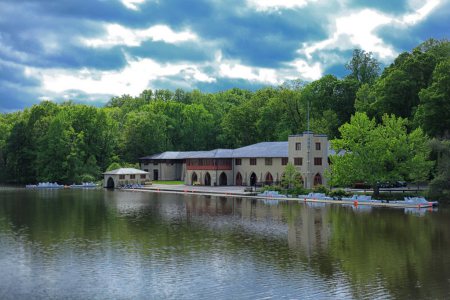
Princeton Boathouse. Courtesy of Aaron Cropper.
Boom. Life-changing step and I’m on my way to living the dream. In late October of 2011, I packed up what I needed and made the move away from my full-time job and promising start to a career at ESPN, close friends, and a comfortable home in Connecticut, to a dusty one-bedroom sublet in Princeton.
For most elite female and aspiring National Team rowers, this is the ticket. The cut to becoming one of the 20-25 athletes training in Princeton is a tough one to make. Beyond this initial huge and difficult step lies an even greater one. Not everyone at the Training Center is guaranteed a spot on the National Team. Many will come through the system not having ever made a boat. As with any athletic pursuit at this level, your time is limited, everyone is replaceable and nothing is ever guaranteed. For some, the opportunities are plentiful, and for others, you might have to fight for the one chance you’re going to get.
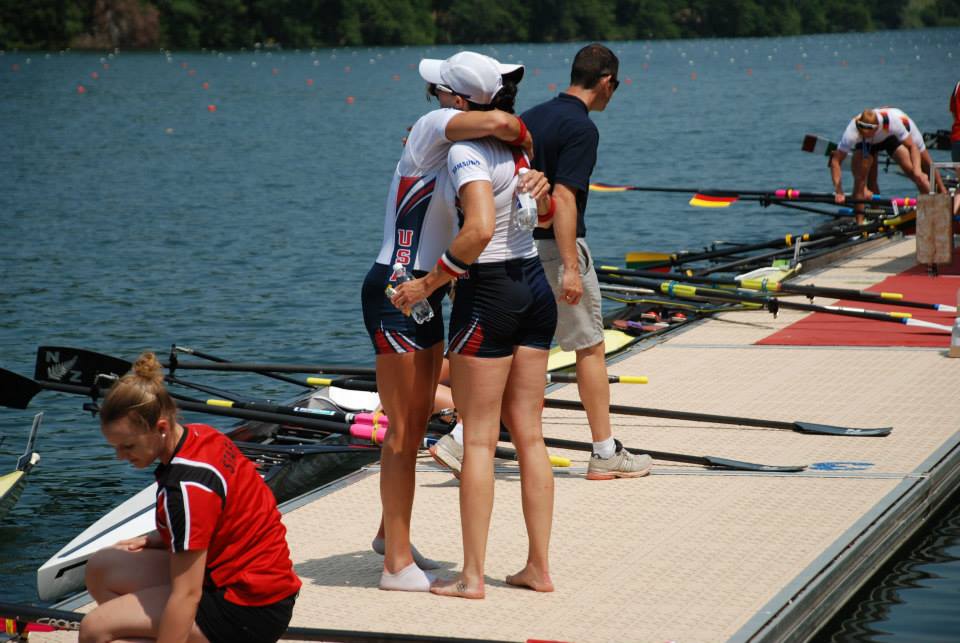
(L-R) Meghan O’Leary, Ellen Tomek; 2013 Samsung World Rowing Cup III Women’s Double Bronze Medalists
Looking back on the 2013 season, I would say it was an overall positive experience. Going into the year, my goals were to continue to improve each day, stay healthy, and perform well enough to make my first National Team. Of course there are other smaller goals along the way, but this was the general intended outcome. After dealing with another rib injury last fall that carried over into the winter, I was quite discouraged. One thing about training in Princeton, is that you are led to believe that you are only as good as your last workout. To some degree, this is true. And when you are injured, you feel completely out of the game. The Training Center can feel like and is at times, a dog-eat-dog environment. As one teammate appropriately describes it (and more specifically, describes selection), it can be a bit of a shark tank. Every day is a battle. The rules of war as well as your known allies and enemies are ever-changing. Get ready for The Hunger Games: Bloody Waters. In my short stint as a rower, I have quickly learned that rowing is absolutely and undeniably a team sport, but it is just as much about the individual.
On the second day of when official team training started back up in Princeton this past September, I found out life would be changing very quickly (again). The women’s double sculls event was essentially being removed from the Training Center in Princeton. My partner from the 2013 season, Ellen Tomek and I had the choice to stay and sweep to contend for spots in the eight, quadruple sculls, pair or four. Or as we had previously decided, remain as a unit and try to develop the double; but in result, be forced to find a new training location.
The reasoning? There would be no resources put toward the women’s double in Princeton, and therefore no opportunities to develop the boat if we were to remain there. I think it needs to be said that this wasn’t really a removal of resources; rather it was an admittance of the culture and structure of the Training Center in Princeton. What was previously hearsay would now be procedure. Over the past several years, separate from individual athletes or outside clubs, the double has never been a priority boat for the United States. Blog post to follow concerning that larger issue.
At the beginning of 2013, I knew I wanted to race the double. I’m what I like to call a “pure” sculler, with very little sweep experience (having never rowed in college). People often ask me, ‘why not go for the eight where you’re almost guaranteed a World Championship or Olympic gold medal at some point in your career?’ The women’s double has never brought home a World Championships or Olympic medal in the history of United States rowing. I guess you could say I like a challenge. What is that they say about the road less traveled? In the double, you are guaranteed to face some of the greatest rowers in the world, and that sounds pretty freaking awesome to me.
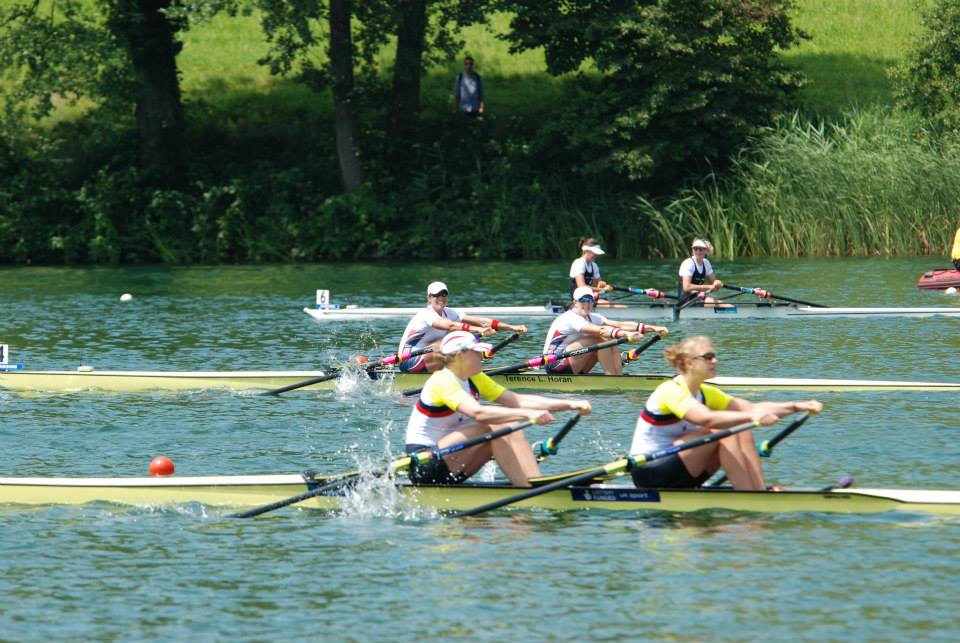
A Finals of the 2013 Samsung World Rowing Cup III
I also like the double because of its unique dynamic. It’s just you and one other person. It’s a marriage of absolute trust in and devotion to the other person because without them, you’re not going very far. Literally and figuratively. You can’t fight against them without being punished. There is no right or wrong in the boat; you both will be right or you both will be wrong in order to truly succeed.
And so I digress. Back to the point of all of this. Ellen Tomek and I won the National Selection Regatta #2, won a bronze medal at World Cup III in Lucerne-much to the surprise of well, probably everybody-and then had a mediocre, 7th place performance at the World Championships in Korea. It was a disappointment. I’ve already gone into the reasons as to why I believe we underperformed in a previous post, but a significant one that is relevant to this is that we were not given any priority by our representative body, the USRowing Training Center - Princeton. I say this as a statement of fact, not as a criticism. I knew this going into making my choice to row the double.
The United States is good at making a fast eight. Really good. We can throw together a boat full of rookies and set a new world record. We are beasts in the eight. The Princeton Training Center should and will continue focusing on the boats that can be developed successfully in a camp-like structure. The double on the other hand, requires a lot of time and development and along with that, a coach who can give that amount of time focusing on developing the boat. This is the primary reason for the removal of the boat from the Training Center. You look at the lineups of small boats that have stood on the medals podium and the majority of them have stuck together for years, building the boat over time. And behind them is a coach that has spent countless hours focused solely on them. It’s the same reason the top U.S. singles have trained independent of the Training Center. Specialty requires specialization. The smaller the boat, the more specialization required in order to be successful. Compare it to making a great quarterback or pitcher.
And so at the end of November, Ellen and I packed up our things and moved south to the Oklahoma City National High Performance Center. The months of September, October and November were a whirlwind of travel and decision-making all while trying to maintain a solid training regimen. Stress can be unbelievably damaging to training and a huge detriment to gaining speed. All we wanted to focus on was preparing ourselves for a solid 2014 season, not how we were going to move our lives 1,500 miles across the country.
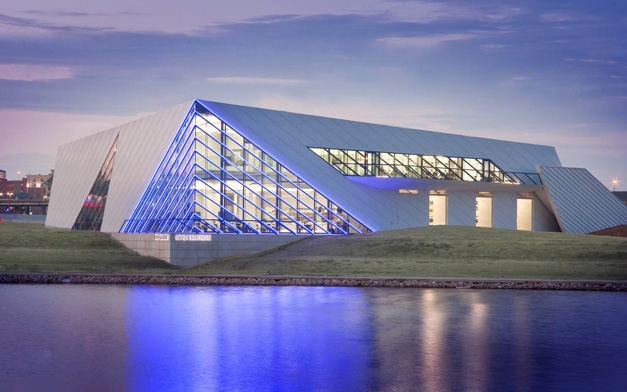
Devon Boathouse, Oklahoma City National High Performance Center
It wasn’t a flawless transition, but I think we handled it all fairly well and I’m happy to say we’re finally settling into our new home. Separate from the imminent chance of tornadoes, the freak ice and snowstorms, an earthquake, and the four scorpions I’ve already spotted, I think we’ve come to the right place. After the initial shock and oftentimes anger that change so often brings, this move has been a positive “reset” button. Though painful and difficult as it may be, you grow from positive and negative experiences alike.
Now it’s time to focus on building something new, building something great.